

Obstetrics and Gynaecology · Jaipur Hospital
Hysterectomy in Jaipur
Heavy bleeding and pelvic pain disrupt your routine. Our surgical team offers thorough assessment, clear options, and a supportive care plan.
- Serving Jaipur since 1991 (35 years)
- NABH accredited
- 24×7 emergency & ICU
- Cashless: RGHS, MAA Yojana, CGHS + 22 insurers
- Operation time
- 1.5 to 3 hours
- Anaesthesia
- Spinal or General anaesthesia
- Recovery
- 4 to 6 weeks for full activity
- Price
- ₹60,000 to ₹2,00,000typical range in India; ask us for an estimate
Living with persistent pelvic pain
Heavy bleeding and pain disrupt your daily life
Severe bleeding, cramps, and pelvic pressure can make work and family life difficult. When medicines no longer provide relief, daily routines become stressful.
-
Heavy and irregular bleeding
Excessive bleeding during periods can cause fatigue and interfere with your normal daily tasks.
-
Severe pelvic discomfort
Ongoing pelvic pain or pressure from fibroids can make sitting, walking, or resting uncomfortable.
-
Uterine prolapse concerns
A slipped uterus can create pressure and cause difficulty with routine urinary functions.
-
Medicines no longer working
Hormone tablets and conservative treatments may stop relieving your pain or bleeding symptoms.
Removing the uterus can be part of the recommended treatment for uterine fibroids, abnormal uterine bleeding, endometriosis, and other conditions.
Why Jaipur Hospital
You may feel worried about taking weeks away from your family, the pain of surgery, and unexpected hospital expenses.
Your care plan
Your first steps with us
- 1 Visit our gynaecology OPD with your medical reports.
- 2 Discuss surgical and non-surgical choices with your surgeon.
- 3 Plan your admission with clear cashless scheme assistance.
- 4 Follow your personalised discharge steps for healing safely.
how the operation is done
Your surgeon will discuss surgical approaches based on your health needs. The operation typically lasts 1.5 to 3 hours under spinal or general anaesthesia.
-
Total Laparoscopic Hysterectomy (TLH)
Keyhole surgery using small abdominal cuts and a camera, allowing faster recovery with smaller scars. Your surgeon will discuss this option.
-
Vaginal Hysterectomy (NDVH)
Performed entirely through the vagina without abdominal cuts, often selected for uterine prolapse. Your surgeon will discuss this option.
-
Abdominal Hysterectomy
Open surgery through a lower abdominal incision, used for larger fibroids or complex disease. Your surgeon will discuss this option.
-
Laparoscopic Assisted Vaginal Hysterectomy (LAVH)
A combined approach using keyhole techniques to assist vaginal removal for difficult cases. Your surgeon will discuss this option.
Why patients trust us
- 1991 Serving Jaipur for 35 years
- NABH Accredited hospital
- 3 Obstetrics and Gynaecology consultants
- 24×7 Emergency, ICU and ambulance
- 25 Cashless schemes and insurers
what clinical studies show about recovery and outcomes
-
up to 4 weeks
In clinical reports, the average recovery time for vaginal or laparoscopic hysterectomy is up to 4 weeks.
-
up to 6 weeks
For open abdominal hysterectomy, physical recovery typically takes up to 6 weeks.
-
81.6%
In a clinical trial, disease-free survival at 4.5 years was 81.6% in the laparoscopic surgery group.
If it is left untreated
Leaving severe fibroids, bleeding, or prolapse unaddressed can lead to worsening discomfort, persistent blood loss, and increasing interference with your daily life.
life after treatment
Most people recover gradually and return to their regular household and work activities within four to six weeks.
-
Relief from heavy bleeding
Most women no longer have menstrual periods or bleeding problems after surgery.
-
Gradual return to routine
Most people can typically resume their usual daily activities around six to eight weeks after surgery.
-
Supportive symptom management
Discomfort and incision swelling usually settle over four to six weeks with rest and care.



Frequently asked questions
Questions patients ask about hysterectomy
What does hysterectomy involve?
In short
A hysterectomy is the surgical removal of the uterus. At Jaipur Hospital, the operation usually takes 1.5 to 3 hours under spinal or general anaesthesia. The surgeon may use a vaginal, laparoscopic, or abdominal approach depending on your condition. A typical hospital stay is 2 to 4 nights.
In detail
The procedure removes the uterus and sometimes the cervix, fallopian tubes, or ovaries. Evidence shows minimally invasive routes such as vaginal or laparoscopic hysterectomy are preferred when feasible because they are linked to shorter recovery and less pain than open abdominal surgery.
The vaginal route is often chosen for prolapse, while laparoscopic surgery suits other benign conditions. The surgeon selects the technique based on uterus size, previous surgery, and the reason for surgery.
A common belief
Many people think every hysterectomy needs a big abdominal cut.
What actually happens
In fact, vaginal or laparoscopic methods are standard for most benign conditions and mean smaller scars and faster healing.
Your next step at Jaipur Hospital
Full recovery takes 4 to 6 weeks. You will need an attendant at home for the first few days. Avoid heavy lifting and vaginal intercourse for 6 to 12 weeks. Walking is encouraged early to prevent clots.
Which tests and scans do I need before hysterectomy?
In short
Before hysterectomy at Jaipur Hospital, you typically need blood tests (complete blood count, blood group, coagulation profile, kidney and liver function), urine analysis, chest X-ray, ECG, and a pelvic ultrasound. Additional tests like MRI, Pap smear, or endometrial biopsy may be needed based on your condition.
In detail
Blood tests check for anaemia, infection risk, and fitness for anaesthesia. Blood group and cross-match prepare for possible transfusion. Coagulation profile assesses bleeding risk. Kidney and liver function guide drug dosing. Chest X-ray and ECG screen heart and lung health for anaesthesia safety.
Pelvic ultrasound evaluates uterus size, fibroids, ovarian cysts, and endometrial thickness. If abnormal bleeding is the reason, a Pap smear and endometrial biopsy may be done to rule out precancer or cancer. For suspected endometriosis or complex fibroids, MRI gives detailed mapping. The anaesthetist reviews all results during the pre-anaesthesia check-up. Evidence supports routine pre-operative assessment to minimise perioperative complications.
A common belief
Patients often assume only an ultrasound is needed.
What actually happens
In reality, a full pre-anaesthesia workup is standard to ensure you are fit for surgery and anaesthesia. Skipping tests can lead to cancelled surgery or unexpected complications.
Your next step at Jaipur Hospital
Tests are usually done 1 to 2 weeks before surgery. Bring all previous reports to your pre-anaesthesia appointment. The anaesthetist will confirm fitness and discuss anaesthesia type (spinal or general).
How painful is a hysterectomy and the early recovery?
In short
A hysterectomy involves some pain after surgery, but it is usually well controlled with medicines. At Jaipur Hospital, the team uses spinal or general anaesthesia during the operation so you feel nothing. After surgery, you will receive regular pain relief such as paracetamol, ibuprofen or ketorolac. Opioids are used less often now because they can slow recovery.
In detail
Evidence shows that effective alternatives to opioids include acetaminophen, ibuprofen and ketorolac, and surgeons do not prescribe opioid pain relievers as often anymore because they can be addictive and their side effects can slow recovery. The amount of discomfort depends on the surgical route.
Vaginal and laparoscopic hysterectomies typically cause less pain than an abdominal hysterectomy because the incisions are smaller or there are no abdominal cuts. You may feel soreness and discomfort for a few weeks, and burning or itching around the incisions is normal. Numbness around the incisions or down the leg can also occur and usually lasts about two months.
A common belief
Many people expect strong opioid tablets, but studies show simple medicines work well and avoid addiction and slowed recovery.
What actually happens
Vaginal and keyhole approaches usually hurt less than open surgery because the cuts are smaller or absent.
Your next step at Jaipur Hospital
Your surgeon will discuss pain relief options before you go home. Take medicines regularly for the first few days even if you feel better, as pain can return if doses are missed.
Walking soon after anaesthesia wears off helps prevent blood clots and lowers pain levels. If pain is not controlled or worsens, contact the hospital.
How long does recovery usually take after a hysterectomy?
In short
Full recovery after a hysterectomy usually takes four to six weeks. At Jaipur Hospital, the hospital stay is typically two to four nights. Vaginal and laparoscopic hysterectomies have a shorter recovery of about two to four weeks, while abdominal hysterectomy may take up to six weeks. You will feel tired for two to four weeks even after pain improves.
In detail
Evidence shows vaginal and laparoscopic procedures are typically associated with shortened hospitalisation and postoperative recovery times compared with open abdominal hysterectomy. Vaginal hysterectomy was associated with a shorter return to normal activities compared to abdominal hysterectomy.
The average recovery time for a vaginal or laparoscopic hysterectomy is up to four weeks; for an abdominal hysterectomy, recovery may take up to six weeks. Most people recover in about four to six weeks depending on the type of surgery.
You typically do not need bed rest; walking as soon as you are able helps prevent blood clots and lowers pain.
A common belief
People often think they must stay in bed, but early walking prevents clots and reduces pain.
What actually happens
Tiredness can last a month even after the wound feels fine, so plan a gradual return to work and exercise.
Your next step at Jaipur Hospital
Plan for someone to take you home and help for the first few days. Aim to spend at least eight hours a day out of bed, walking short distances and increasing gradually.
Avoid heavy lifting, vaginal intercourse, tampons, and soaking in baths for six to twelve weeks as advised. Discuss return to work and exercise with your surgeon at follow-up.
Does this uterine condition need treatment if I have few symptoms?
In short
Not every uterine condition requires immediate treatment when symptoms are mild. At Jaipur Hospital, the gynaecology team assesses how fibroids, bleeding or prolapse affect your daily life before recommending surgery. Many women manage with observation or medical therapy for months or years. The decision depends on symptom severity, growth rate and your personal preferences.
In detail
Evidence shows that healthcare providers often suggest alternative treatments before recommending a hysterectomy. For fibroids or abnormal bleeding, options include hormonal therapy, tranexamic acid or a levonorgestrel intrauterine system. Prolapse may improve with pelvic floor physiotherapy or a pessary.
Surgery is usually considered when conservative measures fail, symptoms interfere with daily activities, or there is a risk of anaemia or organ damage.
A common belief
Some people think any fibroid must be removed.
What actually happens
In reality, guidelines recommend trying medicines, a hormonal coil or a pessary first. Surgery is kept for when those options no longer help or when anaemia or organ pressure develops.
Your next step at Jaipur Hospital
Your surgeon will review your scans, blood counts and symptom diary at the OPD visit. If watchful waiting is safe, you will receive a follow-up schedule, typically every six to twelve months. Should symptoms worsen, you can return earlier for reassessment.
How could my uterine condition or its treatment affect future pregnancy?
In short
If you keep your uterus, future pregnancy may still be possible after certain treatments at Jaipur Hospital. Myomectomy or hysteroscopic surgery aims to preserve fertility. A hysterectomy ends any chance of pregnancy permanently. Your gynaecologist will explain the impact of each option on your reproductive plans.
In detail
Fibroids themselves can distort the uterine cavity and affect implantation or increase miscarriage risk. Myomectomy restores the cavity but carries a risk of uterine rupture in later labour, so caesarean delivery is often advised.
Endometrial ablation destroys the lining and makes pregnancy unsafe; it is not offered if you want children. Uterine artery embolisation may reduce ovarian reserve and is generally not recommended for women planning pregnancy. Hysterectomy removes the uterus entirely, so pregnancy becomes impossible.
If ovaries are kept, they still produce eggs, but without a uterus you cannot carry a pregnancy. Discuss fertility preservation with your surgeon before any procedure.
A common belief
Many women assume any fibroid surgery keeps the door open for pregnancy.
What actually happens
In reality, only certain procedures are fertility-friendly. Ablation and hysterectomy close that door completely.
Your next step at Jaipur Hospital
Tell your doctor clearly if you want children in the future. Ask about the timing of conception after myomectomy or other fertility-sparing surgery. Request a referral to a fertility specialist if needed.
Why might my doctor recommend hysterectomy?
In short
Your doctor may recommend hysterectomy for heavy or painful periods, fibroids, uterine prolapse, endometriosis, or gynaecologic cancer. At Jaipur Hospital, our gynaecology team considers surgery when symptoms interfere with daily life and other treatments have not helped. The decision is based on your specific condition and its impact on you.
In detail
Common reasons include abnormal uterine bleeding that does not respond to medication, large or symptomatic fibroids causing pain or pressure, and significant prolapse leading to urinary or bowel problems. Severe endometriosis unresponsive to hormones may also lead to this recommendation.
For precancerous or cancerous conditions, hysterectomy can be life-saving. Evidence shows that when conservative treatments fail, hysterectomy provides definitive relief for many benign conditions. The surgeon will discuss whether ovaries and fallopian tubes should also be removed, which affects hormone levels and cancer risk.
A common belief
Some patients expect hysterectomy to be the first option.
What actually happens
In practice, guidelines suggest trying medical management, hormonal therapy, or less invasive procedures first. Surgery is usually considered when those options have been exhausted or when there is a cancer risk.
Your next step at Jaipur Hospital
You will have a detailed evaluation including ultrasound and blood tests. The doctor will review your medical history and previous treatments. If surgery is advised, you will receive information on the surgical route, hospital stay, and recovery timeline.
How should I prepare in the days before hysterectomy?
In short
In the days before hysterectomy at Jaipur Hospital, stop smoking at least 4 weeks prior, arrange an attendant for your hospital stay and home recovery, and follow your surgeon's instructions on medications. You will attend a pre-anaesthesia check-up and sign consent forms.
In detail
Quitting smoking improves wound healing and reduces anaesthesia risks. Inform your doctor about all medicines, supplements, and herbal products you take. Blood thinners, hormonal pills, or certain supplements may need to be stopped days before surgery. Eat a balanced diet and stay hydrated.
Prepare your home for recovery: set up a comfortable resting area, stock easy-to-prepare meals, and arrange help for household tasks and childcare for 2 to 4 weeks. Pack loose clothing, sanitary pads, and personal items for a 2 to 4 night stay.
Evidence shows early mobilisation after surgery prevents blood clots, so practise deep breathing and leg exercises beforehand. The hospital will give specific instructions on skin preparation and fasting.
A common belief
Many patients focus only on fasting.
What actually happens
Preparation also means stopping certain medicines early, quitting smoking weeks ahead, and organising support at home. Without an attendant, discharge may be delayed. Home readiness makes recovery smoother and safer.
Your next step at Jaipur Hospital
Complete all tests at least a week before surgery. Confirm your admission time and fasting instructions. Ensure your attendant knows the hospital location and visiting hours.
What are the common side effects and the less common serious complications of a hysterectomy?
In short
Common side effects after a hysterectomy include soreness, bloating, shoulder tip pain from gas, vaginal discharge, and numbness or itching around incisions. At Jaipur Hospital, the surgical team explains these before surgery. Less common but serious complications include heavy bleeding, infection, damage to the bladder, bowel or ureters, and blood clots in the legs or lungs.
In detail
Evidence lists blood loss, infection, reaction to anaesthesia, and damage to abdominal organs such as the bladder, bowel or ureters as risks. Laparoscopic hysterectomy has more urinary tract injuries compared to abdominal hysterectomy, though the number of adverse events was low in studies.
If the ovaries are removed and you have not reached menopause, you will enter menopause immediately with symptoms such as hot flushes and vaginal dryness. Emotional reactions vary; some women feel a sense of loss, which is usually temporary. Scarring occurs both internally and externally; laparoscopic surgeries cause smaller, less visible scars than abdominal hysterectomy.
A common belief
People often think only of wound pain, but serious risks include bleeding, infection, injury to the bladder or bowel, and blood clots.
What actually happens
Laparoscopic surgery carries a slightly higher chance of urinary tract injury, though overall adverse events are low.
Your next step at Jaipur Hospital
Call your surgeon or go to the nearest emergency department if you have heavy vaginal bleeding, fever, severe abdominal pain, shortness of breath, chest pain, or leg swelling. These may signal infection, bleeding or a blood clot. Follow all post-operative instructions and attend your follow-up appointment.
Which symptoms are expected after a hysterectomy and which need urgent medical attention?
In short
Expected symptoms after a hysterectomy include vaginal discharge or light spotting for a few weeks, soreness at incision sites, bloating, gas, shoulder tip pain, numbness or itching around scars, and tiredness for two to four weeks. At Jaipur Hospital, you will receive a written list of what to watch for. Urgent signs are heavy vaginal bleeding, fever, severe abdominal pain, shortness of breath, chest pain, or leg swelling.
In detail
Evidence states it is normal to have scarring internally and externally, burning or itching around incisions, and a numb feeling around incisions or down the leg lasting about two months.
Bloating and gassiness are very normal as the intestines fill the space once occupied by the uterus. If ovaries are removed, menopausal symptoms such as hot flushes and vaginal dryness start immediately.
Call your healthcare provider if you have heavy vaginal bleeding, fever, or any other concerns. Shortness of breath even while resting could be a clot in the lungs and needs emergency care.
A common belief
Many women think any bleeding is an emergency, but light spotting is expected.
What actually happens
The dangerous signs — soaking a pad an hour, fever, or sudden breathlessness — need same-day care, not a wait-and-see approach.
Your next step at Jaipur Hospital
Keep your follow-up appointment so the surgeon can check healing. Contact the hospital immediately if you soak a pad in an hour, have a temperature above 38°C, cannot pass urine, or develop calf pain and swelling. Do not wait for the next clinic visit if these occur.
FAQ library
Questions and answers about hysterectomy
When you contact us
Consult our gynaecology team in Jaipur
Book an OPD consultation at Jaipur Hospital to review your reports and discuss suitable treatment options.
- A consultation with a gynaecologist in the OPD
- Your scans and reports reviewed, with tests done in-house if you need them (laboratory, X-ray and imaging)
- Your options explained in plain words, including whether you need surgery at all
- A cost estimate before you decide
- Help with cashless treatment under RGHS, MAA Yojana, CGHS and empanelled insurers and TPAs
- Follow-up visits after your treatment
Overview
Hysterectomy: what to know
What is a hysterectomy and how it works
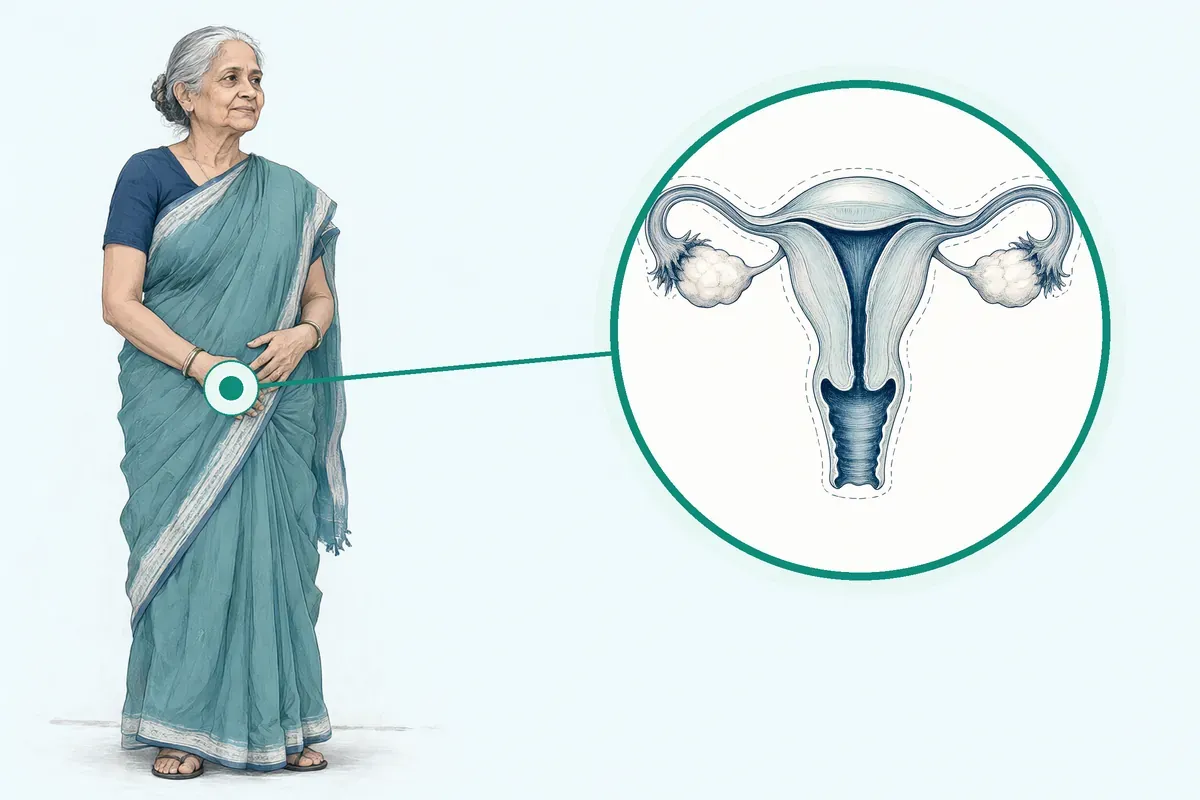
A hysterectomy is the surgical removal of your uterus. The uterus is the organ where a baby grows during pregnancy. After your uterus is removed, you will no longer have menstrual periods and you cannot become pregnant. Removing the uterus puts physical stress on your entire body.
There are two main types of this procedure based on what is removed. In a total hysterectomy, the surgeon removes both your uterus and your cervix. In a subtotal or partial hysterectomy, the surgeon removes only the upper part of your uterus while leaving your cervix in place.
Depending on the medical reason for your surgery, the procedure may also involve taking out nearby organs such as your fallopian tubes and ovaries. If cancer is present, a radical hysterectomy may be performed to take out the uterus, cervix, surrounding tissue, and sometimes the fallopian tubes and ovaries.
Removing the uterus can be part of recommended care for conditions like:
- Uterine fibroids
- Abnormal uterine bleeding
- Chronic pelvic inflammatory disease
- Severe endometriosis
- Uterine prolapse
- Gynaecologic cancers
At Jaipur Hospital, our surgical team evaluates each case carefully before planning any operation.
After a hysterectomy, other internal organs naturally shift to fill the open space. Your small and large intestines mainly fill the space where your uterus used to sit. If your cervix is removed during the procedure, you may no longer need routine Pap tests, but if your cervix remains, regular Pap smears to screen for cervical cancer must continue.
Symptoms of uterine problems and urgent warning signs
- Sudden or very heavy vaginal bleeding
- High fever or chills
Uterine conditions often cause distinct physical symptoms that disrupt everyday living.
You may experience:
- Heavy or painful periods
- Abnormal bleeding between cycles
- Constant pelvic pain
When the uterus slips down into the vaginal canal, known as uterine prolapse, you might notice significant discomfort, pelvic heaviness, or urinary issues. Large fibroids can also cause significant bleeding, pelvic fullness, and severe pain.
Severe pain, heavy bleeding, or pelvic discomfort can interfere with your daily routine and work. While these problems develop over time, certain acute symptoms need prompt medical attention.
You must seek urgent medical care the same day if you notice warning signs such as:
- Sudden or very heavy vaginal bleeding
- High fever or chills
- Shortness of breath or difficulty breathing, even while resting
Shortness of breath can be a sign that a blood clot has travelled to your lungs, which requires immediate evaluation in an emergency room. You can reach the 24×7 emergency department at Jaipur Hospital at any time if you notice sudden complications or severe symptoms.
Causes of uterine problems and who is at higher risk
- Fibroids
- Non-cancerous growths in uterine muscle wall
- Endometriosis
- Uterine-like tissue grows outside the uterus
- Pelvic inflammatory disease
- Chronic infection damages reproductive organs
- Gynaecologic cancers
- Endometrial and other cancers may need surgery
Uterine issues can develop from several underlying medical conditions. Fibroids, which are non-cancerous growths in the uterine muscle wall, are a common cause of pain and excessive bleeding. Severe endometriosis, where tissue similar to the uterine lining grows outside the uterus, causes chronic inflammation and pain. Chronic pelvic inflammatory disease and abnormal bleeding can also damage the reproductive organs. In other cases, gynaecologic cancers such as endometrial cancer require surgical intervention.
Certain factors place people at higher risk for needing uterine surgery. Individuals with severe symptoms like heavy bleeding or relentless pelvic pain that fail to respond to standard medical therapies may need surgery. People facing large fibroids or advanced endometriosis that do not settle with medicines face a higher likelihood of surgical treatment.
Those with a high personal or family risk of certain types of cancer may also benefit from surgery. Removing the uterus and surrounding organs can lower the risk of uterine cancer. In addition, removing the fallopian tubes reduces the risk of ovarian cancers that start in the tubes, even if the ovaries are left in place.
How uterine conditions are diagnosed
To understand the cause of your pelvic symptoms, you will need your doctor to refer you to a gynaecologist. At Jaipur Hospital, your gynaecologist begins by reviewing your full medical history, the duration of your symptoms, and how your daily activities are affected.
A thorough physical and pelvic examination helps the doctor check the size, shape, and position of your uterus and vagina. The doctor checks for uterine prolapse, pain points, or noticeable masses like fibroids.
Your evaluation will include specific laboratory and diagnostic tests. You may need to provide blood and urine samples to check your general health and verify that you are fit for treatment. Diagnostic tests also examine the extent of any disease outside the uterus and help determine accessibility to the pelvic organs. In cases where cancer is suspected, standard tissue evaluations help confirm the exact cell type and stage of disease.
Treatment options without surgery and when surgery is advised
Healthcare providers often suggest alternative medical treatments before recommending a hysterectomy. The right choice depends mostly on the underlying reason for your symptoms. When surgery is not medically necessary, doctors explore non-surgical options first.
Non-surgical treatments may include:
- Hormonal therapy to manage heavy bleeding or relieve pain
- Non-hormonal medicines and pain relievers to control inflammation and discomfort
- Less invasive medical procedures to reduce bleeding or shrink tissue
Your healthcare provider will work closely with you to build a treatment plan suited to your specific symptoms. Sometimes, however, conservative treatments do not help, or surgery becomes the only option to address the problem.
Surgery is typically advised when you have severe pain, excessive bleeding, or significant discomfort that interferes with everyday life. It is also recommended when conservative medical therapies fail to provide relief. Large fibroids causing severe bleeding, advanced endometriosis resistant to medication, significant uterine prolapse causing urinary trouble, or gynaecologic cancers make surgical removal appropriate.
If you smoke, quitting tobacco at least four weeks before any planned operation helps your wounds heal properly. Your gynaecologist at Jaipur Hospital will explain all surgical routes and help you decide the right path for your health.
Preparing for your hysterectomy surgery
When preparing for a hysterectomy, your surgical team will explain the operation in detail, including possible complications and side effects. You can talk to your surgeon about any concerns you have regarding the surgery and your recovery at home. To confirm you are healthy enough for surgery, you may need to provide blood and urine samples. If you smoke, quitting at least 4 weeks before surgery helps your surgical wounds heal faster.
Your surgeon will discuss medicines with you before the operation. Doctors may prescribe antibiotics to help prevent infection and pain relievers to decrease inflammation. You can discuss all your current medicines with your doctor in the OPD so your care plan is ready. Your surgeon will also discuss your options for pain relief after surgery.
These options may include prescription pain relief or over-the-counter medicines such as ibuprofen, paracetamol, or ketorolac. Surgeons do not prescribe opioid pain relievers as often today because they can be addictive and cause side effects that slow recovery.
If you have a high risk of nausea and vomiting after surgery, you may receive a skin patch that releases medication to help prevent those symptoms.
On the night before surgery, you will likely fast for 6 hours before your operation starts. As an exception, a couple of hours before the scheduled start time, you can drink a bottle of a clear sports or nutrition drink, choosing any colour except red.
Plan to have a family attendant accompany you to Jaipur Hospital to stay with you and arrange for someone you trust to drive you home after discharge. Bring comfortable, loose clothing and your past medical records for admission.
How the hysterectomy operation is done
On the day of surgery, you will change into a hospital gown. A healthcare provider hooks you up to monitors that track your heart rate. A provider also places an intravenous line in a vein in your arm to deliver fluids and medicines. An anaesthesiologist will give you either spinal anaesthesia or general anaesthesia.
The anaesthesia keeps you from feeling pain during the surgery. In our hospital, the operation time typically ranges between 1.5 to 3 hours, and the procedure generally lasts one to three hours.
A hysterectomy involves the surgical removal of your uterus. Depending on the condition being treated, your surgeon may perform a total hysterectomy to remove your uterus and cervix, or a subtotal hysterectomy to remove the uterus while leaving your cervix in place. A radical hysterectomy removes the uterus, cervix, surrounding tissues, and sometimes the ovaries and fallopian tubes. Depending on your specific situation, your surgeon may also remove surrounding tissues such as your fallopian tubes and ovaries.
Your surgeon will advise which surgical technique suits your condition. The main techniques include:
- Total Laparoscopic Hysterectomy: This is keyhole surgery performed through small incisions in your abdomen using a thin tube with a camera. It results in small scars and allows a faster return to normal activities.
- Vaginal Hysterectomy: The uterus is removed through your vagina without abdominal cuts. It is commonly used for uterine prolapse and is associated with shortened hospital stays and faster recovery.
- Abdominal Hysterectomy: The uterus is removed through an incision in your lower abdomen. This open surgery remains an option for a large uterus or cancer.
- Laparoscopic Assisted Vaginal Hysterectomy: This combined approach uses keyhole instruments to assist vaginal removal in difficult cases.
The choice of route can depend on the size and shape of your uterus and vagina, accessibility to the uterus, extrauterine disease, whether the surgery is scheduled or emergent, surgeon experience, and your preference.
Risks and possible complications of a hysterectomy
As with any major surgical procedure, there are risks associated with having a hysterectomy. In published clinical studies, the overall number of serious adverse events was low. Removing the uterus puts stress on the entire body.
Known surgical risks include blood loss, infection, reactions to anaesthesia, and accidental damage to nearby abdominal organs such as the bladder, bowel, or ureters. In medical studies, laparoscopic hysterectomy had more urinary tract injuries compared to open abdominal hysterectomy.
Common temporary side effects include soreness, bloating, and belly swelling. After the uterus is removed, your small and large intestines shift to fill the pelvic space. You may feel discomfort at abdominal incision sites for about four weeks, and redness, bruising, or swelling generally clears in four to six weeks. Mild burning or itching around healing wounds is normal.
Some patients notice numbness around the cuts or down the leg, which usually lasts about two months. Surgical scarring occurs both internally and externally; laparoscopic cuts leave smaller scars than abdominal surgery cuts.
If your surgeon removes your ovaries during the operation and you have not reached menopause, you will enter menopause right away. This can cause symptoms such as vaginal dryness and low sex drive. If your ovaries are preserved, they continue to produce hormones, and you will not enter surgical menopause.
Emotional reactions vary; some patients experience a temporary sense of loss or grief. Discussing emotional concerns with your healthcare provider can help you find appropriate support.
Recovery and aftercare following surgery
In our hospital, patients typically stay in the hospital for 2 to 4 nights. You typically do not need complete bed rest after surgery. Your surgical team will encourage you to get out of bed and walk around as soon as the anaesthesia wears off and it is safe.
Moving your legs or sitting upright in a chair helps prevent blood clots known as deep vein thrombosis. You can start taking fluids and food to rehydrate your body and restart your digestive system; chewing gum can also help ease post-surgery gas.
Full recovery typically takes 4 to 6 weeks. In clinical reports, recovery after vaginal or laparoscopic surgery averages up to 4 weeks, with most patients resuming basic activities in two to four weeks. Recovery following an open abdominal hysterectomy may take up to 6 weeks. Most individuals can return to their usual activities six to eight weeks after surgery.
Plan to rest and take a few weeks off from work, as you can expect to feel tired for 2 to 4 weeks. Aim to spend at least 8 hours out of bed each day, taking short walks and slowly increasing your walking distance.
Do not lift heavy objects until your surgeon approves it. To ease abdominal discomfort on the toilet, sit down slowly, support your belly, or lean forward into a pillow. Applying a warm compress or heating pad to your abdomen can provide pain relief. Keep your incision sites clean and dry.
Avoid soaking in baths, pools, or hot tubs until your incisions have healed completely. Do not place anything in your vagina—including tampons, douches, and vaginal intercourse—for 6 to 12 weeks, or for as long as your surgeon advises.
Call your surgical team or go to the emergency room immediately if you develop heavy vaginal bleeding, fever, or shortness of breath. Shortness of breath while resting can be a sign of a blood clot in your lungs.
Results: how well hysterectomy works in clinical studies
A hysterectomy permanently stops menstrual periods and prevents pregnancy. For patients with chronic pelvic pain, severe fibroids, or abnormal bleeding, surgery provides relief from symptoms and improves daily comfort. If your cervix is removed, you may no longer require routine Pap tests, but if your cervix is retained during a subtotal hysterectomy, regular Pap smear screening must continue.
People who have a supracervical hysterectomy may experience light periods for up to a year if small amounts of endometrial tissue remain in the cervix.
Removal of the fallopian tubes reduces the risk of ovarian cancer, even when the ovaries are retained. The surgery also removes the risk of uterine cancer. A hysterectomy does not harm long-term sexual function.
In clinical research examining surgical approaches, studies show distinct findings for different conditions. In the randomised LACE trial of 760 women with stage I endometrial cancer, total abdominal hysterectomy and total laparoscopic hysterectomy demonstrated equivalent disease-free survival at 4.5 years.
Disease-free survival was 81.3% in the abdominal group and 81.6% in the laparoscopic group, with recurrence rates of 7.9% and 8.1% respectively. In another study involving cervical cancer, minimally invasive surgery was associated with a 3-year disease-free survival rate of 91.2% compared with 97.1% for open abdominal surgery, and an overall survival rate of 93.8% compared with 99.0%.
These study results come from specific groups of trial participants, and your surgeon will discuss the expected outcomes for your diagnosis.
Cost of hysterectomy and insurance options in Jaipur
The typical price for a hysterectomy in India ranges from ₹60,000 to ₹2,00,000. In general Indian healthcare data, hysterectomy costs typically fall between ₹1,00,000 and ₹2,50,000.
Your actual expenses depend on several medical and admission factors. The surgical approach chosen by your surgeon—whether vaginal, laparoscopic, or open abdominal—affects theatre time and equipment use. Room selection also changes the total bill, as private rooms carry higher daily charges than general shared wards.
The overall duration of your hospital stay, medicines purchased from the chemist, and diagnostic laboratory tests also determine your final cost. You can ask our team in Jaipur for an estimate based on your planned care.
Jaipur Hospital is a NABH-accredited multispeciality hospital. We accept government schemes including Rajasthan Government Health Scheme (RGHS), MAA Yojana, and Central Government Health Scheme (CGHS). We also work with a panel of private insurance companies and Third Party Administrators (TPAs) to assist eligible patients with cashless hospitalisation claims. Please bring your scheme card or insurance policy papers when visiting our hospital for admission.