

General & Laparoscopic Surgery · Jaipur Hospital
Piles Surgery in Jaipur
Bleeding, pain or a lump? Get a clear assessment and a simple plan from our surgical team.
- Serving Jaipur since 1991 (35 years)
- NABH accredited
- 24×7 emergency & ICU
- Cashless: RGHS, MAA Yojana, CGHS + 22 insurers
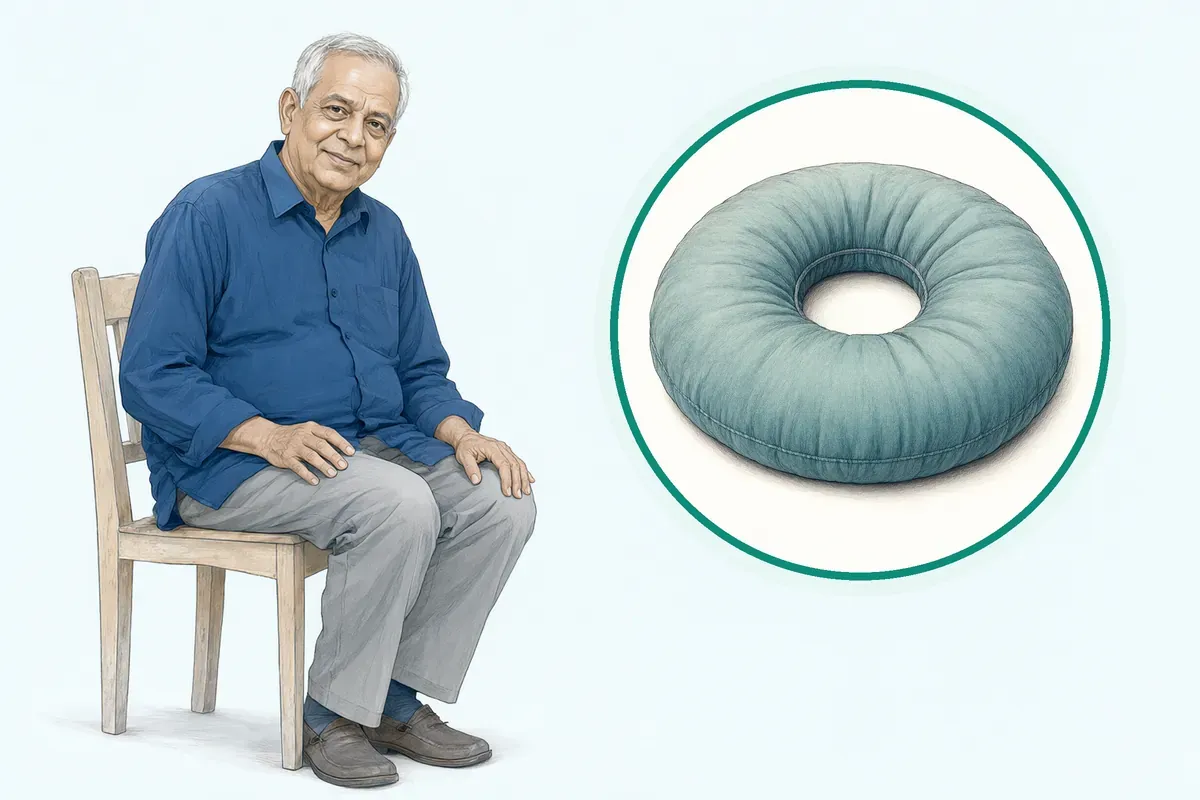
- Procedure time
- 20 to 45 minutes
- Anaesthesia
- Spinal or short general anaesthesia
- Recovery
- Back to desk work in 3 to 7 days for most patients
- Price
- ₹35,000 to ₹90,000typical range in India; ask us for an estimate
Piles disrupt daily life
Bleeding, itching or a lump that won't go back
You may see bright blood in your stool or on the paper, feel a lump after passing stool, or have itching that makes sitting uncomfortable. Simple measures like fibre and fluids often help at first, but symptoms can persist or return.
-
Bright blood after passing stool
The most common sign is blood in the stool or on the toilet paper, with no pain, during or just after passing stool.
-
Lump that comes out and stays out
Prolapsed piles can cause a sense of rectal fullness and make cleaning difficult.
-
Itching and skin irritation
Mucus leakage from prolapsed piles irritates the skin around the anus.
-
Risk of anaemia over time
Repeated bleeding can lower your iron levels and cause tiredness.
Haemorrhoids are swollen veins in the anal canal and the most common anorectal disorder worldwide.
Why Jaipur Hospital
You worry about pain during bowel movements, the embarrassment of explaining it, and the days you might miss from work or home duties.
Your care plan
Your first steps with us
- 1 Call or visit OPD for a surgeon consultation
- 2 Get examined and have any tests done in-house
- 3 Discuss the right procedure for your grade of piles
- 4 Have surgery and recover with follow-up visits
How the operation is done
Surgery is usually done under spinal or short general anaesthesia and takes 20 to 45 minutes. You go home the same day or stay one night. Your surgeon will discuss which technique fits your condition.
-
Laser haemorrhoidoplasty
Laser energy is applied inside the piles to shrink them by causing fibrosis.
-
Stapler haemorrhoidopexy (MIPH)
A circular stapler lifts prolapsed piles back inside and removes a ring of tissue above them.
-
Open haemorrhoidectomy
The piles are cut away; used for large external piles.
-
Rubber-band ligation
A small band is placed at the base of the pile in OPD to cut off its blood supply.
Why patients trust us
- 1991 Serving Jaipur for 35 years
- NABH Accredited hospital
- 3 General & Laparoscopic Surgery consultants
- 24×7 Emergency, ICU and ambulance
- 25 Cashless schemes and insurers
What research shows about these treatments
-
about 9 in 10
In studies, bleeding stopped in up to 90% of patients after rubber band ligation for lower-grade piles.
-
1 to 2 weeks
Healing after stapler surgery typically takes a couple of weeks, with most people returning to light activity sooner.
-
7% to 9%
Serious adverse events occurred in 7% of stapler patients and 9% of traditional surgery patients in a large trial.
If it is left untreated
If left untreated, repeated bleeding can lead to iron deficiency anaemia. Large prolapse may cause difficulty passing stool or, rarely, massive bleeding needing urgent care.
Life after treatment
Most people return to desk work within a week and see bleeding and prolapse improve.
-
Back to routine
Most patients return to desk work in 3 to 7 days after surgery.
-
Less bleeding
Bleeding usually stops or becomes much less after the procedure.
-
No protruding lump
Prolapse that used to come out typically stays inside after treatment.
-
Easier hygiene
Cleaning after bowel movements becomes simpler without external tags.
Frequently asked questions
Questions patients ask about piles surgery
What does piles surgery involve?
In short
Piles surgery at Jaipur Hospital usually takes 20 to 45 minutes under spinal or short general anaesthesia. The surgical team uses either laser haemorrhoidoplasty to shrink piles from inside or stapler haemorrhoidopexy to lift prolapsed piles back into place. Open haemorrhoidectomy is used for large external piles. Most patients go home the same day or stay one night.
In detail
Laser haemorrhoidoplasty delivers energy directly into the pile mass, causing fibrosis that shrinks the tissue and fixes it to the anal wall. Stapler haemorrhoidopexy removes a ring of mucosa above the dentate line with a circular stapler, lifting the cushions and reducing blood flow.
In studies, laser surgery averaged 24 minutes with less blood loss (about 5 ml) and shorter hospital stay (about 1 day) compared to stapler surgery which averaged 30 minutes with more blood loss (about 10 ml) and longer stay (about 3 days).
Pain scores at 24 hours, one week, one month and three months were consistently lower with laser. Both techniques show similar rates of bleeding, recurrence and complications.
A common belief
Many people think all piles surgery is the same open cutting operation.
What actually happens
In reality, laser and stapler techniques are less invasive. Studies show laser surgery takes less time, causes less bleeding, and patients recover faster than with stapler surgery, though both are safe.
Your next step at Jaipur Hospital
Your surgeon will explain which technique suits your grade of piles after examination. You can usually return to desk work in 3 to 7 days. The typical price range is ₹35,000 to ₹90,000.
Which tests and scans do I need before piles surgery?
In short
Before piles surgery at Jaipur Hospital, you will usually need routine blood tests such as complete blood count, coagulation profile, blood group, and basic biochemistry. If you have rectal bleeding and are over 50 or have a family history of colorectal disease, a colonoscopy is advised to rule out other causes. Proctoscopy is done in OPD to grade the piles.
In detail
Guidelines recommend colonoscopy for patients with rectal bleeding when there is a personal or family history of colorectal neoplasms, inflammatory bowel disease, altered bowel habits, recent weight loss, iron-deficiency anaemia, or a positive faecal immunochemical test.
Flexible sigmoidoscopy with anoscopy may be an alternative if colonoscopy is not feasible. Anoscopy or proctoscopy in OPD confirms the grade using the Goligher system. Routine pre-anaesthesia checks include ECG and chest X-ray if indicated by age or comorbidities.
No specialised imaging like MRI or CT is routinely required for uncomplicated haemorrhoidal disease. The surgeon will order only the tests relevant to your age, symptoms and medical history.
A common belief
Patients often expect a long list of scans.
What actually happens
For straightforward piles, only basic blood work and a scope exam are needed. Colonoscopy is not routine for everyone — only when guidelines indicate it to rule out other diseases.
Your next step at Jaipur Hospital
Most tests are completed within a day or two at the hospital's in-house laboratory and radiology. Once results are reviewed and fitness is confirmed, a surgery date is offered. Typical hospital stay is same day or one night.
How painful is piles surgery and the early recovery?
In short
Pain after piles surgery varies by technique and person. At Jaipur Hospital, our surgical team uses spinal or short general anaesthesia so you feel nothing during the 20 to 45 minute procedure. Most patients describe moderate discomfort for the first few days, especially when passing stool, and this usually improves within a week.
In detail
Studies show laser haemorrhoidoplasty tends to cause less postoperative pain than stapler haemorrhoidopexy or open haemorrhoidectomy. In one trial, pain scores at 24 hours, one week, one month and three months were consistently lower in the laser group.
Stapler patients had a longer hospital stay and took more time to return to normal activity. Open surgery typically involves more pain because tissue is cut and sutured.
Our team gives pain relief medication and advises sitz baths, stool softeners and a high-fibre diet to make the first bowel movements easier.
A common belief
Many assume all piles surgeries hurt the same.
What actually happens
Evidence shows laser treatment often causes less pain and a quicker return to activity than stapler or open surgery, but your surgeon will match the method to your pile grade and health.
Your next step at Jaipur Hospital
You can expect the strongest discomfort in the first two to three days. Desk work is usually possible in three to seven days. Avoid heavy lifting for two weeks. Take prescribed pain medicine on schedule, not only when pain is severe. Keep stools soft with fibre and fluids. If pain worsens suddenly or you develop fever, contact the hospital.
How long does recovery usually take after piles surgery?
In short
Recovery time depends on the technique and your job. At Jaipur Hospital, our surgical team tells most patients they can return to desk work in three to seven days. Hospital stay is same day or one night. Full healing takes a couple of weeks, with heavy lifting avoided for two to four weeks.
In detail
Studies report that laser haemorrhoidoplasty patients had a mean hospital stay of 1.28 days and returned to normal activity in 2.24 days, while stapler patients stayed 3.28 days and took 4.24 days. Open haemorrhoidectomy typically requires more time off work due to greater postoperative pain.
Pain and analgesic use are lower in the first three weeks after stapler compared with open surgery, but quality-of-life scores at 24 months favour open surgery. Rubber band ligation is an OPD procedure with almost no downtime. Your surgeon will give a personalised timeline based on the procedure chosen and your physical demands.
A common belief
Patients often compare their recovery to a friend who had a different technique.
What actually happens
Laser patients typically go home sooner and return to activity faster than stapler patients, while open surgery needs the most time off. Your surgeon will give a timeline specific to your operation and job.
Your next step at Jaipur Hospital
Plan for at least three days off work after laser or stapler surgery, and up to two weeks after open surgery. Keep stools soft with fibre, fluids and prescribed stool softeners. Use sitz baths after each bowel movement. Avoid gym, cycling and heavy lifting for two weeks. Attend your follow-up at two to three weeks.
How are the different grades of piles diagnosed?
In short
The grades of piles are diagnosed by clinical examination and anoscopy at Jaipur Hospital. The surgeon asks about your symptoms, performs a digital rectal examination, and uses an anoscope to see the anal canal. The widely used Goligher classification grades piles from I to IV based on size, prolapse, and whether they reduce spontaneously.
In detail
Evidence describes Grade I as bleeding without prolapse. Grade II prolapses on straining but reduces spontaneously. Grade III prolapses and requires manual reduction. Grade IV remains prolapsed and cannot be reduced. The surgeon also checks for external piles, skin tags, and thrombosis.
If there is rectal bleeding, especially in older patients or those with risk factors, a colonoscopy or flexible sigmoidoscopy may be advised to rule out other colorectal disease.
The grade determines whether you start with fibre and medicines, outpatient rubber-band ligation, or proceed to laser, stapler, or open surgery.
A common belief
Patients often guess their grade from symptoms alone.
What actually happens
Only a direct look with an anoscope gives the correct grade, and the grade decides whether you need medicine, a band, or surgery.
Your next step at Jaipur Hospital
Book a consultation at Jaipur Hospital for a proper grading. The surgeon will explain your grade, show you the findings, and recommend the next step. You will also receive a cost estimate within the typical range of ₹35,000 to ₹90,000 if surgery is needed.
How will the surgeon decide whether piles surgery is necessary?
In short
At Jaipur Hospital, the surgeon decides on piles surgery after a clinical assessment of your symptoms, the grade of haemorrhoids, and how you have responded to earlier treatment. The decision follows established guidelines that recommend non-surgical measures first for lower grades and surgery for higher grades or when conservative care fails.
In detail
Evidence shows that initial management is community based and starts with dietary changes, bulk-forming laxatives, and lifestyle advice. Outpatient procedures such as rubber band ligation are used for grade I to III haemorrhoids that do not improve with conservative treatment.
Surgical options including laser haemorrhoidoplasty, stapler haemorrhoidopexy (MIPH), and open haemorrhoidectomy are considered for higher grades or when banding has been unsuccessful. The surgeon will also check for other conditions such as colorectal disease or portal hypertension before planning surgery.
A common belief
Many people think surgery is the first option.
What actually happens
In fact, guidelines recommend conservative care and simple OPD treatments like rubber band ligation for early grades. Surgery comes later, and the choice of laser, stapler, or open technique depends on your specific grade and anatomy.
Your next step at Jaipur Hospital
You will have an OPD consultation where the surgeon examines you, reviews any previous reports, and may advise a colonoscopy or sigmoidoscopy if indicated. Based on the findings, the surgeon explains which technique suits your grade and health status. To discuss your case and get a personalised plan, book a consultation at Jaipur Hospital.
Why might my doctor recommend piles surgery?
In short
Your doctor may recommend piles surgery when symptoms such as bleeding, prolapse, pain or itching persist despite conservative measures like fibre, fluids and OPD treatments. Surgery is usually considered for grade III or IV haemorrhoids, or when rubber-band ligation has not helped. The aim is to relieve symptoms and improve quality of life.
In detail
Guidelines suggest starting with dietary changes, bulk-forming laxatives and OPD procedures such as rubber-band ligation or sclerotherapy for lower-grade piles. If these fail, or if you have large prolapsed piles (grade III–IV), surgical options like laser haemorrhoidoplasty, stapler haemorrhoidopexy or open haemorrhoidectomy are offered.
Studies show surgical intervention provides effective symptom control for higher-grade disease. Stapled haemorrhoidopexy is a recognised alternative to traditional excision. Laser treatment can reduce tissue trauma, bleeding and hospital stay. The choice depends on the grade of piles, your overall health and your surgeon's assessment.
A common belief
Some patients believe surgery is the first step.
What actually happens
In fact, guidelines advise trying conservative and OPD measures first. Surgery comes in when those options have been exhausted or the piles are too advanced for them.
Your next step at Jaipur Hospital
At your OPD visit, the surgeon will examine you, confirm the grade and discuss whether non-surgical options have been tried. If surgery is advised, you will receive a cost estimate within the typical ₹35,000 to ₹90,000 range and a date for the procedure.
How should I prepare in the days before piles surgery?
In short
Before piles surgery at Jaipur Hospital, your surgeon will give you specific instructions. Usually you eat a light, high-fibre diet and drink plenty of water to keep stools soft. You may be asked to take a laxative or an enema the evening before or on the morning of the procedure. Avoid alcohol and smoking, as they can slow healing. Follow any bowel-prep advice exactly as given.
In detail
Good bowel preparation reduces the chance of infection and makes the operation easier. Evidence shows that a balanced diet with adequate fibre and oral fluid intake improves stool consistency, which is a main goal of conservative management.
Stimulant laxatives or osmotic agents have been shown to reduce the risk of bleeding and persisting symptoms. Your surgical team will tell you whether you need a formal bowel washout or simply a mild laxative. Stopping smoking and avoiding alcohol before surgery is also recommended to lower anaesthetic risks.
A common belief
Many people think they need a strong purge, but a mild laxative or enema is usually enough.
What actually happens
Over-cleansing can irritate the anal area and make recovery harder.
Your next step at Jaipur Hospital
You will receive a written preparation sheet at your pre-operative visit. Buy any prescribed laxatives or enemas from the chemist a day early. Arrange for an attendant to bring you to the hospital and take you home. If you develop fever, loose motions, or any new illness before the date, call the hospital.
What are the common side effects and the less common serious complications of piles surgery?
In short
Common side effects after piles surgery include mild bleeding, pain during bowel movements, swelling, skin tags and temporary difficulty passing urine. At Jaipur Hospital, our surgical team monitors you closely. Serious complications such as heavy bleeding, infection, rectal perforation or severe sepsis are rare but possible.
In detail
In studies, postoperative bleeding occurs in 15 to 44 percent of patients after some techniques, and pain is reported in 8 to 80 percent depending on the method.
Rubber band ligation can cause pain, bleeding, thrombosis and skin tags; very rarely it leads to massive haemorrhage or sepsis. Stapler haemorrhoidopexy carries a small risk of rectal perforation with peritonitis. Laser haemorrhoidoplasty shows lower blood loss and fewer complications in comparative data.
Overall, serious adverse events were seen in about 7 percent of stapler patients and 9 percent of open surgery patients in one large trial. Our team follows strict protocols to minimise these risks.
A common belief
People often worry about rare disasters but overlook the common nuisance of pain and spotting.
What actually happens
Data shows laser and stapler methods have similar overall safety, but laser tends to cause less bleeding and pain. Your surgeon will explain the risks that matter for your specific case.
Your next step at Jaipur Hospital
Expect some spotting on toilet paper for a few days. Take prescribed antibiotics and pain relief as directed. Keep the area clean with warm water. Avoid straining.
If you notice heavy bright red bleeding, fever above 38°C, severe pain not relieved by medication, or inability to pass urine, go to the emergency department.
Which symptoms are expected after piles surgery, and which need urgent medical attention?
In short
After piles surgery at Jaipur Hospital, you can expect some pain, mild bleeding, and a feeling of pressure or soreness in the anus for a few days. These are normal and usually improve with the medicines your surgeon prescribes. You may also notice a small dressing or gauze pass with your first bowel movement.
In detail
Evidence shows post-operative pain occurs in 15 to 100 percent of patients and bleeding ranges from 15 to 44 percent after certain procedures. The Cleveland Clinic notes it is normal to feel pressure or soreness after haemorrhoidopexy.
However, you must seek urgent care if you have heavy bright red bleeding that does not stop, high fever, severe abdominal pain, difficulty passing urine, or signs of infection such as spreading redness or foul discharge.
Rare but serious complications like massive haemorrhage or sepsis have been reported after procedures such as rubber band ligation, so prompt attention to warning signs is essential.
A common belief
Many patients think any bleeding is an emergency.
What actually happens
In studies, minor bleeding is common after surgery. But heavy non-stop bleeding, high fever, severe belly pain, or inability to pass urine are red flags. Rarely, severe sepsis or massive haemorrhage can happen, so do not ignore these signs.
Your next step at Jaipur Hospital
Take prescribed pain relief and stool softeners regularly. Use sitz baths with warm water for comfort. Watch for heavy bleeding, fever above 38 degrees Celsius, or inability to pass urine.
If any of these occur, go to the emergency department at Jaipur Hospital immediately. Your surgeon will review your recovery at the first follow-up.
FAQ library
Questions and answers about piles surgery
When you contact us
Your next step: a clear plan
Contact Jaipur Hospital for a surgeon consultation, in-house tests if needed, a cost estimate and help with cashless schemes.
- A consultation with a general and laparoscopic surgeon in the OPD
- Your scans and reports reviewed, with tests done in-house if you need them (laboratory, X-ray and imaging)
- Your options explained in plain words, including whether you need surgery at all
- A cost estimate before you decide
- Help with cashless treatment under RGHS, MAA Yojana, CGHS and empanelled insurers and TPAs
- Follow-up visits after your treatment
Overview
Piles Surgery: what to know
What piles are and how they develop
Piles, also called haemorrhoids, are swellings of the veins inside the anal canal or around the anus. They are the most common anorectal disorder worldwide. The veins in this area can become enlarged when there is increased pressure, which causes the supporting tissues to weaken and the cushions to slide down. Many people have piles without knowing it, but they become a problem when they bleed, prolapse, or cause discomfort.
Symptoms of piles and warning signs that need same-day care
- Heavy bleeding that does not stop
- Feel dizzy or faint
- Severe pain preventing sitting
- High fever with anal pain
The most common sign is bright red blood in the stool or on the toilet paper, during or just after passing stool. Blood in the stool is not always piles, so have it checked by a doctor.
You may also feel:
- A lump protruding from the back passage
- Itching
- Soreness
- A feeling of incomplete emptying
Pain is not typical for simple internal piles, but a sudden, severe pain with a tender lump at the anal edge usually means a blood clot has formed in an external pile.
Contact Jaipur Hospital the same day if you notice heavy bleeding that does not stop, feel dizzy or faint, have severe pain that prevents you from sitting, or develop a high fever with anal pain. These can signal significant blood loss, a strangulated pile, or an infection that needs urgent attention.
Causes and who is at higher risk
- Chronic constipation
- Straining raises rectal pressure
- Low-fibre diet
- Leads to hard stools and straining
- Pregnancy
- Uterus presses on pelvic veins
- Ageing
- Tissues weaken after 50
Piles develop when pressure in the lower rectum rises repeatedly.
Common reasons include:
- Chronic constipation and straining at stool
- Long periods of sitting on the toilet
- A low-fibre diet
- Not drinking enough fluids
Pregnancy increases the risk because the growing uterus presses on the pelvic veins and hormones relax the vessel walls. Ageing weakens the supporting tissues, so piles become more common after 50; about half of people in this age group experience symptoms.
A family history of piles, obesity, and heavy lifting also raise the likelihood:
- Family history of piles
- Obesity
- Heavy lifting
How piles are diagnosed: examination and tests
Your surgeon starts by asking about your symptoms, bowel habits, and any family history of bowel disease. A gentle examination of the anal area and a proctoscopy (a short, lighted tube) allow the surgeon to see the piles and grade them from I to IV.
If you are over 40, have a family history of colorectal cancer, have lost weight without trying, or have iron-deficiency anaemia, a colonoscopy or flexible sigmoidoscopy is usually advised to rule out other causes of bleeding. These tests are done in the hospital's endoscopy suite under sedation.
Non-surgical treatment for piles and when surgery is advised
- Eat more fibre and drink water Vegetables, fruits, whole grains, plenty of water
- Use bulk-forming laxative if needed Helps soften stools
- Try phlebotonics for bleeding and itching Medicines may reduce symptoms
First-line treatment focuses on making stools soft and easy to pass.
This means eating more fibre:
- Vegetables
- Fruits
- Whole grains
- Drinking plenty of water
- Using a bulk-forming laxative if needed
A warm sitz bath for a few minutes after each bowel movement can relieve irritation. Medicines called phlebotonics may reduce bleeding, itching, and discomfort.
If these measures do not help, outpatient procedures are the next step. Rubber-band ligation is the most common OPD treatment for grade I to III piles; a tiny band cuts off the blood supply and the pile shrinks and falls off in a few days. Injection sclerotherapy is another OPD option for early grades.
Surgery is usually advised when piles are large (grade III or IV), keep coming back after banding, or cause persistent bleeding and prolapse that affects daily life. Your surgeon will discuss which operation suits your grade and general health.
Preparing for piles surgery at Jaipur Hospital
Do
- Bring list of current medicines
- Bring insurance or scheme card
- Bring comfortable loose clothing
Before your operation, our surgical team will review your medical history and any medicines you take. You may need blood tests, an ECG, or a chest X-ray depending on your age and health. These are done at our in-house diagnostic laboratory and imaging centre. Tell your surgeon about blood thinners, diabetes tablets, or any supplements you use.
The anaesthetist will discuss spinal or short general anaesthesia with you on the day of surgery. You must not eat or drink for at least six hours before the procedure. Bring a list of your current medicines, your insurance or scheme card (RGHS, MAA Yojana, CGHS, or private TPA), and comfortable loose clothing. An attendant should plan to stay with you if you are admitted overnight.
How piles surgery is done at Jaipur Hospital
laser
- Laser haemorrhoidoplasty
stapler
- Stapler haemorrhoidopexy (MIPH)
open
- Open haemorrhoidectomy
banding
- Rubber-band ligation
Your surgeon will recommend the technique that fits your grade of piles and your general health. The main options are laser haemorrhoidoplasty, stapler haemorrhoidopexy (MIPH), open haemorrhoidectomy, and rubber-band ligation. Laser haemorrhoidoplasty uses laser energy to shrink the piles from inside by causing fibrosis and cutting off the blood supply.
Stapler haemorrhoidopexy lifts prolapsed piles back into place with a circular stapler that removes a ring of tissue above the dentate line. Open haemorrhoidectomy cuts away the piles and is used for large external piles. Rubber-band ligation is an OPD procedure where a small band is placed at the base of an internal pile to cut off its blood supply.
On the day of surgery, you are taken to a modular operation theatre. The procedure usually takes 20 to 45 minutes under spinal or short general anaesthesia. After the operation, you are moved to the recovery room where nurses monitor you until the anaesthesia wears off. Most patients go home the same day or stay one night.
Risks and possible complications of piles surgery
- about 7% Stapler haemorrhoidopexy
- about 9% Traditional excisional surgery
All operations carry some risk. In studies, the commonest complications after surgical treatment are bleeding and pain, reported in a wide range of patients. After stapler haemorrhoidopexy, about 7% of participants had serious adverse events; after traditional excisional surgery, about 9% had serious adverse events. Minor complications such as pain, bleeding, thrombosis, and skin tags can occur after rubber-band ligation.
Rare but severe complications described after rubber-band ligation include:
- Massive gastrointestinal haemorrhage
- Liver abscesses
- Endocarditis
- Perineal sepsis
- Death
Rectal perforation with peritonitis is a particular risk of stapled haemorrhoidopexy. Severe sepsis can complicate stapled haemorrhoidopexy. After anaesthesia, you may feel groggy, confused, or nauseous. Our team monitors you closely and manages any complication promptly.
Recovery and aftercare after piles surgery
- Desk work Return in 3 to 7 days
- Healing Takes a couple of weeks
- Heavy lifting Avoid for two to four weeks
Most people return to desk work in 3 to 7 days. Healing takes a couple of weeks. You may feel some pressure or soreness in the anal area. Pain medication and medicines for nausea are prescribed as needed. A gauze or foam dressing placed during surgery usually comes out with the first bowel movement.
Sitz baths with warm water for a few minutes help comfort. Eat a high-fibre diet, drink plenty of fluids, and use a stool softener if advised to avoid straining. Avoid heavy lifting and strenuous activity for two to four weeks. Light activity is encouraged early. Keep your follow-up appointment with your surgeon.
Call the hospital or visit the 24×7 emergency department if you have:
- Heavy bleeding that does not stop
- Fever
- Severe pain not relieved by medicines
- Inability to pass urine
- Signs of infection such as increasing redness or discharge
Results of piles surgery: how well it works and recurrence
In studies, both laser and stapler techniques appear safe and effective with comparable outcomes for bleeding, recurrence, and postoperative complications. Stapled haemorrhoidopexy is associated with less pain and earlier return to normal activity in the short term compared with traditional excisional surgery.
Laser haemorrhoidoplasty has been shown to have shorter surgery duration, less blood loss, lower pain scores at multiple time points, shorter hospital stay, and faster return to normal activity compared with the stapler method.
Recurrence was observed in about 7% of patients in a stapler group and about 3% in a laser group in one trial; the difference was not statistically significant. Traditional excisional surgery showed fewer recurrences at 12 months compared with stapled haemorrhoidopexy in a large trial.
Rubber-band ligation stops bleeding in up to 90% of cases and improves grade III piles in 78% to 84% of patients, but recurrence at three months is around 13%. Your surgeon will discuss what you can expect based on your grade of piles and the technique chosen.
Cost and insurance for piles surgery in Jaipur
The typical price range for piles surgery at Jaipur Hospital is ₹35,000 to ₹90,000.
The final cost depends on:
- The technique (laser, stapler, open, or banding)
- The grade of piles
- Type of anaesthesia
- Whether you stay the same day or overnight
- Any additional investigations or medicines
We accept:
- RGHS
- MAA Yojana
- CGHS
- A panel of private insurers and TPAs
Our billing team can check your coverage and give you an estimate before admission. The in-house pharmacy and diagnostic laboratory are available on campus for any medicines or tests you need during your stay.