

Urology · Jaipur Hospital
Kidney Stone Treatment in Jaipur
Sudden back pain or trouble peeing can disrupt your life. We offer a medical assessment and a clear plan to help.
- Serving Jaipur since 1991 (35 years)
- NABH accredited
- 24×7 emergency & ICU
- Cashless: RGHS, MAA Yojana, CGHS + 22 insurers
- Procedure time
- 30 to 90 minutes
- Anaesthesia
- Spinal or general anaesthesia
- Recovery
- Back to light activity in 2 to 5 days
- Price
- ₹40,000 to ₹1,50,000typical range in India; ask us for an estimate
Sudden pain and disruption
Sharp back pain that stops your daily routine
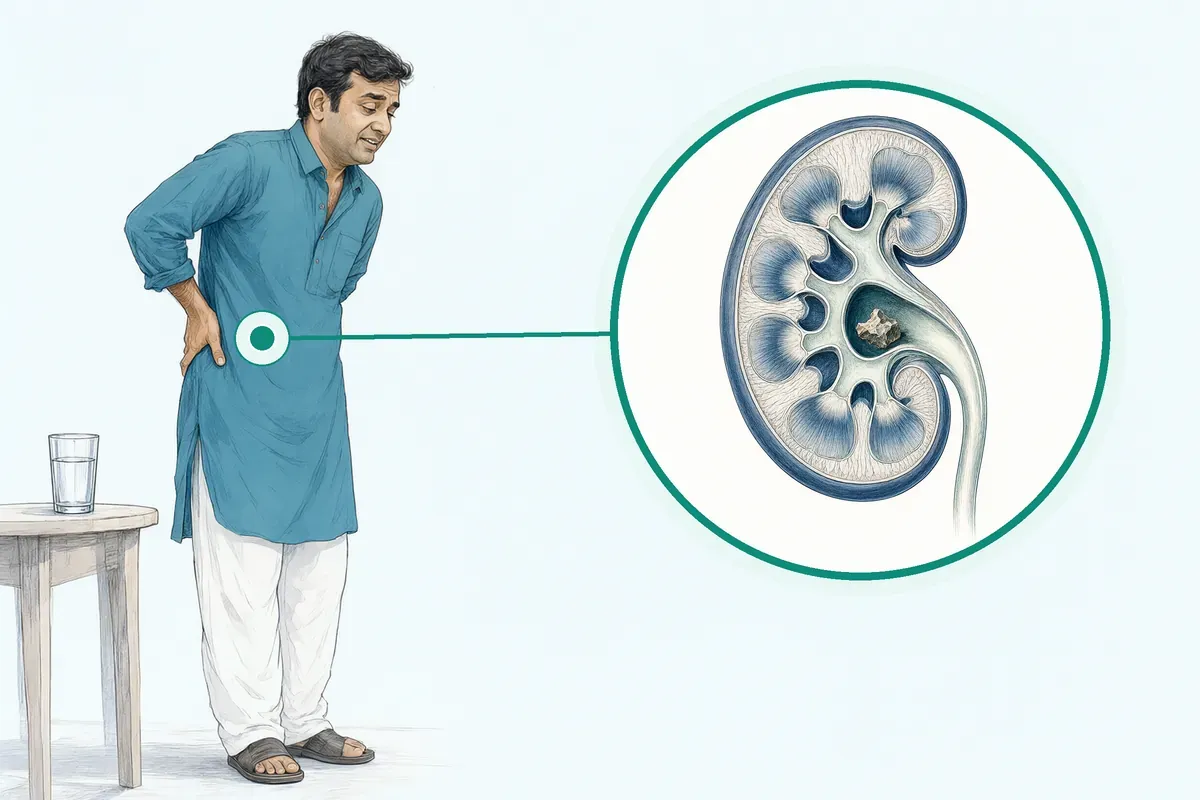
Kidney stones can cause severe pain in your back or side that comes in waves. You may feel sick, see cloudy pee, or worry about missing work.
-
Severe pain in waves
Stones moving through the urinary tract can cause sharp pain in your back, belly, or side.
-
Nausea and fever
A stone may bring feeling sick, vomiting, or feeling hot and cold.
-
Trouble peeing
You may need to pee often, or notice that your pee looks cloudy.
-
Worry about work and costs
Sudden attacks make planning difficult, creating concern over hospital bills and time away from your job.
Kidney stones are clusters of crystals that form from minerals and other substances in your urinary tract.
Why Jaipur Hospital
You may be worried about sudden sharp pain, missing days at work, and the cost of hospital care.
Your care plan
Your first steps with us
- 1 Book an OPD consultation with our urology team
- 2 Review your scans and run needed diagnostic tests
- 3 Choose a treatment plan with your surgeon
- 4 Recover under medical observation and return home
How the procedure is carried out
Procedures typically take 30 to 90 minutes under spinal or general anaesthesia. Most people return to light activity in 2 to 5 days.
-
RIRS (Retrograde Intrarenal Surgery)
A flexible scope is passed through the urethra with laser dusting to break stones without an incision, as your surgeon will discuss.
-
PCNL (Percutaneous Nephrolithotomy)
A keyhole surgery performed through a small incision in the back for large or complex stones, as your surgeon will discuss.
-
ESWL (Extracorporeal Shock Wave Lithotripsy)
Non-invasive shock waves focused from outside the body to break small stones into passable fragments, as your surgeon will discuss.
-
URSL (Ureteroscopic Lithotripsy)
A rigid scope passed through the urinary passage to treat stones located in the lower ureter, as your surgeon will discuss.
Why patients trust us
- 1991 Serving Jaipur for 35 years
- NABH Accredited hospital
- 24×7 Emergency, ICU and ambulance
- 25 Cashless schemes and insurers
Findings from clinical research
-
Around 80%
In studies, around 80% of kidney stones can pass on their own through the urine without surgery.
-
Up to 75%
Research shows that after having one stone, the chance of developing another over a lifetime can reach up to 75%.
-
0.4%
In an imaging study of emergency patients with suspected stones, the rate of high-risk diagnoses with complications within 30 days was 0.4%.
If it is left untreated
Untreated stones can cause pee to back up and limit your kidney's ability to filter waste. They can also cause bleeding or severe pain that requires hospital treatment.
Getting back to your routine
With timely medical care, kidney stones are usually a temporary condition and most people return to daily life.
-
Return to normal activity
Most people can resume light activity within 2 to 5 days following typical clinical protocols.
-
Clear daily routine
Patients usually return to their regular work and family schedule once recovery is complete.
-
Diet and hydration habits
Most patients work on long-term hydration habits, such as drinking adequate water, to reduce future risks.
Meet the team
Our Urology specialists
Care led by Jaipur Hospital's urology consultants, backed by round-the-clock surgical, diagnostic and critical care support.
Frequently asked questions
Questions patients ask about kidney stone treatment
Which problems are assessed under kidney stone treatment?
In short
Kidney stone treatment at Jaipur Hospital assesses stones in the kidney or ureter that cause pain, blockage, infection, or risk of kidney damage. The surgical team evaluates stone size, location, composition, and whether the stone is likely to pass on its own or needs active removal.
In detail
Assessment begins with symptoms such as flank pain, blood in urine, or recurrent infections. Imaging, usually a CT scan for adults or ultrasound for children and pregnant women, confirms stone size and position.
Blood and urine tests check kidney function, infection markers, and metabolic factors like calcium or uric acid levels. Stones smaller than 6 mm often pass spontaneously, while larger stones or those causing obstruction, infection, or worsening kidney function typically need intervention.
The choice among RIRS, PCNL, ESWL, or URSL depends on stone size, location, hardness, and patient factors such as bleeding risk or body habitus.
A common belief
Many people think any stone needs surgery.
What actually happens
In fact, stones under 6 mm often pass with fluids and pain relief. Surgery is reserved for stones that are large, stuck, causing infection, or threatening kidney function.
Your next step at Jaipur Hospital
If you have been diagnosed with a stone or have symptoms suggesting one, book a consultation at Jaipur Hospital. The urology team will review your scans, order any missing tests, and discuss which technique suits your stone.
Most procedures are daycare or need one night in hospital, with return to light activity in two to five days.
How will the doctor decide which tests I need?
In short
The doctor at Jaipur Hospital selects tests based on your symptoms, stone history, and clinical examination. Typical first-line imaging is a non-contrast CT scan for adults or ultrasound for pregnant women and children. Blood and urine tests check kidney function, infection, and stone-forming chemicals.
In detail
Guidelines recommend CT scan as the most accurate test to locate and size stones in adults. Ultrasound avoids radiation and is preferred in pregnancy and for children under 16. Urine analysis detects blood, crystals, and infection.
Blood tests measure creatinine, electrolytes, calcium, and uric acid to assess kidney function and metabolic risk. If you have recurrent stones, a 24-hour urine collection may be ordered to analyse volume, pH, citrate, oxalate, and other factors.
The surgeon tailors the panel to your situation, avoiding unnecessary tests while gathering enough information to plan treatment or prevention.
A common belief
Patients sometimes ask for every test available.
What actually happens
But guidelines limit radiation where possible. Ultrasound is first choice in pregnancy. A 24-hour urine is only needed for recurrent stone formers, not a first episode.
Your next step at Jaipur Hospital
At your OPD visit, the surgeon reviews your history and orders the appropriate scans and lab work. Most tests are done in-house on the same day. Results are usually available within a few hours to a day. The surgeon then discusses findings and next steps.
How soon should I expect improvement after the chosen treatment?
In short
After kidney stone treatment at Jaipur Hospital, most patients return to light activity in two to five days. Pain from the procedure usually settles within a few days. Stone fragments may pass over one to two weeks. A stent, if placed, is removed at two to four weeks as a daycare procedure.
In detail
Recovery depends on the technique. ESWL and URSL are often daycare; you may feel flank discomfort and see blood in urine for a few days as fragments pass.
RIRS typically needs one night in hospital; stent discomfort (frequency, urgency, flank pain on urination) is common until stent removal. PCNL requires one to three nights; you may have a drainage tube for a day or two.
Full stone clearance is confirmed by follow-up imaging, usually at four to six weeks. Fatigue and mild discomfort can last up to two weeks after PCNL.
A common belief
Patients often expect instant relief.
What actually happens
But fragments take time to pass, and a stent causes urinary symptoms until removal. PCNL recovery is longer than ESWL or RIRS. Full confirmation of stone clearance comes at the follow-up scan, not on the day of surgery.
Your next step at Jaipur Hospital
Take prescribed pain relief and drink plenty of water to flush fragments. Avoid heavy lifting for one to two weeks. Attend the stent removal appointment if a stent was placed. Contact the hospital if you develop fever, heavy bleeding, or worsening pain.
What do my creatinine, eGFR, and urine results mean for kidney stones?
In short
Creatinine, eGFR, and urine results show how well your kidneys are working and whether a stone is causing blockage or infection. Jaipur Hospital uses these tests to decide if you need urgent drainage or can proceed with planned stone treatment. A rising creatinine or falling eGFR may indicate obstruction.
In detail
Serum creatinine and estimated glomerular filtration rate (eGFR) reflect overall kidney function. Urine analysis checks for blood, infection, crystals, and pH. Evidence shows stone formers often have higher urinary calcium, oxalate, or uric acid, and lower citrate.
A urine culture guides antibiotic choice if infection is present. These values help the urologist choose between shock wave lithotripsy, ureteroscopy, or percutaneous nephrolithotomy and plan prevention.
A common belief
Patients often focus only on the stone size.
What actually happens
Kidney function and urine chemistry decide whether we can use shock waves or need a scope, and how to stop stones coming back.
Your next step at Jaipur Hospital
Bring all recent blood and urine reports to your OPD visit. The surgeon will explain each value and whether any medication or diet change is needed before the procedure. Repeat tests may be done on the day of admission.
How can I decide whether to seek advice about ESWL lithotripsy?
In short
ESWL is a non-invasive option for certain kidney stones, and Jaipur Hospital offers it after proper assessment. It suits stones under 2 centimetres in the kidney or upper ureter when there is no infection, bleeding disorder, or severe obesity. Your surgeon checks stone density on CT, skin-to-stone distance, and anatomy to see if shock waves can reach and break the stone effectively.
In detail
ESWL uses external shock waves to fragment stones so they pass in urine. It is typically an outpatient procedure under light sedation or general anaesthesia, lasting 45 to 60 minutes. Multiple sessions may be needed.
It is less suitable for very hard stones (high Hounsfield units), lower ureter stones, or patients with anatomical abnormalities. Stones larger than 2 centimetres, cystine or brushite stones, and those causing obstruction with infection are usually treated with ureteroscopy or PCNL instead. The decision balances stone-free rates against the chance of repeat sessions and fragment passage discomfort.
A common belief
Many believe ESWL works for all stones.
What actually happens
Hard stones, large stones, or lower ureter stones often need a scope and laser instead.
Your next step at Jaipur Hospital
Bring recent CT images and blood reports to the OPD. The urologist reviews stone size, location, and hardness, then explains expected sessions, discomfort, and follow-up scans. If ESWL fits, it can be scheduled as a daycare procedure.
Which urinary symptoms need urgent assessment for kidney stones?
In short
Certain urinary symptoms signal a kidney stone complication that needs urgent care at Jaipur Hospital. Fever with flank pain suggests an infected, blocked kidney, which is a medical emergency. Inability to pass urine, severe uncontrolled pain, persistent vomiting, or visible blood clots in urine also need immediate evaluation. These signs may mean obstruction, infection, or injury that can damage the kidney if not treated quickly.
In detail
A stone blocking the ureter with infection can cause sepsis within hours. Fever, chills, rapid heart rate, or low blood pressure are red flags. Complete urinary retention (cannot pass any urine) risks kidney damage and bladder rupture.
Severe pain not relieved by prescribed medication may indicate a stone moving into a tight spot or causing ureteric spasm. Gross haematuria with clots can obstruct the urethra. Nausea and vomiting that prevent oral hydration worsen dehydration and stone passage.
Any of these warrant a visit to the 24×7 emergency department for blood tests, urine culture, and urgent imaging (usually ultrasound or non-contrast CT).
A common belief
People often wait out severe pain at home.
What actually happens
An infected blocked kidney can become septic in hours. Do not wait for the stone to pass if you have fever.
Your next step at Jaipur Hospital
If you develop fever with flank pain, go to the emergency department immediately. Do not wait for an OPD appointment. Bring any recent scans and a list of medicines.
The team can place a stent or nephrostomy tube to drain the kidney, start IV antibiotics, and plan definitive stone treatment once infection is controlled.
Which symptoms should prompt me to see a specialist?
In short
You should see a specialist at Jaipur Hospital if you have severe flank or lower back pain that comes in waves, blood in your urine, frequent or urgent need to urinate, cloudy or foul-smelling urine, nausea or vomiting with pain, or fever with chills. These suggest a stone may be blocking the urinary tract or causing infection.
In detail
Kidney stones often cause colicky pain that radiates from the loin to the groin. Smaller stones may pass without symptoms, but larger stones can obstruct the ureter, leading to hydronephrosis and kidney damage if untreated.
Evidence shows that fever with flank pain signals possible infected obstruction, which is a urological emergency. Blood in urine, even without pain, warrants evaluation to rule out stones or other pathology. Recurrent urinary infections or a family history of stones also justify specialist review for preventive assessment.
A common belief
People often wait hoping the pain will pass.
What actually happens
But fever with flank pain can mean an infected blocked kidney, which needs urgent drainage. Blood in urine without pain also needs checking, not ignoring.
Your next step at Jaipur Hospital
If you notice any of these symptoms, attend the OPD for clinical examination and imaging. The surgeon will order a CT scan or ultrasound, urine analysis, and blood tests to confirm the diagnosis. Early evaluation prevents complications.
How will the results change my care plan?
In short
Test results at Jaipur Hospital directly shape your care plan by confirming stone size, location, and whether there is obstruction, infection, or kidney impairment. Small stones without complications may be managed with observation and hydration. Larger or obstructing stones usually need a procedure such as ESWL, URSL, RIRS, or PCNL.
In detail
Imaging shows if the stone is in the kidney or ureter, its diameter, and whether the kidney is swollen (hydronephrosis). Urine culture guides antibiotic choice if infection is present. Blood creatinine reveals kidney function.
Metabolic blood and 24-hour urine results identify treatable causes like hypercalciuria, hypocitraturia, or high oxalate, allowing targeted dietary or medical prevention. Evidence shows that matching the procedure to stone characteristics improves stone-free rates and reduces complications.
For example, ESWL suits small kidney stones under 2 cm, while PCNL is preferred for large or complex stones. The surgeon integrates all data to recommend the safest, most effective option.
A common belief
A common mistake is assuming one treatment fits all.
What actually happens
But a 5 mm ureter stone may need a scope, while a 1 cm kidney stone might need shock waves or keyhole surgery. Metabolic results also change long-term prevention, not just the immediate fix.
Your next step at Jaipur Hospital
After tests, the surgeon explains the findings and outlines your options with expected recovery times. You will receive a clear plan for treatment or observation, plus prevention advice. Follow-up imaging may be scheduled to monitor stone passage or clearance.
What should I do if kidney stone symptoms persist or worsen?
In short
If kidney stone symptoms persist or worsen, you should contact Jaipur Hospital or visit the 24×7 emergency department without delay. Severe pain that does not settle with prescribed medication, fever with chills, inability to pass urine, or vomiting that prevents fluid intake all need urgent assessment. An attendant should bring you if you cannot travel alone.
In detail
Persistent or worsening symptoms may mean the stone is blocking the ureter, causing infection, or damaging the kidney. Evidence shows obstruction can lead to back-up of urine and limit the kidney's ability to filter waste, while infection can progress to sepsis. Bleeding may also increase.
The emergency team will repeat imaging, check blood counts and kidney function, and decide whether you need a stent, drainage tube, or definitive stone removal such as ureteroscopy or percutaneous nephrolithotomy.
A common belief
Many people try to wait it out at home with painkillers, but a blocked or infected kidney can deteriorate quickly.
What actually happens
Delaying can lead to kidney damage or sepsis, which are far harder to treat.
Your next step at Jaipur Hospital
Do not wait more than a few hours if pain becomes unbearable, fever appears, or urine output drops. Bring any recent reports and a list of medicines.
The urology team at Jaipur Hospital will review your scans, explain the next step, and arrange admission or a day-care procedure if required.
Is the kidney stone problem temporary or long term?
In short
Kidney stones are a temporary condition in the sense that each stone can be treated and removed, but the tendency to form stones is often long term. Jaipur Hospital treats the current stone and then focuses on prevention. Evidence shows that after one stone, the chance of another in your lifetime can be up to 75 percent.
In detail
Stones themselves are not long-term — they pass or are removed. However, the underlying metabolic, dietary, or anatomical factors that caused them usually persist.
Recurrence rates in studies are 11 percent at two years, 20 percent at five years, 31 percent at ten years, and 39 percent at fifteen years. Conditions such as hypercalciuria, low urinary citrate, high oxalate, or low urine volume increase long-term risk.
Associated conditions like diabetes, hypertension, and metabolic syndrome also raise the chance of new stones. Treatment therefore has two parts: removing the existing stone and correcting the risk factors.
A common belief
Many people think once the stone is gone the problem is solved.
What actually happens
Data shows nearly 40 percent form another stone within fifteen years if prevention is ignored.
Your next step at Jaipur Hospital
After your procedure, the urology team will arrange metabolic evaluation — blood tests, 24-hour urine, and stone analysis if possible. You will receive a personalised prevention plan covering fluids, diet, and sometimes medication. Follow-up imaging is typically done at three to six months and then yearly.
FAQ library
Questions and answers about kidney stone treatment
When you contact us
Consult our urology team in Jaipur
Contact Jaipur Hospital to arrange an OPD assessment and review your options with our surgical team.
- A consultation with a urologist in the OPD
- Your scans and reports reviewed, with tests done in-house if you need them (laboratory, X-ray and imaging)
- Your options explained in plain words, including whether you need surgery at all
- A cost estimate before you decide
- Help with cashless treatment under RGHS, MAA Yojana, CGHS and empanelled insurers and TPAs
- Follow-up visits after your treatment
Overview
Kidney Stone Treatment: what to know
What is a kidney stone and how does it form
- 1 in 10 people Lifetime risk
- up to 75% Recurrence chance
A kidney stone is a hard lump made of minerals that can form in your kidneys and cause pain or trouble peeing. Kidney stones are clusters of crystals or solid masses that form from minerals, acids, and other substances in your urinary tract. They can be as small as a grain of sand or, rarely, larger than a golf ball. Kidney stones are usually caused by a build-up of chemicals found in your pee.
These include substances like:
- Calcium
- Sodium
- Oxalate
- Uric acid
When you have too many particles of these substances in your pee and too little liquid, they stick together to form crystals. Over months or years, these crystals can grow into stones.
About 1 in 10 people will get a kidney stone during their lifetime. If you have had one kidney stone, you have up to a 75% chance of having another one in your lifetime. Kidney stones are named for the type of crystals they are made of. Most stones form attached to tissue patches called Randall's plaques in the kidney.
In studies, crystal buildup is linked to cell irritation and temporary swelling in the kidneys. Kidney stones do not cause death, and they are a temporary condition. Once you pass the stone or have it removed by our surgical team, kidney stones will not bother you forever.
Kidney stone symptoms and when to seek urgent care
- Unbearable pain
- Blocked urine flow
Depending on the size of your kidney stone, you may not realise that you have one. Smaller stones can travel through your urinary tract and pass in your pee without causing any symptoms. However, passing kidney stones is often painful. Even some small stones can cause severe pain as they move.
Large kidney stones can get trapped in your ureter, which is the tube that carries pee from your kidney down to your bladder.
The most common symptom of kidney stones is pain in your lower back, belly, or side. This pain may extend from your groin to your side. It can be a dull ache, or it can be sharp and severe. Doctors often call this colicky pain because it tends to come and go in sharp waves.
Other symptoms you may notice include:
- Feeling hot, cold, or shivery, or having a high temperature
- Feeling sick in your stomach (nausea) or vomiting
- Needing to pee more often than usual
- Pee that looks cloudy
- Blood in your pee
You should visit our 24×7 emergency department the same day if your pain is unbearable. Urgent medical attention is necessary if a stone causes a blockage that stops your pee from flowing. A trapped stone can cause pee to back up, limit your kidney's ability to filter body waste, or cause bleeding.
Kidney stone causes and who is at higher risk
- 11% to 61% Salt intake risk increase
- over twice the odds Diabetes odds
Kidney stones are most common in men in their 30s and 40s. You are more likely to develop kidney stones if you do not drink enough water to stay hydrated. In warm weather or active routines, dark pee is a clear sign that you are dehydrated and need to drink more water. A close family member with kidney stones or having had stones before also increases your risk.
What you eat and drink directly affects your risk of developing stones. Having too much salt in your diet raises your risk. In research studies, adults with higher sodium intake showed an 11% to 61% increased risk of stones. Adults should have less than 6g of salt a day.
Eating a high-protein, low-fibre diet or being bed-bound and inactive can also lead to stones. In a large study of over 51,000 people in the United Kingdom, people who ate less meat had a lower risk of kidney stones than heavy meat-eaters. Not having enough calcium in your diet also increases your risk.
Certain health conditions and medicines increase your chances of getting stones. You are at higher risk if you have metabolic syndrome, frequent urine infections, or diabetes. In medical studies, people with diabetes had over twice the odds of developing stones compared to those without diabetes. High blood pressure is also linked to stones. Medicines such as aspirin, antacids, water tablets (diuretics), and antibiotics can raise your risk as well.
How our doctors diagnose kidney stones
- OPD consultation Doctor listens to symptoms and does a physical check-up
- Imaging scan CT scan for adults, ultrasound for pregnant women and children under 16
- Blood and urine tests Check kidney function, mineral levels, infection and crystals
When you visit Jaipur Hospital for an OPD consultation, a doctor can usually diagnose kidney stones by listening to your symptoms and doing a physical check-up.
Your doctor will ask about:
- Your diet
- Your medical history
- Any medicines you take
- Whether anyone in your family has had kidney stones
You should be evaluated by a healthcare provider to check for blockages or other complications.
To see the exact size and location of the stone, our team uses diagnostic imaging. Adults typically undergo a CT scan. For pregnant women and children under 16 years of age, doctors use an ultrasound scan instead. In clinical trials, starting with an ultrasound was linked to lower radiation exposure than a CT scan, without increasing complications or hospital visits.
Your doctor will also order blood tests and urine tests. Urine tests check for infection, traces of blood, or high levels of stone-forming crystals. Blood tests check your kidney function and mineral levels. Knowing the exact size and location of your stone allows your surgeon to recommend the most suitable treatment.
Non-surgical care and when surgery is advised
- 90% Stones under 6 mm
- 60% Stones over 6 mm
- 80% All stones
Around 80% of kidney stones can pass out of your body on their own in your pee. In clinical records, around 90% of small stones smaller than 6 mm pass without a procedure, while about 60% of stones larger than 6 mm pass on their own. A stone smaller than 4 mm may take one to two weeks to pass.
Larger stones that can pass may take two to three weeks. Once a stone reaches your bladder, it usually passes in a few days. However, it can take up to three weeks or more for stones to pass.
If your stone is small and likely to pass, your doctor will ask you to monitor your symptoms at home. Adults should drink 2.5 to 3 litres of water each day, while children should drink 1 to 2 litres. You can add fresh lemon juice to your water. Avoid drinking lots of fizzy, caffeinated, or alcoholic drinks.
Do not make sudden diet changes without speaking to your doctor. Your doctor may prescribe medicines from our in-house chemist to manage pain, reduce nausea, and help your stone pass. You should follow up if the stone does not pass within four to six weeks.
If a stone is not causing pain or risk of kidney damage, it does not have to be removed. However, surgery is advised if you have a large stone, severe pain, or a stone that blocks the flow of pee.
Surgical options typically include:
- Shock-wave lithotripsy (ESWL)
- Flexible laser surgery without cuts (RIRS)
- Rigid scope surgery for lower ureter stones (URSL)
- Keyhole surgery (PCNL) through a small cut in your back
Your surgeon will advise which option suits your condition. At Jaipur Hospital, procedures are typically performed under spinal or general anaesthesia. Patients usually return to light activity in 2 to 5 days, and hospital stays typically last daycare or 1 night.
Preparing for kidney stone surgery
- Health tests and scans Blood, urine, and imaging to locate the stone
- Review all medicines Tell your surgeon about aspirin, diuretics, antibiotics, antacids
- Follow fasting rules Stop eating and drinking as told before anaesthesia
- Bring documents and an attendant Medical files, ID cards, insurance papers, and one adult attendant
When a stone cannot pass on its own, your surgeon will discuss surgical options with you. Preparing for kidney stone surgery begins at the OPD before your admission date. Your doctor will arrange tests to check your overall health and locate the stone. These usually include blood tests and urine tests.
You will also need imaging such as an ultrasound scan, an X-ray, or a CT scan to check the exact size, shape, and position of the stone.
Tell your surgeon about every medicine you take regularly. You must discuss medicines such as aspirin, diuretics, antibiotics, and antacids with your doctor beforehand. Never stop or alter your routine medicines on your own. Your surgeon and the anaesthesia team will advise you on which medicines to take or pause before the operation.
Fasting instructions depend on the type of anaesthesia planned for your procedure. Procedures done under general or regional anaesthesia require an empty stomach. Our surgical team will inform you typically how many hours before surgery you must stop drinking and eating.
On the day of your surgery at Jaipur Hospital, bring your previous medical files, prescription slips, and government identity cards. You should also bring any scheme cards or private health insurance documents. You should have one adult attendant stay with you during your hospital admission.
How kidney stone surgery is done
Our surgical team offers several surgical techniques to break up or remove kidney stones. Your surgeon will examine your scans and advise you on which procedure suits your stone size, shape, and location. Jaipur Hospital does not use one single technique as standard for every patient.
- RIRS (Retrograde Intrarenal Surgery): This flexible ureteroscopy technique uses laser energy without any skin cut. A thin, flexible scope passes through the urethra and bladder into the kidney. A laser fibre breaks the stone into dust or small fragments. The fragments are flushed out or removed with a wire basket.
- PCNL (Percutaneous Nephrolithotomy): This is keyhole surgery for large or complex stones. The surgeon makes a small incision in your back to insert a miniature camera called a nephroscope. Special instruments or sound waves are used through the tube to break and remove the stone.
- ESWL (Extracorporeal Shock Wave Lithotripsy): This is a non-invasive procedure that uses high-energy shock waves from outside the body. It targets small stones in the kidney to crack them into tiny pieces that pass out in your pee.
- URSL (Ureteroscopic Lithotripsy): A rigid scope passes through the urethra into the lower ureter. The surgeon reaches the stone and uses a laser to break it into pieces or removes it using a tiny wire basket.
On the day of the procedure, you will be admitted to Jaipur Hospital. The procedure time is usually 30 to 90 minutes. Anaesthesia is typically spinal anaesthesia or general anaesthesia. For ESWL, light sedation with local anaesthesia or general anaesthesia may be considered, or it may be done awake without anaesthetic. PCNL requires general anaesthesia.
Ureteroscopy is often done under general anaesthesia. A soft tube called an ureteric stent may be placed in your ureter to help pee drain and let stone fragments pass. Your hospital stay is usually daycare or 1 night, though some procedures like PCNL may require a short stay of 1 to 3 days.
Risks and possible complications of kidney stone treatment
- Ureteroscopic procedures
- Small chance of infection, bleeding, or ureter injury
- PCNL (keyhole surgery)
- Bleeding, infection, kidney damage, blood clots, organ injury
- Nearby organ injury
- Bowel, ureter, liver, or bladder may be injured during PCNL
- Complication rate
- High-risk diagnoses with complications within 30 days was 0.4%
Every surgical intervention carries some potential risks. Your surgeon will talk to you about these before you give your consent. Most patients recover without serious problems, but knowing what might occur helps you stay alert during recovery.
During and after ureteroscopic procedures, there is a small chance of infection, bleeding, or injury to the ureter. Patients may notice some blood in their urine and mild discomfort as tiny stone fragments pass out. In studies evaluating emergency presentations for suspected stones, the incidence of high-risk diagnoses with complications within the first 30 days was low at 0.4%.
For keyhole procedures like PCNL, possible risks include bleeding, infection, kidney damage, blood clots, and organ injury. Because the instrument passes through the back into the kidney, there is a small risk of injury to nearby organs like the bowel, the ureter, the liver, or the bladder.
In clinical study reviews comparing techniques, standard PCNL achieved stone clearance at the expense of higher complication rates, more blood loss, and longer hospital admission times compared to less invasive procedures.
Recovery and aftercare after kidney stone treatment
Recovery begins in the recovery room at Jaipur Hospital under the observation of our clinical team. After a daycare procedure or a stay of 1 night, your attendant can assist you with your discharge. Recovery allows most patients to be back to light activity in 2 to 5 days.
For PCNL, patients stay in the hospital typically 1 to 3 days so doctors can monitor healing. You may need to stay off work for a week or so after a PCNL.
During the first days at home, you may feel mild burning or notice pink-coloured pee, especially if an internal stent has been placed. Take all medicines exactly as prescribed by your doctor. You can buy your prescribed medicines from our in-house pharmacy or your local chemist.
Drink plenty of clean water, typically 2.5 to 3 litres each day for an adult, to keep your pee pale and flush out tiny fragments. If a stent was inserted, it is usually removed after 1 to 4 weeks during a quick OPD visit.
In the first weeks, gradually return to your normal routine while avoiding heavy lifting. Follow-up imaging with an ultrasound scan or X-ray will be scheduled to confirm that stone pieces have cleared.
Call Jaipur Hospital or visit our 24×7 emergency department immediately if you develop:
- A high fever with chills
- Severe belly or back pain that does not improve with medication
- Heavy bleeding with large clots in your pee
- Continuous vomiting
- An inability to pass urine
Results and recurrence rates in studies
Clinical studies show that modern interventions are effective for clearing urinary stones. In a meta-analysis of ten studies comparing stone surgery techniques, researchers observed that standard PCNL provided a higher stone-free rate than RIRS, while RIRS provided higher stone-free rates than minimally invasive percutaneous procedures. However, PCNL was also associated with longer hospital stays and greater blood loss.
Kidney stones tend to recur over time if underlying factors remain unaddressed. Medical literature notes that about 1 in 10 people develop a kidney stone during their lifetime. If you have had one stone, medical research reports you have up to a 75% chance of forming another stone in your lifetime.
In one long-term study following patients for a median of 11.2 years, stone recurrence was documented in 11% at 2 years, 20% at 5 years, 31% at 10 years, and 39% at 15 years.
Clinical trials have examined ways to reduce this recurrence risk. In patients with one past calcium stone, low-strength evidence showed that increasing daily fluid intake halved the risk of recurrent stones. In large prospective dietary studies, following a DASH-style diet reduced the risk of kidney stone formation by up to 45%.
Maintaining adequate calcium in your diet and cutting down on salt and soft drinks also showed lower recurrence in research groups.
Cost of kidney stone treatment and insurance in Jaipur
The price for kidney stone treatment at Jaipur Hospital typically ranges from ₹40,000 to ₹1,50,000. This is the typical range in India; ask us for an estimate. The final cost changes depending on several medical factors.
These factors include:
- The surgical technique selected
- The size and number of stones
- Whether stones are present in one or both kidneys
- The type of anaesthesia
- Whether your stay is daycare or requires 1 or more nights in the ward
Jaipur Hospital is empanelled with major government health schemes, including:
- Rajasthan Government Health Scheme (RGHS)
- Ayushman Utkrisht Chiranjeevi MAA Yojana
- Central Government Health Scheme (CGHS)
Patients covered under these schemes can access treatment according to the rules and approval limits of their respective schemes.
We also work with a wide panel of private insurers and Third Party Administrators (TPAs) for cashless hospitalisation and reimbursement claims. Kidney stone procedures are covered under health insurance by most healthcare insurance providers. Please present your scheme card or insurance policy document during your OPD consultation so our team can assist you with your pre-authorisation paperwork.