

ENT (Ear, Nose and Throat) · Jaipur Hospital
Tonsillitis Treatment in Jaipur
When throat infections keep returning, our surgical team provides a thorough clinical assessment and a clear plan.
- Serving Jaipur since 1991 (35 years)
- NABH accredited
- 24×7 emergency & ICU
- Cashless: RGHS, MAA Yojana, CGHS + 22 insurers
- Operation time
- 45 to 60 minutes
- Anaesthesia
- General anaesthesia
- Recovery
- Soft diet for 10 to 14 days, avoid strenuous activity
- Price
- ₹40,000 to ₹80,000typical range in India; ask us for an estimate
Frequent throat pain and disrupted sleep
My child keeps getting throat infections and struggles to breathe at night
Recurrent throat pain often leads to repeated school absence and broken sleep. Swollen tissue can narrow the airway, making breathing uncomfortable during the night.
-
Recurrent throat pain
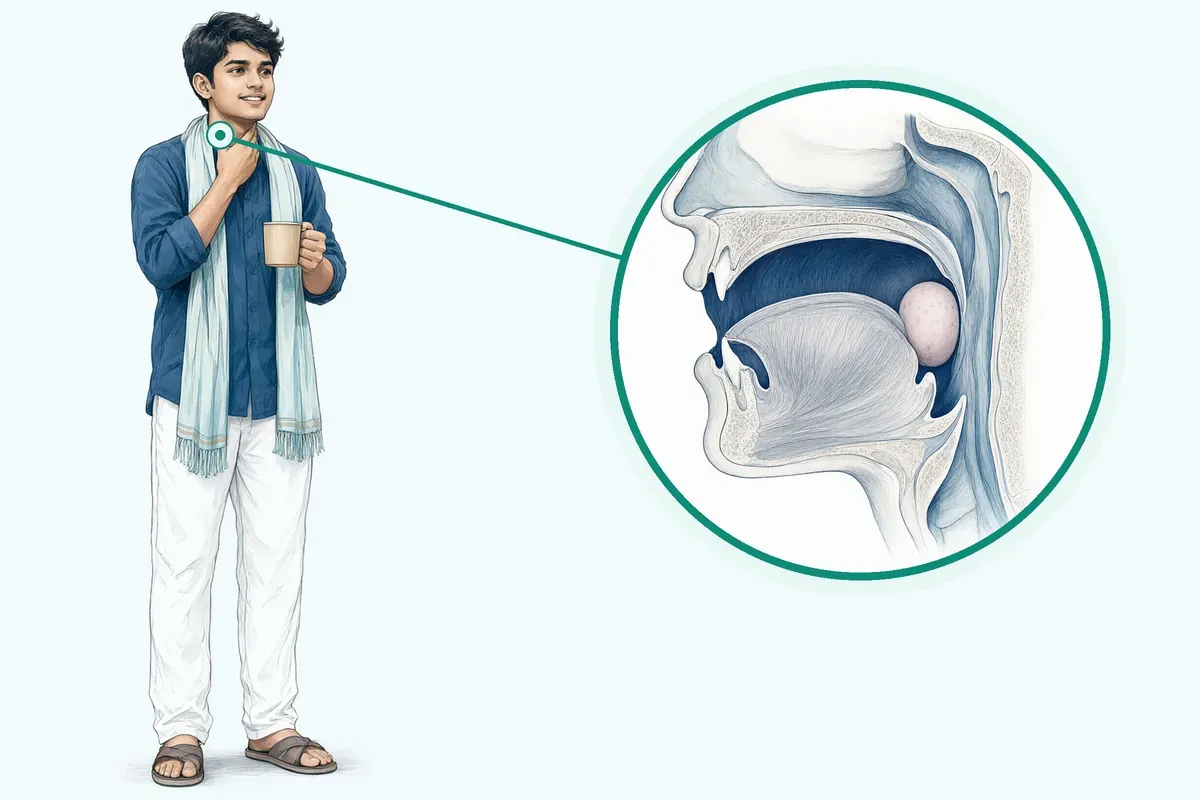
Tonsils swell and become painful when repeatedly infected with bacteria or viruses.
-
Nighttime breathing difficulty
Swollen tonsils and adenoids can partially block the airway, causing loud snoring or mouth breathing.
-
Disrupted school days
Frequent fever and throat discomfort make it hard for children to attend school regularly.
In many children, the tonsils become repeatedly infected with bacteria and viruses, which make them swell and become painful.
Why Jaipur Hospital
You may worry about your child going through surgery, missing school, and staying overnight in a hospital ward.
Your care plan
Your first steps with us
- 1 Book an OPD consultation with our ENT team.
- 2 Review your child's throat and medical history together.
- 3 Discuss surgical options if medicines do not help enough.
- 4 Follow guided home recovery with planned follow-up visits.
How the operation is done
Your surgeon removes swollen tonsils or adenoids through the mouth under general anaesthesia. The operation typically takes 45 to 60 minutes.
-
Cold Steel Dissection
Your surgeon will discuss this traditional method using a scalpel and snare with lower associated cost.
-
Coblation Tonsillectomy
Your surgeon will discuss this low-temperature radiofrequency option designed for less post-operative pain and faster tissue healing.
-
Microdebrider Assisted
Your surgeon will discuss this powered shaver option for precise tissue removal, commonly used during adenoidectomy.
-
Bipolar Diathermy
Your surgeon will discuss this widely available electrocautery technique used to seal vessels and manage tissue.
Why patients trust us
- 1991 Serving Jaipur for 35 years
- NABH Accredited hospital
- 2 ENT (Ear, Nose and Throat) consultants
- 24×7 Emergency, ICU and ambulance
- 25 Cashless schemes and insurers
What research shows about adenotonsillectomy
-
20 to 30 minutes
A tonsillectomy usually takes about 20 to 30 minutes to complete in operative studies.
-
about two weeks
On average, most people in clinical records reach full recovery in about two weeks.
-
13% to 29%
The proportion of patients who had residual OSAS ranged from 13% to 29% in low-risk populations.
If it is left untreated
Enlarged tonsils and adenoids can partially block the airway, causing children to stop breathing for brief seconds while asleep. This can also lead to sticky fluid collecting in the middle ear, which affects hearing.
Life after treatment
Careful treatment helps manage airway obstruction and frequent infections over time.
-
Restful nighttime breathing
Most children breathe more comfortably through the nose once airway obstruction clears.
-
Gradual dietary recovery
Children usually resume their normal diet after a temporary soft diet period.
-
Return to daily routines
Most children return to school after about 10 days of resting at home.
Frequently asked questions
Questions patients ask about tonsillitis treatment
What does tonsil and adenoid surgery in children involve?
In short
Tonsil and adenoid surgery in children involves removing the tonsils and adenoids through the mouth under general anaesthesia. The operation usually takes 45 to 60 minutes at Jaipur Hospital. Your child will be asleep and feel no pain during the procedure. The surgeon uses specialised instruments to remove the tissue. Most children stay in hospital for day care or one night.
In detail
The tonsils sit at the back of the mouth and the adenoids sit high in the throat behind the nose. Both can become enlarged or repeatedly infected, causing breathing problems, snoring, or frequent sore throats.
Surgery is performed through the open mouth without any external cuts. Several techniques are available, including cold steel dissection, coblation, microdebrider, and bipolar diathermy. The choice depends on the surgeon's judgement and your child's needs.
In studies, adenotonsillectomy is the primary treatment for obstructive sleep apnoea caused by enlarged tissue. The procedure aims to open the airway and reduce recurrent infections.
A common belief
Some parents think the surgery is long or needs external stitches.
What actually happens
In reality, it is done entirely through the mouth and most children go home the same day or after one night.
Your next step at Jaipur Hospital
After surgery, your child will need a soft diet for 10 to 14 days and should avoid strenuous activity. Pain relief is given regularly, especially before meals. Your child should stay home from school for about 10 days and avoid crowded places for two weeks.
A follow-up appointment will be arranged. To discuss whether this surgery is right for your child, book a consultation at Jaipur Hospital.
Which tests and scans does my child need before tonsil and adenoid surgery?
In short
Before tonsil and adenoid surgery, your child may need a blood test to check haemoglobin and clotting. A sleep study is often done if sleep apnoea is suspected. A flexible nasendoscopy may be used to view the adenoids. X-rays are rarely needed. The surgeon decides based on your child's symptoms. Jaipur Hospital has in-house laboratory and imaging facilities.
In detail
Routine blood tests include a complete blood count and coagulation profile to ensure safe anaesthesia and surgery. If your child snores, gasps, or has daytime sleepiness, a polysomnography (sleep study) confirms obstructive sleep apnoea and its severity. This helps plan post-operative monitoring.
A flexible nasendoscopy lets the surgeon see the adenoid size directly. In studies, objective testing is recommended for high-risk patients or when symptoms persist. Allergy testing is not routine. If your child has a bleeding disorder or takes certain medicines, additional tests may be needed. The anaesthetist will review all results before the operation.
A common belief
Parents often expect many scans.
What actually happens
In reality, only targeted tests are done. A sleep study is the main extra test, and only when breathing during sleep is a concern.
Your next step at Jaipur Hospital
Test results are usually available within a day. The surgeon will explain them at the pre-operative visit. You will also receive fasting instructions and a consent form. The typical cost range for surgery is ₹40,000 to ₹80,000. To arrange the necessary tests for your child, book a consultation at Jaipur Hospital.
How painful is the tonsillitis treatment procedure and the early recovery?
In short
Your child will feel no pain during the tonsillitis treatment because it is done under general anaesthesia at Jaipur Hospital. After surgery, a sore throat is expected and usually lasts about a week. Earache is also common because the throat and ears share nerves. Pain relief is given regularly to keep your child comfortable.
In detail
Evidence from recovery guidelines shows that children typically have a sore throat for about a week after adenotonsillectomy and may also complain of earache. The pain can make swallowing difficult, so your child may be reluctant to eat or drink.
Regular paracetamol or ibuprofen, given half an hour before meals, helps ease the pain and makes eating easier. For the first 24 hours, pain relief is given every four to six hours even if your child does not seem to be in pain.
After that, it is given as needed but never more than the dose on the bottle. Eating normal foods like toast and cereal actually helps the surgical area heal faster, even though soft foods feel easier at first. Drinking plenty of fluids is essential. Most children feel much better by two weeks.
A common belief
Many parents expect only soft foods like ice cream.
What actually happens
Actually, eating normal foods such as toast helps the throat heal faster. The key is regular pain relief before meals, not waiting for pain to build up.
Your next step at Jaipur Hospital
Plan for your child to stay home from school for 10 days. Give pain medicine on schedule for the first day, then as needed. Offer cool, non-acidic drinks and encourage normal eating as soon as possible. Keep the mouth clean with gentle brushing.
How long does recovery usually take after tonsillitis treatment?
In short
Recovery after tonsillitis treatment at Jaipur Hospital usually takes about two weeks for a child to feel fully back to normal. The operation itself takes 45 to 60 minutes. Most children stay in hospital for one night, though some go home the same day. A soft diet is advised for 10 to 14 days.
In detail
Evidence from recovery guidelines shows that on average most people reach full recovery in about two weeks. The first few days are the hardest, with sore throat and earache peaking around days three to five. Pain is managed with regular paracetamol or ibuprofen.
Children should not go to school or nursery for 10 days after leaving hospital. They should avoid crowded places and people with coughs and colds for two weeks to reduce infection risk. Strenuous activity is avoided for the same period.
Eating normal foods like toast and cereal helps the healing area recover faster, even though soft foods feel easier at first. Drinking plenty of fluids is essential. Recovery can be slower if complications such as bleeding or infection occur.
A common belief
Many families think soft food like jelly is most suitable for weeks.
What actually happens
Actually, eating toast and cereal helps the throat heal faster. The trick is regular pain medicine before meals so chewing does not hurt.
Your next step at Jaipur Hospital
Plan for 10 days off school and two weeks of quiet activity at home. Give pain relief on schedule, encourage fluids, and offer normal textured foods as soon as your child can manage them. Attend the follow-up appointment.
What symptoms suggest an infection, voice strain, reflux, or another cause for my child's throat problems?
In short
Throat symptoms in children can come from several causes. Recurrent tonsillitis usually brings fever, sore throat, swollen neck glands, and white patches on the tonsils. Voice strain shows as hoarseness that worsens with talking and improves with rest. Reflux may cause a chronic cough, throat clearing, a lump sensation, or bad breath without fever. Enlarged adenoids often cause mouth breathing, snoring, and a nasal voice. Your surgeon at Jaipur Hospital will sort out the cause at the consultation.
In detail
Evidence shows that the pattern of symptoms points to the diagnosis. Infections typically come in episodes with fever and acute pain. Voice strain relates to vocal overuse such as shouting or singing. Reflux symptoms are often worse after meals or when lying down.
Adenoid hypertrophy causes persistent nasal blockage and sleep-disordered breathing. A careful history and examination separate these conditions.
The Paradise criteria (7 episodes in one year, 5 per year for two years, or 3 per year for three years) help decide if surgery is needed for recurrent infection. Sleep studies may be used when breathing problems are the main concern.
A common belief
Parents often assume every sore throat is tonsillitis.
What actually happens
In reality reflux and adenoid problems mimic infection but need different treatment. A proper ENT examination with a camera tells the difference.
Your next step at Jaipur Hospital
Keep a symptom diary for two weeks before the appointment. Note fever, voice changes, cough timing, eating habits, and sleep patterns. Bring any previous throat swab reports or imaging.
The ENT surgeon will examine the throat and may use a flexible camera to see the adenoids and larynx. Blood tests or a sleep study may be ordered.
Could enlarged tonsils and adenoids affect my child's hearing, balance, breathing, speech, or swallowing?
In short
Yes. Enlarged tonsils and adenoids can affect several functions. Large adenoids block the Eustachian tube, leading to glue ear and hearing loss. They also cause chronic mouth breathing, snoring, and obstructive sleep apnoea. Enlarged tonsils can make swallowing solids difficult and change the voice to a hot potato quality. Balance is rarely affected directly, but chronic ear problems may cause unsteadiness. Your surgeon at Jaipur Hospital will assess all these areas.
In detail
Evidence shows a clear link between adenoid hypertrophy and otitis media with effusion (glue ear) because the adenoids sit at the opening of the Eustachian tube. Blockage prevents middle ear ventilation, causing fluid build-up and conductive hearing loss. This can delay speech development.
Airway obstruction from large tonsils and adenoids causes sleep-disordered breathing, which affects growth, behaviour, and learning. Swallowing difficulty occurs when tonsils physically narrow the oropharynx. Voice changes result from altered resonance. Treating the obstruction often reverses hearing, speech, and breathing problems.
A common belief
Parents often treat ear infections and speech delay separately.
What actually happens
In many children the root cause is the same: enlarged adenoids blocking the Eustachian tube and airway. Removing them can solve hearing, breathing, and speech problems together.
Your next step at Jaipur Hospital
If your child has hearing concerns, snoring, restless sleep, unclear speech, or difficulty eating solids, book an ENT assessment. The surgeon will examine the ears, perform tympanometry, and may order a sleep study or flexible nasendoscopy. Adenoidectomy with or without tonsillectomy is the primary treatment for these problems.
Why might my child's doctor recommend tonsil and adenoid surgery?
In short
A doctor may recommend tonsil and adenoid surgery if your child has recurrent tonsillitis or enlarged tissue causing breathing problems during sleep. The Paradise criteria suggest surgery when a child has seven episodes in one year, five episodes per year for two years, or three episodes per year for three years. Surgery is also advised for obstructive sleep apnoea, glue ear, or difficulty swallowing. Jaipur Hospital follows these guidelines.
In detail
Recurrent infections make the tonsils swell and become painful. Enlarged tonsils and adenoids can block the airway, leading to snoring, mouth breathing, and pauses in breathing during sleep. This condition is called obstructive sleep apnoea. It can affect growth, behaviour, and attention.
Large adenoids can also block the Eustachian tube, causing glue ear and hearing problems. In studies, adenotonsillectomy improves sleep apnoea, behaviour, and quality of life. Medical management is tried first, but if it does not help enough, surgery may be the next step. The decision balances the frequency of infections against the impact on daily life.
A common belief
Some parents believe tonsils must always be removed after a few sore throats.
What actually happens
In fact, doctors use strict criteria like the Paradise guidelines. Many children improve with time or medical treatment alone.
Your next step at Jaipur Hospital
Your ENT surgeon will review your child's history, examine the throat, and may order a sleep study if sleep apnoea is suspected. If surgery is advised, you will receive instructions on preparation and recovery. The typical cost range is ₹40,000 to ₹80,000. To discuss your child's symptoms and options, book a consultation at Jaipur Hospital.
How should my child prepare in the days before the procedure?
In short
In the days before tonsil and adenoid surgery, your child should avoid people with coughs and colds, stop any medicines the surgeon advises, and follow fasting instructions. At Jaipur Hospital, the team gives a written preparation guide at the pre-operative visit.
In detail
Your surgeon may ask you to stop certain medicines such as ibuprofen, aspirin, or herbal supplements that can increase bleeding risk, usually several days before surgery. Paracetamol is usually allowed.
Keep your child away from crowded places and anyone with infections for two weeks before the operation to reduce the chance of postponement. Ensure your child is well hydrated and eating normally.
If your child develops a fever, cough, or runny nose, contact the hospital as the surgery may need to be rescheduled. The anaesthetist will review your child's health on the day of surgery. Evidence shows optimising health before surgery reduces complications.
A common belief
Families often forget to stop ibuprofen or herbal products early enough, which can lead to cancellation.
What actually happens
Also, sending a child to a birthday party or play area just before surgery increases the risk of catching a cold and delaying the operation. Preparation is about reducing avoidable risks.
Your next step at Jaipur Hospital
Buy soft foods and pain relief (paracetamol or ibuprofen syrup) for the recovery period at home. Arrange for an attendant to stay with your child in hospital and for the first few days after discharge. Plan for 10 to 14 days off school. The hospital will confirm the admission time and fasting start time the day before.
What are the common side effects and the less common serious complications of tonsillitis treatment?
In short
Common side effects after tonsillitis treatment at Jaipur Hospital include sore throat, earache, difficulty swallowing, and feeling sleepy from the anaesthetic. Less common but serious complications include bleeding, infection, and reactions to anaesthesia. The surgical team explains all of these before you sign the consent form.
In detail
Evidence shows that bleeding is the most significant risk and is usually greatest in the first few days after surgery. Infection risk is reduced by giving antibiotics as a precaution. Anaesthetic complications are very rare with modern anaesthetics and experienced anaesthetists.
Other possible issues include temporary voice change, nasal regurgitation of fluids, or injury to the lips or teeth from the instruments used to hold the mouth open. If bleeding occurs, your child may need to stay in hospital overnight for monitoring.
In rare cases, a second operation is needed to stop the bleeding. Quinsy, an abscess beside the tonsil, is a rare complication of untreated tonsillitis rather than the surgery itself.
The team follows protocols for high-risk patients, such as those with obesity or severe sleep apnoea, who are monitored as inpatients.
A common belief
Some people think bleeding only happens straight away.
What actually happens
In fact, it can occur up to two weeks later when the scabs come off. That is why you must watch for fresh blood and know the emergency number.
Your next step at Jaipur Hospital
Watch for bright red bleeding from the mouth or nose, high fever, dehydration from not drinking, or difficulty breathing. These need urgent medical attention. Keep the follow-up appointment so the surgeon can check healing.
Which symptoms are expected after tonsillitis treatment, and which need urgent medical attention?
In short
Expected symptoms after tonsillitis treatment at Jaipur Hospital include sore throat for about a week, earache, difficulty swallowing, mild fever, bad breath, and white patches where the tonsils were removed. Urgent symptoms are bright red bleeding from the mouth or nose, high fever above 38.5°C, signs of dehydration, and difficulty breathing.
In detail
Evidence shows that a sore throat lasting about a week and earache are normal because the throat and ears share nerves. White slough at the surgical site is part of healing, not infection. Bad breath is common for the first week.
A low-grade fever may occur in the first 48 hours. However, fresh bright red bleeding, vomiting blood, or swallowing large amounts of blood needs immediate care.
High fever that does not respond to paracetamol, inability to drink for more than 12 hours, no urine output for 8 to 12 hours, or noisy breathing and pauses in breathing during sleep are all reasons to seek help straight away.
The risk of bleeding is usually greatest in the first few days but can occur up to two weeks after surgery. If you are unsure, it is always safer to call the hospital.
A common belief
White patches look like pus to many parents, but they are the normal healing scab.
What actually happens
The real danger is fresh red blood, not the white coating. Know the difference and keep the emergency number by the phone.
Your next step at Jaipur Hospital
Keep the emergency contact number handy. Give pain relief regularly for the first 24 hours, then as needed. Encourage fluids and normal eating. Watch for the urgent signs listed above, especially at night.
FAQ library
Questions and answers about tonsillitis treatment
When you contact us
Consult our ENT surgical team in Jaipur
Speak with an ENT surgeon in our OPD to understand your child's treatment options.
- A consultation with an ENT surgeon in the OPD
- Your scans and reports reviewed, with tests done in-house if you need them (laboratory, X-ray and imaging)
- Your options explained in plain words, including whether you need surgery at all
- A cost estimate before you decide
- Help with cashless treatment under RGHS, MAA Yojana, CGHS and empanelled insurers and TPAs
- Follow-up visits after your treatment
Overview
Tonsillitis Treatment: what to know
What is tonsillitis and how does it happen
- What they are
- Round fleshy masses at the back of the throat
- Adenoids
- Sit high in the throat behind the nose, not visible
- Role
- Part of the immune system
- Growth pattern
- Grow in childhood, shrink around age four
Your tonsils are round, fleshy masses in the back of your throat. They sit on both sides of your throat at the back of the mouth and are clearly visible. Adenoids are not visible because they sit high in the throat behind the nose. Both tonsils and adenoids are part of your immune system.
Tonsils and adenoids tend to grow during childhood and then shrink around the age of four. They get bigger during childhood and can shrink as you get older. By the time a child reaches adulthood, their adenoids and tonsils will have disappeared almost completely.
Tonsillitis happens when the tonsils become inflamed. In many children, the tonsils become repeatedly infected with bacteria and viruses. These infections make them swell and become painful. When adenoids and tonsils swell, they can partially block the airway.
At Jaipur Hospital, our surgical team evaluates children whose swollen tonsils or adenoids cause ongoing trouble with breathing or swallowing. Tonsillectomy is the surgical removal of your tonsils. When needed, adenoid and tonsil procedures can be performed together.
Symptoms of tonsillitis and warning signs for urgent care
- Severe breathing difficulty Do not drive yourself; call an ambulance
- Abscess (quinsy) Pus between tonsils and throat wall
Tonsillitis causes painful sore throats. Swollen tonsils can block part of the airway and make it harder to breathe during sleep. Like tonsils, adenoids can also become swollen. Swollen adenoids can make it difficult for children to breathe through their nose. As a result, your child may breathe through their mouth and snore loudly when asleep.
Large tonsils and adenoids can cause obstructive sleep apnoea, where your child stops breathing for a couple of seconds while asleep and then starts again. Swollen adenoids and tonsils are also linked to glue ear. This happens when the middle ear becomes blocked by a sticky substance which affects your child's hearing.
Symptoms of tonsillitis usually go away after 3 to 4 days, but they can last longer. However, complications can happen. One rare complication is an abscess filled with pus between the tonsils and the wall of the throat, called quinsy.
If you see severe warning signs, you must seek urgent hospital care the same day. Driving to an emergency room on your own is not recommended if there are severe breathing difficulties; someone else should drive or an ambulance should be called. In studies, complications after surgery might require keeping a patient in hospital overnight to monitor progress.
You should call your healthcare provider if complications arise after surgery. Jaipur Hospital maintains a 24×7 emergency department and a 24×7 ambulance service to assist with urgent medical needs.
Causes of tonsillitis and who is at higher risk
- Viral infection
- Common cold and flu viruses
- Bacterial infection
- Strep throat bacteria
- Childhood risk
- Tonsils grow naturally during childhood
- Obesity link
- Independent risk factor for sleep apnoea
Tonsillitis is usually caused by a viral infection, such as a common cold. It can also be due to a bacterial infection such as strep throat. Tonsillitis itself is not contagious, but most infections that cause it, such as colds and flu, are contagious.
Children are at higher risk because tonsils and adenoids grow naturally during childhood. Some children have larger than average tonsils and adenoids that partially block their airway. Obstructive sleep apnoea is associated with cardiovascular, growth, and neurobehavioral abnormalities. In medical studies, obesity is an independent risk factor for obstructive sleep apnea.
In studies, obstructive sleep apnea is associated with an increased risk of cardiovascular events. In one trial, prevalence of obstructive sleep apnoea syndrome ranged from 0% to 5.7%. In studies, a significant number of obese patients required intubation or continuous positive airway pressure postoperatively.
Having a high temperature or not feeling well enough to do normal activities are reasons to stay at home to avoid spreading infection. Staying at home and avoiding contact with other people stops infections from spreading when symptoms are present.
How tonsillitis is diagnosed in the OPD
When you visit Jaipur Hospital for an OPD consultation, an ENT doctor evaluates your throat. A consultation fee of an ENT surgeon may vary from ₹1,000 to ₹2,000 per consultation session.
A doctor can usually tell if it is tonsillitis by asking about symptoms and looking in the throat. Your doctor will check the size of the tonsils and look for redness, swelling, or pus. In studies, most diagnostic screening tests had low sensitivity and specificity.
A swab test using a cotton bud to wipe the back of the throat can see if bacteria are causing tonsillitis. This helps determine whether an antibiotic is necessary. If you or your child has symptoms related to enlarged tonsils, you should speak to a healthcare provider.
Surgeons also evaluate whether repeated infections meet specific criteria for surgery. Healthcare providers use the 7 5 3 rule, also called the Paradise criteria, to help decide whether a child needs surgery for tonsillitis. It is named after Dr. Paradise, the paediatrician who developed it.
Before any planned procedure, your healthcare provider will check to make sure you are healthy enough for surgery, which may involve getting blood tests.
Treatment options without surgery and when surgery is advised
Sometimes, medical management without surgery is all the treatment that is needed. Home care can help manage mild throat discomfort. Mixing half a teaspoon of salt in a glass of warm water creates a solution for gargling. Salt water gargles can be prepared with clean water at home, and simple fever medicines can be obtained from your local chemist.
If your child's problems are due to tonsils and adenoids becoming infected, they often do not need to have them removed. The problem will probably improve with time as your child's tonsils and adenoids shrink naturally. For mild obstructive sleep apnoea syndrome, intranasal steroids may ameliorate the condition.
Intranasal corticosteroids are an option for children with mild obstructive sleep apnoea syndrome in whom surgery is contraindicated or for mild postoperative symptoms. Follow-up is needed after intranasal steroid treatment. In studies, data were insufficient to recommend rapid maxillary expansion. Weight loss is recommended in addition to other therapy in patients who are overweight or obese.
Continuous positive airway pressure, or CPAP, is effective in the treatment of obstructive sleep apnoea syndrome. In studies, CPAP significantly reduced snoring and daytime sleepiness, and it improved health-related quality of life and mood. However, adherence is a major barrier to CPAP use. CPAP is not recommended as first-line therapy for obstructive sleep apnoea syndrome when adenotonsillectomy is an option. CPAP is recommended if adenotonsillectomy is not performed or if sleep apnoea persists postoperatively.
Surgery is advised when non-surgical options do not provide adequate relief. Surgery to remove tonsils is usually only done if severe tonsillitis keeps coming back. Healthcare providers recommend tonsillectomy for two main reasons: to treat sleep-related breathing issues or frequent infections.
If your child is having difficulties in breathing or has developed glue ear, it is probably better to have their tonsils and adenoids removed. Adenotonsillectomy is recommended as the first-line treatment of patients with adenotonsillar hypertrophy. In studies, removing tonsils and adenoids will solve these airway obstruction problems.
In medical studies, treatment of obstructive sleep apnoea syndrome resulted in improvements in behaviour and attention, and likely resulted in improvement in cognitive abilities. Obstructive sleep apnoea syndrome may improve after adenotonsillectomy even in obese children.
Parents often worry about removing lymphoid tissue. Having a tonsillectomy does not weaken your immune system. Your body can still fight off germs without tonsils. Even if you have your tonsils removed, the tissues in your throat can still become infected and sore. Your surgeon at Jaipur Hospital will examine your child and advise whether medical treatment or surgery is suitable.
Preparing for tonsillitis and adenoid surgery in Jaipur
Do
- Health check and blood tests
- Discuss regular medicines
- Follow fasting instructions
Avoid
- Stop medicines on your own
Before the operation, your healthcare provider will check your child to make sure they are healthy enough for surgery. This check may involve getting blood tests. Your surgical team will give you clear instructions to help you and your child prepare for the procedure.
Your surgeon will discuss your child's regular medicines with you. For example, you may need to stop giving certain medicines several days before surgery. Never stop or alter any medication on your own without direct advice from your doctor.
Your child may need to fast and have no food or water from the night before surgery. Following these fasting instructions carefully keeps your child safe while they are asleep under anaesthesia.
When you come to the hospital, pack comfortable loose clothing for your child. A parent or attendant can stay by the child's side before and after the procedure. Please bring all past medical files, doctor notes, and identity cards for insurance verification.
How tonsil and adenoid surgery is done at Jaipur Hospital
- Arrive at reception Admission area
- General anaesthesia Child asleep, no pain
- Surgery through mouth No cuts on face or neck
- Recovery monitoring Vital signs checked
On the day of the procedure, you will arrive at our reception and admission area. The operation will be carried out under general anaesthesia. This means your child will be deeply asleep, comfortable, and will not feel any pain during the operation. Modern anaesthetics are very safe, and your child's anaesthetist is an experienced doctor trained to manage your child's care.
Surgeons use many methods to perform tonsillectomies and remove adenoids. In medical practice, several common techniques are available:
- Cold Steel Dissection: A traditional method using a surgical scalpel and snare, offering low cost.
- Coblation Tonsillectomy: Uses low-temperature radiofrequency energy, leading to less post-operative pain and faster healing.
- Microdebrider Assisted: Uses a powered shaver for precise tissue removal, which works well for adenoidectomy.
- Bipolar Diathermy: Uses electrocautery to remove tissue and control bleeding, and is widely available.
Your surgeon will advise you on which technique suits your child. In published medical reviews, data were insufficient to recommend specific surgical techniques over others.
Both the tonsils and adenoids are removed directly through the mouth, leaving no cuts on the face or neck. Providers often perform adenoid and tonsil procedures together. The operation typically takes 45 to 60 minutes. An uncomplicated tonsillectomy alone takes about 20 to 30 minutes, while adding adenoid removal can add to the total operating time.
Your child will usually be away from the ward for about an hour. After the operation, our surgical team transfers your child to a recovery area where staff check their vital signs.
Risks and possible complications of tonsil surgery
- Infection
- Antibiotics often given as precaution
- Bleeding
- Greatest in first few days after operation
- Anaesthesia risk
- Very small risk with general anaesthesia
- High-risk patients
- Obese children may need breathing support after surgery
Complications after tonsil surgery are rare, but like any surgical procedure, risks can happen. Every operation carries some risk of infection, and surgeons often give antibiotics as a precaution. There is also a very small risk associated with general anaesthesia.
Bleeding is a recognised risk of tonsil surgery. The risk of bleeding is usually greatest in the first few days after the operation. While rare, complications that do occur are seldom serious enough to require another operation. If any issues arise in the recovery room, your provider might keep your child in the hospital overnight to monitor progress.
In studies of patients with sleep apnoea, high-risk groups such as obese patients sometimes required breathing support with intubation or continuous positive airway pressure after surgery. For this reason, clinical guidelines recommend that high-risk patients should be monitored as inpatients after surgery.
Having your child's tonsils removed does not weaken their immune system. Their body can still fight off germs effectively after the surgery is complete. Even after tonsils are removed, the remaining tissues in the throat can still occasionally become infected or sore.
Recovery and aftercare after tonsillectomy: first days and weeks
- First 24 hours Give pain relief as directed
- At least 10 days Off school or nursery
- Two weeks Avoid crowds and smoke
A tonsillectomy is typically managed as a day care procedure, or your child may stay 1 night in the hospital. Your child may feel sleepy right after the operation due to the anaesthetic. They may also feel uncomfortable, have a sore throat for about a week, or complain of an earache.
These feelings are normal and usually improve within one to two weeks. In general, recovery is more difficult for adults than for children.
During the first 24 hours at home, give your child pain relief as directed by your healthcare provider, even if your child does not seem to be in severe pain. After the first day, provide pain medicines as needed, keeping strictly within the instructions on the bottle or prescription. You can buy these medicines from our hospital chemist or a local chemist.
Drinking plenty of fluids is essential for recovery. Children often find chilled liquids easiest to swallow. Avoid acidic juices like orange juice because they can sting the raw throat. Protocol typically calls for a soft diet for 10 to 14 days, avoiding crunchy, hard, or spicy foods that can irritate the healing throat tissues.
Once your child feels ready and comfortable, they can gently try solid foods. Encourage your child to brush their teeth gently, as keeping the mouth clean helps prevent infection and promotes healing.
Your child should rest as much as possible for the first few days. Keep them away from crowded places and people with coughs or colds for two weeks to prevent infections. You should also keep your child away from cigarette smoke because smoke makes throat pain worse. Your child should take at least 10 days off from school or nursery, and avoid strenuous activity.
Call Jaipur Hospital or contact your healthcare provider if your child develops fresh bleeding from the mouth, persistent vomiting, a high fever, or if they cannot drink fluids.
Results of tonsillitis and adenoid surgery in medical studies
Medical research shows clear benefits when children undergo surgery for recurrent tonsillitis or enlarged tissues that block the airway. In clinical trials, treating obstructive sleep apnoea by removing tonsils and adenoids led to measurable improvements in breathing during sleep. Studies also observed that successful treatment of sleep obstruction resulted in improvements in children's daytime behaviour, attention, and cognitive abilities.
When surgery is performed for airway obstruction, studies show that residual sleep apnoea can still occur in some patients. In low-risk groups of children, the proportion of patients who had residual obstructive sleep apnoea ranged from 13% to 29% in published research.
Obese children may also see improvement in airway obstruction after surgery, though they remain at higher risk for residual symptoms.
Because symptoms can occasionally continue or return, clinical guidelines advise that patients should be reevaluated after surgery to see if further treatment is needed. Children who undergo partial tonsillectomy should be monitored for possible recurrence of sleep-related breathing symptoms. If airway obstruction persists after surgery, continuous positive airway pressure therapy or weight management may be recommended by your doctor.
Tonsil surgery cost and insurance options in Jaipur
At Jaipur Hospital, the typical cost for tonsil and adenoid surgery ranges between ₹40,000 and ₹80,000. This is the typical price range in India for this procedure.
The exact total cost varies depending on several factors, including whether your child needs an adenoidectomy alongside the tonsillectomy, the surgical technique selected with your surgeon, room category, and whether your child stays as a day care patient or stays for 1 night.
Jaipur Hospital is an NABH-accredited private hospital established in February 1991, located near Gopalpura Flyover on Main Tonk Road in Jaipur. We accept major government healthcare schemes, including Rajasthan Government Health Scheme (RGHS), MAA Yojana, and Central Government Health Scheme (CGHS).
We also work with a panel of private insurers and Third Party Administrators (TPAs) for cashless claims and reimbursement. You can visit our hospital OPD counter with your policy documents, government cards, or doctor referral slips to verify your coverage and ask us for a personalised estimate.