

Urology · Jaipur Hospital
Prostate Cancer Surgery in Jaipur
You have a prostate cancer report and feel uncertain. Jaipur Hospital offers a clear assessment, plain-language options, and a structured care plan.
- Serving Jaipur since 1991 (35 years)
- NABH accredited
- 24×7 emergency & ICU
- Cashless: RGHS, MAA Yojana, CGHS + 22 insurers
- Operation time
- 2 to 4 hours
- Anaesthesia
- General anaesthesia
- Recovery
- Catheter for 1 to 2 weeks, normal activity in 4 to 6 weeks
- Price
- ₹1,50,000 to ₹4,00,000typical range in India; ask us for an estimate
Uncertainty After Your Diagnosis
You are worried about surgery and what comes after
A prostate cancer diagnosis brings urgent questions. You may wonder if surgery is necessary, how it affects urination and intimacy, and how much time away from work you will need.
-
Worry About Bladder Control
Many men worry about accidental urine leaks and whether bladder control returns after surgery.
-
Concerns About Erections
Prostate surgery can affect nearby nerves, leaving men worried about intimacy and long-term erectile function.
-
Family and Work Disruption
You may worry about the recovery period, hospital stay, and managing expenses for your family.
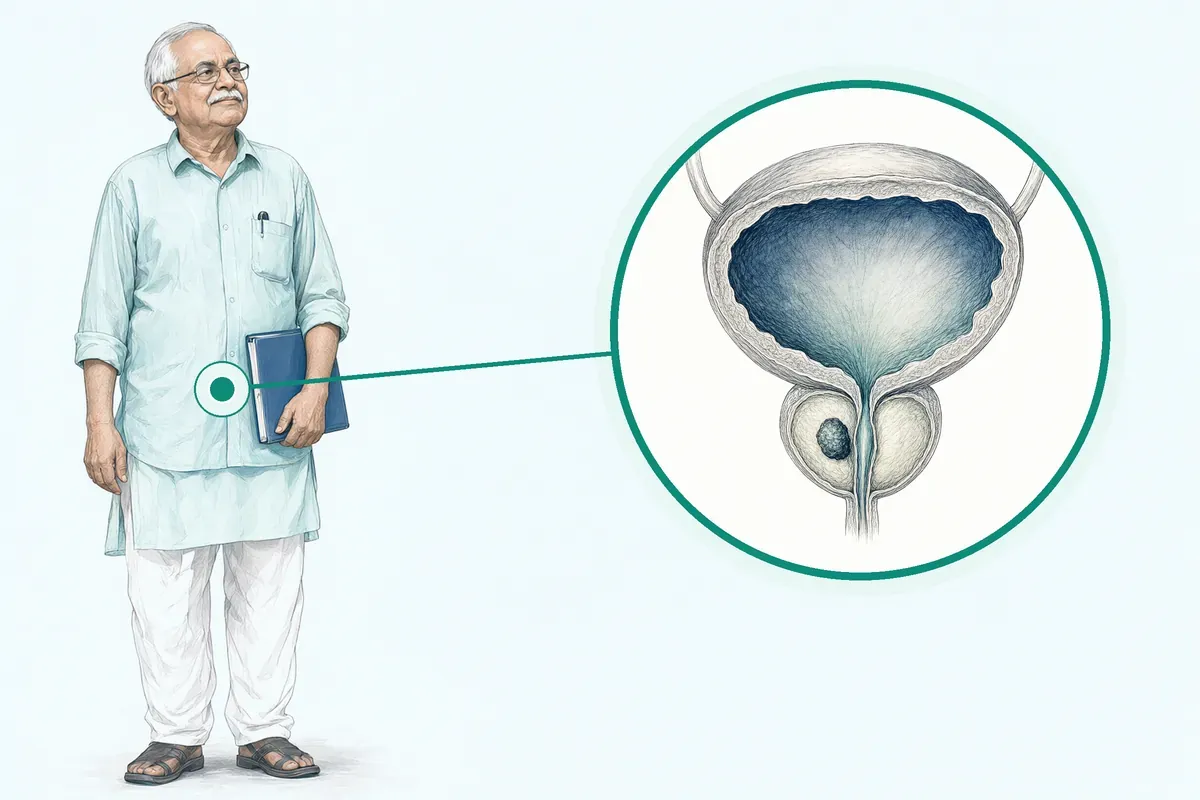
Prostate surgery affects the nerves close to the prostate that control blood flow to the penis.
Why Jaipur Hospital
You may feel worried about urine leaks, changes to your intimate life, and taking time away from work.
Your care plan
Your first steps with us
- 1 Book an OPD consultation with our urology team.
- 2 Review your PSA reports and scans with your surgeon.
- 3 Discuss surgical options and receive a transparent cost estimate.
- 4 Complete your procedure and follow a guided recovery schedule.
How the Operation Is Done
Radical prostatectomy removes the prostate gland. Your surgeon will discuss which approach suits your health and cancer stage. It typically takes 2 to 4 hours under general anaesthesia.
-
Open Retropubic Radical Prostatectomy
A traditional approach using a single lower abdominal incision to access and remove the prostate.
-
Laparoscopic Radical Prostatectomy
A minimally invasive method using small keyhole incisions and surgical ports.
-
Robot-Assisted Laparoscopic Prostatectomy
A minimally invasive procedure using robotic instruments designed for precision during nerve-sparing steps.
-
Perineal Radical Prostatectomy
An approach using an incision between the scrotum and anus, less commonly selected.
Why patients trust us
- 1991 Serving Jaipur for 35 years
- NABH Accredited hospital
- 24×7 Emergency, ICU and ambulance
- 25 Cashless schemes and insurers
What Clinical Studies Show About Prostate Surgery
-
21.4%
In a clinical trial, adverse events within 30 days after surgery occurred in 21.4% of men.
-
About 9 out of every 10
In hospital research, about 9 out of every 10 patients regained urine control over time.
-
12 months
Patients in studies often urinate as they did before surgery within 12 months, or within a few months.
If it is left untreated
Untreated prostate cancer can grow and spread beyond the prostate to lymph nodes and bones. In clinical trials, active monitoring was associated with higher rates of disease progression and distant metastases compared to surgery.
Life After Treatment
Recovery requires patience. With guided postoperative care, most men steadily resume everyday routines.
-
Returning Home
A hospital stay typically lasts 2 to 4 nights, with an attendant staying to support your initial recovery.
-
Managing the Catheter
A urinary catheter is typically in place for 1 to 2 weeks before normal urination restarts.
-
Resuming Routine Activity
Most patients return to desk work in about two weeks and resume normal physical activity within 4 to 6 weeks.
Meet the team
Our Urology specialists
Care led by Jaipur Hospital's urology consultants, backed by round-the-clock surgical, diagnostic and critical care support.
Frequently asked questions
Questions patients ask about prostate cancer surgery
What does radical prostatectomy involve?
In short
Radical prostatectomy is surgery to remove the whole prostate gland and seminal vesicles. At Jaipur Hospital, the operation takes 2 to 4 hours under general anaesthesia. Your surgeon may also remove some lymph nodes in the pelvis to check for spread. You will stay in hospital for 2 to 4 nights and have a catheter for 1 to 2 weeks.
In detail
The prostate sits deep in the pelvis, so the surgeon reaches it through one of several approaches. Open retropubic radical prostatectomy uses a lower abdominal incision. Laparoscopic and robot-assisted laparoscopic prostatectomy use small ports and a camera; the robot gives enhanced precision for nerve-sparing.
Perineal radical prostatectomy uses an incision between the scrotum and anus but is less common. In studies, long-term cancer outcomes are similar between open and minimally invasive methods. The choice depends on tumour factors, your anatomy and the surgeon's experience.
A common belief
Many people think only the open cut is used, but laparoscopic and robot-assisted methods are also options.
What actually happens
Studies show similar long-term cancer control across techniques; the difference lies in recovery speed and nerve-sparing precision.
Your next step at Jaipur Hospital
Your urologist will explain which approach suits you after reviewing your scans and biopsy. You will have pre-operative tests and an anaesthesia check. Plan for 4 to 6 weeks before returning to normal activity.
Which tests and scans do I need before radical prostatectomy?
In short
Before radical prostatectomy at Jaipur Hospital, you will need a recent PSA blood test, a prostate MRI or CT scan of the abdomen and pelvis, and often a bone scan to check for spread. Routine blood work includes complete blood count, kidney and liver function, and coagulation profile. A pre-anaesthesia check with an ECG and chest X-ray is also required.
In detail
The MRI helps the surgeon see the tumour extent and plan nerve-sparing. The CT or bone scan rules out metastases to lymph nodes or bones, which would change the treatment plan. Blood tests ensure you can tolerate general anaesthesia and surgery.
If you have heart or lung conditions, additional clearance from a physician or cardiologist may be needed. All reports should be recent, usually within four weeks of the planned operation.
A common belief
Patients sometimes assume only a PSA is needed.
What actually happens
Imaging is essential to confirm the cancer has not spread beyond the prostate. Without it, the surgeon cannot be sure surgery is the right treatment.
Your next step at Jaipur Hospital
Our urology team will give you a checklist of required investigations. Most tests can be done at our in-house laboratory and radiology department. Bring any previous biopsy slides and imaging discs to your pre-operative visit.
How painful is prostate cancer surgery and the early recovery?
In short
Pain after prostate cancer surgery varies by technique and individual response. At Jaipur Hospital, the surgical team manages pain with a planned protocol that includes regular medication during the hospital stay of two to four nights. Most patients describe the discomfort as moderate and well controlled with oral tablets once they go home.
In detail
Open retropubic radical prostatectomy uses a larger lower abdominal incision, so soreness at the wound site is more noticeable in the first week. Laparoscopic and robot-assisted approaches use several small ports, which typically cause less incision pain and allow earlier movement.
General anaesthesia is used for all techniques. The catheter remains in place for one to two weeks and may cause bladder spasms or a feeling of urgency, which the team treats with antispasmodic medication if needed.
Evidence shows adverse events within thirty days occurred in about twenty-one percent of men in large series, but severe pain requiring strong opioids beyond a few days is uncommon.
Your next step at Jaipur Hospital
You will receive a written pain plan at discharge with doses and timings for paracetamol and a stronger tablet for breakthrough pain. Keep moving gently at home; walking short distances every few hours helps bowel function and reduces stiffness.
Avoid heavy lifting for four to six weeks. If pain suddenly worsens, you develop a fever, or the wound becomes red and hot, contact the hospital immediately.
How long does recovery usually take after prostate cancer surgery?
In short
Recovery after prostate cancer surgery happens in stages. At Jaipur Hospital, the typical hospital stay is two to four nights. The catheter remains for one to two weeks. Most people return to light daily activity within a few weeks and resume normal activity in four to six weeks.
In detail
Open retropubic radical prostatectomy usually needs the longer end of the stay and recovery range because of the larger incision. Laparoscopic and robot-assisted approaches often allow discharge the next day and faster return to desk work, around two weeks.
Bladder control typically returns slowly over several weeks to months; evidence shows twelve-month continence rates after robot-assisted surgery range from eighty-four to ninety-seven percent. Erectile function recovery varies widely and can take up to three years.
Heavy lifting and strenuous exercise should be avoided for at least six weeks. Fatigue is common for the first month.
Your next step at Jaipur Hospital
Plan for one to two weeks off work if you have a desk job, longer for physical work. Keep walking daily, increasing distance gradually. Do pelvic floor exercises as taught. Attend the catheter removal appointment and all follow-ups. Report fever, heavy bleeding, wound redness, or inability to pass urine after catheter removal.
What do the type, grade, and stage mean for prostate cancer?
In short
At Jaipur Hospital, the type, grade, and stage describe the cancer in detail. The type tells which cells are involved, almost always adenocarcinoma. The grade, shown as a Gleason score or Grade Group, shows how abnormal the cells look and how fast they may grow. The stage tells the size of the tumour and whether it has spread beyond the prostate.
In detail
Doctors use the Gleason score, which adds the two most common patterns seen under the microscope, to give a Grade Group from 1 to 5. A higher group means a more aggressive cancer.
Staging uses the TNM system: T for tumour size and local spread, N for lymph node involvement, and M for distant spread. Imaging such as MRI, bone scan, or PSMA PET-CT helps confirm the stage. These details guide whether radical prostatectomy, radiotherapy, or active surveillance is appropriate.
A common belief
Many patients confuse grade with stage.
What actually happens
Grade is about cell appearance and growth speed. Stage is about how far the cancer has travelled. Both are needed to choose the right treatment.
Your next step at Jaipur Hospital
Your surgeon will explain your specific grade and stage at the consultation and discuss the treatment options that match your situation. You will receive a clear plan for the next steps, including any further imaging or biopsy that may be needed.
Which urinary symptoms need urgent assessment after prostate cancer surgery?
In short
At Jaipur Hospital, certain urinary symptoms after radical prostatectomy need urgent assessment. These include complete inability to pass urine, heavy bleeding with clots, severe pain in the lower abdomen or back, fever with chills, and sudden swelling of the legs. If the catheter becomes blocked or falls out, contact the hospital immediately.
In detail
After surgery, the catheter drains urine while the urethral anastomosis heals. Blockage by blood clots can cause bladder distension and pain. Heavy bleeding may indicate a vessel that needs attention. Fever suggests a urinary tract infection that can spread.
Leg swelling may signal a deep vein thrombosis. Stress incontinence with coughing or straining is common and usually improves with time, but sudden worsening or new symptoms should be reported. The hospital's 24×7 emergency department is equipped to evaluate these problems promptly.
A common belief
Some patients wait too long, thinking symptoms are normal.
What actually happens
Catheter blockage or heavy bleeding can become serious quickly. The 24×7 emergency department is ready to help.
Your next step at Jaipur Hospital
Keep the emergency numbers handy and do not hesitate to call if you notice any of these signs. Your surgeon will also review catheter care and warning signs before discharge.
Why might my doctor recommend radical prostatectomy?
In short
Your doctor may recommend radical prostatectomy at Jaipur Hospital when the cancer is confined to the prostate and is likely to grow or spread if left untreated. Surgery is a common treatment for localised tumours that have not reached lymph nodes or bones. The aim is to remove the cancer completely while it is still contained.
In detail
Guidelines suggest surgery for tumours with higher risk features, such as a rising PSA, a high Gleason score, or a clinical stage that indicates significant volume.
In studies, radical prostatectomy reduced the risk of metastases compared with active monitoring and lowered prostate-cancer mortality in long-term follow-up. Open surgery is often preferred when the cancer has spread locally or is high risk. Your surgeon will weigh the cancer characteristics against your age, general health, and personal preferences before advising surgery.
A common belief
Some patients believe surgery is only for advanced cases.
What actually happens
Actually, it is most effective when the cancer has not yet spread to lymph nodes or bones. Waiting too long can reduce the chance of complete removal.
Your next step at Jaipur Hospital
The decision is made after reviewing your biopsy, imaging, PSA trend, and fitness for anaesthesia. You will have time to discuss the benefits and side effects such as incontinence and erectile dysfunction.
How should I prepare in the days before radical prostatectomy?
In short
In the days before radical prostatectomy at Jaipur Hospital, follow your surgeon's instructions on medicines, diet, and bowel preparation. Stop blood-thinning drugs such as aspirin or clopidogrel only when told by your doctor. You may be asked to take a laxative or enema the evening before surgery to clear the bowel.
In detail
You should shower with an antiseptic soap on the morning of the operation. Avoid smoking and alcohol, as they impair healing. Arrange for an attendant to stay with you during the hospital stay.
Pack comfortable clothes, your regular medicines in original packets, and any test reports. If you have diabetes or hypertension, your medicines will be adjusted by the anaesthesia team during the pre-operative check.
A common belief
Some patients stop all medicines on their own, which can be dangerous.
What actually happens
Others forget to arrange an attendant. Both can delay the surgery. Follow the written checklist from your surgeon exactly.
Your next step at Jaipur Hospital
Confirm your admission time with the admissions desk. Fasting rules will be given by the anaesthetist, usually nothing by mouth for six hours before surgery. Reach the hospital with your attendant and all documents.
What are the common side effects and the less common serious complications of prostate cancer surgery?
In short
Common side effects after prostate cancer surgery at Jaipur Hospital include urinary leakage and difficulty with erections. Loss of fertility is certain because the prostate and seminal vesicles are removed. Less common serious complications can include bleeding needing transfusion, infection, injury to the rectum, blood clots and reactions to anaesthesia. Lymphoedema or swelling in the legs is rare.
In detail
Evidence from MSKCC shows about nine out of ten people regain urine control over time while five to ten out of one hundred may have mild stress leakage that persists.
Erectile function recovery varies widely; it can take weeks, months or up to three years and some men may not recover full erections. MD Anderson notes high-volume centres report fewer incontinence problems.
A European study found adverse events within thirty days in about twenty-one percent of men and mortality is very low. Your surgeon will discuss how your age, health and cancer stage affect these risks.
A common belief
Patients often think incontinence and impotence are long-term for everyone.
What actually happens
Data shows most men regain bladder control and many recover erections over time especially with nerve-sparing techniques. High-volume centres have lower complication rates.
Your next step at Jaipur Hospital
Before surgery ask about sperm banking if you want children later. After discharge watch for heavy bleeding, fever, wound redness, calf pain or inability to pass urine and contact the hospital immediately if they occur. Pelvic floor exercises started early can help bladder control. Follow-up visits are typically at two to three weeks and then at regular intervals.
Which symptoms are expected after prostate cancer surgery, and which need urgent medical attention?
In short
Expected symptoms after prostate cancer surgery include mild pain at the incision sites, bladder spasms or urgency while the catheter is in, fatigue, and some urine leakage when you move or cough. At Jaipur Hospital, the team gives you a symptom checklist at discharge so you know what is normal.
In detail
The catheter may cause a sensation of needing to pass urine or brief cramping; antispasmodic medication helps. Leaking a few drops with activity is common in the first months. Bowel movements may be irregular for a week.
Swelling or bruising around the ports or incision is normal.
Urgent signs are: bright red blood or large clots in the catheter bag or urine, fever above thirty-eight degrees, increasing wound redness, warmth, or pus, sudden calf pain or swelling, shortness of breath or chest pain, and inability to pass urine after the catheter is removed. These need immediate evaluation in the emergency department.
Your next step at Jaipur Hospital
Keep the catheter tube unkinked and the bag below bladder level. Drink two to three litres of water daily unless told otherwise. Take prescribed pain tablets on schedule for the first few days, then as needed. Do pelvic floor exercises three times daily.
If any urgent symptom appears, do not wait for the next clinic visit; go to the emergency department at Jaipur Hospital at once.
FAQ library
Questions and answers about prostate cancer surgery
When you contact us
Consult Our Urology Team in Jaipur
Contact Jaipur Hospital to discuss your prostate reports, evaluate your treatment options, and plan your care.
- A consultation with a urologist in the OPD
- Your scans and reports reviewed, with tests done in-house if you need them (laboratory, X-ray and imaging)
- Your options explained in plain words, including whether you need surgery at all
- A cost estimate before you decide
- Help with cashless treatment under RGHS, MAA Yojana, CGHS and empanelled insurers and TPAs
- Follow-up visits after your treatment
Overview
Prostate Cancer Surgery: what to know
What is localised prostate cancer and prostate cancer surgery
- Prostate gland
- Small gland below the bladder, only in men
- Cancer start
- Cells grow out of control inside the gland
- Localised cancer
- Tumour stays inside the prostate or nearby tissue
- Surgery name
- Radical prostatectomy removes the whole prostate and seminal vesicles
The prostate is a small gland found only in men, located just below the bladder. Prostate cancer begins when cells inside this gland grow out of control. When the cancer cells stay only inside the prostate gland or the tissue right next to it, doctors call it localised prostate cancer. This means the tumour has not spread outside the prostate to lymph nodes or bones.
Prostate cancer surgery is called a prostatectomy, which is the surgical removal of part or all of the prostate gland. For localised cancer, your surgeon typically performs a radical prostatectomy. A radical prostatectomy is surgery to remove all of the prostate gland along with the seminal vesicles.
In some cases, your surgeon may also remove some of the lymph nodes in your pelvis to check if cancer cells have spread.
Jaipur Hospital provides evaluation and surgical care for localised prostate cancer through our Urology department. When you visit our OPD, our surgical team evaluates the stage and grade of your cancer to determine the right care plan for you.
Symptoms of prostate cancer and urgent warning signs
- Cannot pass urine Bladder feels painfully full
- Heavy blood in urine
- Severe fever with chills
- Sudden unbearable pelvic pain
Early localised prostate cancer may not cause any clear discomfort or symptoms at first. As the tumour develops, it can cause lower urinary tract symptoms.
You may experience difficulties such as:
- Trouble passing urine
- A slow urine stream
- Needing to pass urine more often during the night
Some men may also notice problems like urine leaking by accident or trouble getting or keeping an erection. These urinary and sexual changes can affect your day-to-day comfort, and our surgical team can evaluate them in our OPD.
Certain warning signs require urgent medical attention on the same day. If you cannot pass urine at all and your bladder feels painfully full, you must seek medical care immediately. You should also seek urgent care if you notice heavy blood in your urine, severe fever with chills, or sudden and unbearable pelvic pain.
Jaipur Hospital operates a 24×7 emergency department with laboratory and imaging support to handle acute urinary blockages and related complications.
Causes of prostate cancer and who is at higher risk
- Age
- Most diagnosed men are under 75; risk rises with age
- Health measures
- BMI, comorbidity index, urinary symptoms, prostate volume
- Tumour risk level
- Intermediate-risk or high-risk guides treatment choices
Prostate cancer develops when normal glandular cells undergo genetic changes that cause them to divide abnormally. While the exact trigger for every patient is not always known, researchers have identified several important risk factors that influence the development and behaviour of prostate tumours.
Your age is an important factor. Men between 50 and 69 years of age are frequently evaluated for prostate changes, and most men diagnosed with localised cancer are under 75 years of age. The risk of developing prostate conditions increases as men grow older.
Other personal health characteristics also play a role. In clinical studies, factors such as body mass index, comorbidity index, existing lower urinary tract symptoms, and total prostate volume are important measures examined by doctors.
The risk level of the tumour itself, including whether it is categorised as intermediate-risk or high-risk, also helps guide doctors in understanding how the cancer might behave.
How prostate cancer is diagnosed: examination and tests
Diagnosing localised prostate cancer involves clinical examinations and specialised diagnostic tests. When you visit our OPD, your surgeon will discuss your symptoms, take a detailed medical history, and carry out a physical examination.
A common blood test used to screen for and evaluate prostate cancer is the prostate-specific antigen (PSA) blood test. In clinical trials, men with a PSA value greater than 10 ng per millilitre showed specific patterns of disease risk. Doctors check PSA levels alongside other findings to assess tumour activity.
Diagnostic confirmation requires a prostate biopsy, where small tissue samples are taken from the prostate and examined under a microscope. This examination identifies the histologic features of the tumour and assigns a risk grade to the cancer.
In addition, imaging scans such as pelvic MRI or ultrasound may be conducted to inspect the prostate gland, assess prostate volume, and confirm whether the cancer is clinically localised. Jaipur Hospital maintains an in-house diagnostic laboratory and imaging services to assist with these evaluations.
Treatment options without surgery and when prostate cancer surgery is advised
Not every patient with localised prostate cancer needs immediate surgery. Because localised tumours often develop slowly, patients who require surgery do not always need to have their prostatectomy right away; they can usually delay it a month or two while discussing care options.
Non-surgical options include active monitoring, observation, or watchful waiting, where doctors track the tumour closely over time without immediate intervention. In clinical trials, a large proportion of long-term survivors under watchful waiting did not require any palliative treatment. Another primary alternative to surgery is radiotherapy, which uses targeted radiation to treat cancer cells.
For example, hypofractionated radiotherapy is given over a shorter time with larger doses per treatment than standard radiotherapy and can be considered for intermediate-risk prostate cancer.
Prostate cancer surgery is typically advised when a tumour has not yet spread outside the prostate to lymph nodes or bones, but is likely to grow and spread fast. Surgery is also commonly recommended for intermediate-risk or high-risk localised tumours, or for otherwise healthy patients younger than 75 years old.
In large trials, radical prostatectomy was associated with lower incidences of disease progression and distant metastases compared to active monitoring. Surgery may also sometimes be used along with other therapies, such as postoperative radiotherapy for higher risk cases.
Your surgeon at Jaipur Hospital will discuss all care options with you to choose the approach suited to your health and cancer stage.
Preparing for prostate cancer surgery at Jaipur Hospital
Do
- Share full medical history
- Ask about sperm banking
- Complete routine tests
- Follow fasting instructions
- Bring documents
- Bring one adult attendant
Before your prostate cancer surgery, our surgical team will review your general fitness and planned procedure. You will meet your surgeon in the OPD for your pre-operative evaluation. Radical prostatectomy is typically performed on otherwise healthy patients younger than 75 years old who have localised cancer that has not spread.
Surgery is a common treatment when a tumour has not spread outside the prostate to lymph nodes or bones. It is also recommended for tumours that are likely to grow and spread fast. If you need surgery, you usually do not have to undergo it right away; in many situations, patients can delay it a month or two while planning.
During your OPD visits, share your full medical history with your surgeon. If you are concerned about loss of fertility after prostate removal, ask your doctor about sperm banking before your operation. Surgery removes the prostate and cuts the path between the testicles and the urethra, so sperm can no longer leave your body. You will not be able to father children with your sperm after surgery unless you store sperm in advance.
Before the operation day, you will complete routine laboratory blood tests, an ECG, and imaging through our in-house diagnostic laboratory and imaging services. Your anaesthesia team from our Anaesthesia and Critical Care department will assess your fitness for general anaesthesia. Follow your care team's instructions regarding fasting before the operation.
Bring your:
- Government photo identity card
- Previous scan reports
- Test results
- Insurance documents
- Regular prescription slips
One adult attendant should accompany you to stay during your hospital stay.
How prostate cancer surgery is done
Open Retropubic Radical Prostatectomy
- Open Retropubic Radical Prostatectomy
Laparoscopic Radical Prostatectomy
- Laparoscopic Radical Prostatectomy
Robot-Assisted Laparoscopic Prostatectomy
- Robot-Assisted Laparoscopic Prostatectomy
Perineal Radical Prostatectomy
- Perineal Radical Prostatectomy
Prostate cancer surgery, or radical prostatectomy, is an operation to remove all of the prostate gland and the seminal vesicles. The operation typically takes 2 to 4 hours under general anaesthesia. During the procedure, your surgeon may also remove some of the pelvic lymph nodes to check whether cancer cells have spread beyond the prostate. On the day of your operation, our team will prepare you and transfer you to our modular operation theatres.
There are several common surgical techniques for radical prostatectomy. Your surgeon will advise which approach suits you:
- Open Retropubic Radical Prostatectomy: A traditional surgical approach where the surgeon removes the prostate through one lower abdominal incision. Open surgery is common across the country and is widely available. It often is better to treat cancer that has spread locally or cancer that is high risk.
- Laparoscopic Radical Prostatectomy: A minimally invasive technique where the surgeon operates using small keyhole ports and small surgical instruments. This method offers smaller cuts, less scarring, and less pain.
- Robot-Assisted Laparoscopic Prostatectomy: A minimally invasive procedure where the surgeon makes several small cuts in the lower abdomen and uses a robotic console for enhanced precision. This method is designed to improve nerve sparing and functional outcomes.
- Perineal Radical Prostatectomy: A less common surgical approach where the incision is made in the skin between the scrotum and the anus.
In studies, patients who have open surgery or minimally invasive surgery show similar long-term cancer control. Minimally invasive methods offer smaller incisions and less scarring. Advanced robotic equipment is available only in selected centres. Your surgeon will discuss your condition and help choose the approach that fits your specific tumour risk and health needs.
Risks and possible complications of prostate cancer surgery
- 21.4% 30-day adverse events
- one death 30-day mortality
Like many major operations, prostate cancer surgery carries general risks such as reactions to general anaesthesia, blood clots, or bleeding. In studies, complications are far less likely to occur when the procedure is conducted by an experienced surgeon who performs high volumes of prostatectomies.
In one study of patients undergoing surgery, adverse events within 30 days after the operation occurred in 21.4% of men. In that study group, one death occurred within 30 days after surgery.
Specific side effects can occur after radical prostatectomy. The operation affects the delicate nerves close to the prostate that control blood flow to the penis. Because of this nerve disturbance, erectile dysfunction, also known as ED or impotence, is a known side effect. This means having difficulty getting or keeping an erection.
In studies, the risk of erectile dysfunction increases with older age. Nerve-sparing surgical techniques can lower the chances of experiencing erectile dysfunction. In addition, prostate removal surgery results in infertility, meaning you cannot have biological children with your sperm without prior planning.
Urinary incontinence, which is accidental leakage of urine, is another side effect. Many men experience stress incontinence, which is a small leak of urine caused by pressure on your bladder when you cough, sneeze, laugh, or exercise.
In published studies of robot-assisted surgery, urinary incontinence rates at 12 months ranged from 4% to 31% when defined as wearing no pad, with an average of 16%. When defined as using no pad or a single safety pad, leakage occurred in 8% to 11% of men, with an average of 9%.
Factors such as older age, body mass index, pre-existing urinary symptoms, and prostate size affect the chance of urine leakage after surgery.
A rare complication is lymphoedema, which is fluid swelling in the legs that can happen if pelvic lymph nodes are removed. When lymphoedema does occur, it can be managed with physical therapy. When surgery is performed after previous radiation therapy, known as a salvage prostatectomy, there is a higher risk of side effects. These can include blocked urine flow or rare injury to nearby organs like the rectum.
Recovery and aftercare: the first days and weeks
- Hospital stay Typically 2 to 4 nights; 1 to 2 days for minimally invasive
- Catheter removal Usually 1 to 2 weeks after surgery
- Desk work Resume in about 2 weeks
- Normal daily activity Return in 4 to 6 weeks
- Full recovery Most men feel fully recovered within 6 to 12 weeks
- Bladder control Often returns within a few months; many like before by 12 months
Following surgery, you will be monitored in our recovery area or Intensive Care Unit before moving to your room. Your hospital stay is typically 2 to 4 nights. Many patients who undergo minimally invasive surgery can walk early and may be able to go home after 1 to 2 days.
You will have a urinary catheter tube in place to drain your bladder while the internal surgical area heals. The catheter typically stays in place for 1 to 2 weeks.
Your attendant will help you with basic needs during your stay. Our nursing team and doctors will show you how to keep the catheter tube clean and manage your drainage bag at home. Take all prescribed medicines from the chemist as directed. You can resume desk work in about 2 weeks.
Patients typically return to normal daily activity in 4 to 6 weeks. Most men feel fully recovered within 6 to 12 weeks after their operation.
Bladder control improves gradually. While some men experience mild stress incontinence that takes time to clear, normal urination often returns within a few months, and many men urinate like they did before surgery within 12 months. Erections take longer to recover because the nearby nerves need time to heal.
Getting hard enough for intercourse may take weeks, months, or up to 3 years after surgery, and medicines may not work in the first few weeks.
Call our 24x7 emergency department or visit the hospital right away if you develop high fever, sudden inability to pass urine, urine leaking around the catheter, swelling in your legs, chest pain, breathlessness, or heavy bleeding from your wound.
Results: how well prostate cancer surgery works
Radical prostatectomy is intended to remove the entire cancer when it is confined to the prostate or nearby tissue. In a long-term clinical trial comparing surgery to observation over 23.2 years of follow-up, 200 of 347 men in the surgery group died, compared with 247 of 348 men in the watchful-waiting group.
Prostate cancer caused 63 deaths in the surgery group and 99 deaths in the watchful-waiting group, showing a relative risk of 0.56. In that trial, the number of patients needed to treat with surgery to prevent one death from prostate cancer was 8. The reduction in prostate cancer deaths was largest in men younger than 65 years of age.
In another clinical study with 10 years of median follow-up, 171 of 364 men assigned to radical prostatectomy died from any cause, compared with 183 of 367 men assigned to observation. In that study, 21 men (5.8%) in the surgery group died from prostate cancer or treatment, compared with 31 men (8.4%) in the observation group.
Surgery was associated with reduced overall mortality in men who had a PSA value higher than 10 ng per millilitre. Surgery and radiotherapy were also both linked with lower rates of cancer progression and spread to bones or other organs compared with active monitoring.
For some men with localised high-risk features or cancer cells near the surgical edges, additional radiotherapy may be recommended after surgery. In a clinical trial with 10.6 years of median follow-up, giving radiotherapy after surgery significantly improved local cancer control and delayed PSA recurrence compared with waiting.
In cases where cancer returns after earlier radiation treatment, a salvage radical prostatectomy can control the disease for 10 years or more.
Cost of prostate cancer surgery and insurance in Jaipur
The typical price for prostate cancer surgery ranges from ₹1,50,000 to ₹4,00,000 in India. Please ask us for an estimate based on your specific condition and care plan. In Indian hospitals, open prostatectomy commonly costs between ₹1,60,000 and ₹2,00,000. Laparoscopic prostatectomy typically costs between ₹2,30,000 and ₹3,00,000. Robotic prostatectomy typically costs between ₹3,70,000 and ₹5,00,000.
The total cost varies based on several factors. These include the surgical technique chosen by your surgeon, your overall health condition, the number of nights spent in the hospital, and your choice of room category. Most health insurance companies cover hospital stay and surgical charges for prostate surgery.
However, policy terms like room rent limits can affect coverage for private or deluxe rooms. In addition, some policies have specific conditions or exclusions for robotic procedures.
Jaipur Hospital is a NABH-accredited hospital located on Main Tonk Road in Jaipur. We accept government healthcare schemes including RGHS, MAA Yojana, and CGHS. We also work with a panel of private insurance companies and third-party administrators (TPAs) for cashless claims.
Our billing and insurance staff in the hospital will assist you and your attendant with claim pre-authorisation and paperwork before admission.