

ENT (Ear, Nose and Throat) · Jaipur Hospital
Nose and Sinus Care in Jaipur
When blocked sinuses cause facial pain and breathing troubles, Jaipur Hospital provides clinical evaluation and a clear treatment plan.
- Serving Jaipur since 1991 (35 years)
- NABH accredited
- 24×7 emergency & ICU
- Cashless: RGHS, MAA Yojana, CGHS + 22 insurers
- Consultation length
- 15 to 30 minutes
- Anaesthesia
- Not needed
- Recovery
- Immediate
- Price
- ₹800 to ₹4,000typical range in India; ask us for an estimate
Struggling to breathe easily
Constant blockage, facial pressure, and restless nights
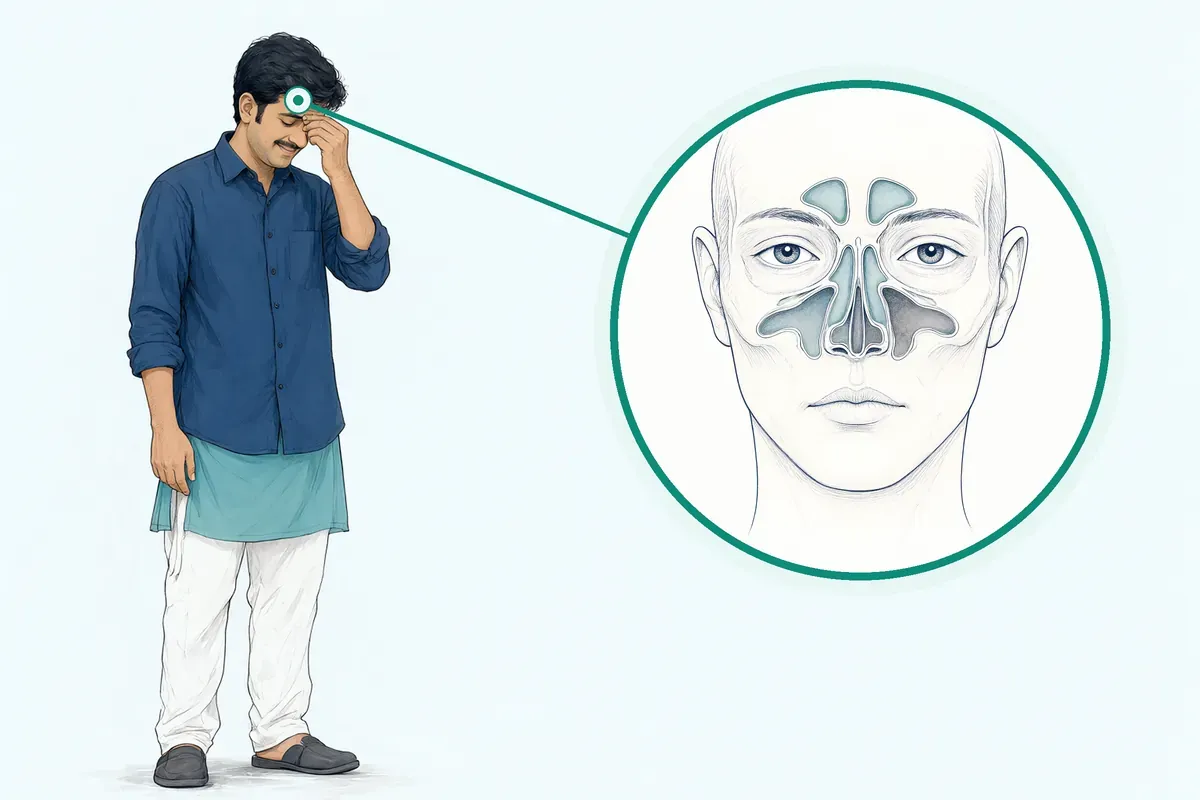
Nasal blockage can make normal breathing difficult, disturb your sleep, and cause persistent headaches or heaviness around your eyes and forehead.
-
Blocked nasal passages
Swelling or tissue growths inside the nose create an obstruction that can feel painful and make breathing hard.
-
Loss of smell
Ongoing sinus inflammation and polyps can reduce your sense of smell, making meals and daily scents hard to detect.
-
Persistent nasal discharge
Frequent runny nose or post-nasal drip leads to throat irritation and constant clearing of your throat.
-
Facial pain and headaches
Sinus congestion creates heaviness and pressure across the cheeks, forehead, and bridge of the nose.
Allergic rhinitis is caused by immunoglobulin E-mediated reactions to inhaled allergens.
Why Jaipur Hospital
You may worry about the discomfort of nasal procedures, unexpected hospital costs, or taking days off from work.
Your care plan
Your first steps with us
- 1 Consult our ENT team in the hospital OPD.
- 2 Complete recommended scans and allergy tests in-house.
- 3 Discuss your medical management or surgical options.
- 4 Begin your personalised care plan and attend follow-ups.
Options your surgeon will discuss
Your surgeon evaluates your nasal cavity and reviews medical therapy, allergy testing, or endoscopic procedures based on your symptoms.
-
Diagnostic Nasal Endoscopy
Provides a high-definition view of nasal passages and sinus openings to check for swelling, discharge, or polyps.
-
Allergy Skin Prick Test
Identifies specific airborne allergens causing nasal symptoms when medical therapy does not provide enough relief.
-
CT Paranasal Sinuses
Detailed imaging of the sinuses used for planning chronic sinusitis management and assessing structural blockages.
-
Intranasal Steroid Spray
First-line medical therapy used to reduce mucosal inflammation in nasal passages and sinus tissue.
Why patients trust us
- 1991 Serving Jaipur for 35 years
- NABH Accredited hospital
- 2 ENT (Ear, Nose and Throat) consultants
- 24×7 Emergency, ICU and ambulance
- 25 Cashless schemes and insurers
Clinical findings in sinus care
-
10% to 40%
Proportion of the general population affected by allergic rhinitis in clinical studies.
-
3 out of every 100
Frequency of heavy bleeding, the most common complication during functional endoscopic sinus surgeries.
-
1 to 2 weeks
Timeframe in which most patients resume their normal routine after functional endoscopic sinus surgery.
If it is left untreated
Untreated sinus disease can lead to persistent airway blockage, sleep disturbances, and reduced productivity at work. In severe cases, uncontrolled infection can spread beyond the sinus cavities to nearby structures like the eyes or brain.
Life with managed sinus symptoms
Targeted care typically helps reduce nasal congestion and restores steady nasal airflow.
-
Easier breathing
Most people notice improved airflow through their nostrils during daily activities and rest.
-
Reduced facial heaviness
Clearing sinus blockage usually eases uncomfortable pressure around the eyes and forehead.
-
Better sleep
Unblocked nasal passages typically make it easier to sleep through the night without waking up congested.
Frequently asked questions
Questions patients ask about nose and sinus care
Which problems are assessed under nose and sinus care?
In short
Jaipur Hospital evaluates a range of nasal and sinus conditions including chronic sinusitis, nasal blockage, allergic rhinitis, and nasal polyps. The service also covers related issues such as loss of smell, facial pain from sinus pressure, and recurrent infections. Our surgical team uses diagnostic nasal endoscopy and allergy testing to identify the exact cause of your symptoms.
In detail
The assessment follows established clinical pathways. Chronic rhinosinusitis with nasal polyps affects an estimated 0.5 to 4.5 percent of the general population and often occurs alongside asthma. Allergic rhinitis affects 10 to 40 percent of people and is caused by IgE-mediated reactions to inhaled allergens.
Our team checks for these conditions using nasal endoscopy for a high-definition view of the nasal passages and sinus openings, allergy skin prick tests to identify specific airborne allergens, and CT scans of the paranasal sinuses when detailed imaging is needed for chronic sinusitis planning.
A common belief
Many people think a blocked nose is just a cold.
What actually happens
In reality, chronic sinusitis and polyps often need a proper endoscopic view and allergy testing to find the real cause.
Your next step at Jaipur Hospital
If you have ongoing nasal congestion, facial pressure, reduced smell, or frequent sinus infections, you can book a consultation at Jaipur Hospital. The visit takes 15 to 30 minutes and is done as an outpatient. No anaesthesia is needed and recovery is immediate.
The typical price range for consultation and basic evaluation is ₹800 to ₹4,000. Please call us to schedule your appointment.
How will the doctor decide which tests I need?
In short
The surgeon at Jaipur Hospital decides on tests based on your symptom pattern, examination findings, and response to previous treatment. If allergic rhinitis is suspected and symptoms are uncontrolled despite medicines or the diagnosis is uncertain, allergy skin prick testing or blood tests for specific IgE may be ordered. For chronic sinusitis, a CT scan of the paranasal sinuses provides detailed imaging for planning.
In detail
Guidelines recommend specific IgE testing, either skin prick or blood, for patients with a clinical diagnosis of allergic rhinitis who do not respond to empiric treatment, when the diagnosis is uncertain, or when knowledge of the specific allergen is needed to target therapy.
Routine sinonasal imaging is not recommended for patients presenting with symptoms consistent with allergic rhinitis alone. However, CT paranasal sinuses is indicated for chronic sinusitis planning, especially when surgery is being considered.
Diagnostic nasal endoscopy gives a high-definition view of the nasal passages and sinus openings and is often performed during the consultation itself.
A common belief
Patients often expect a CT scan for every blocked nose.
What actually happens
Guidelines advise against routine imaging for simple allergic rhinitis. Tests are chosen to match the suspected condition, not as a standard bundle.
Your next step at Jaipur Hospital
The surgeon will explain why each test is suggested and what it will show. Most tests are done on-site at our in-house diagnostic laboratory and imaging centre. Allergy skin prick testing and nasal endoscopy can often be done the same day. CT scans may be scheduled for a convenient time. There is no hospital stay.
How soon should I expect improvement after the chosen treatment for sinus or nasal problems?
In short
At Jaipur Hospital, the timeline for improvement depends on the treatment you receive. With intranasal steroid sprays, you may notice some relief within a few days, but full effect often takes two to four weeks of daily use. After functional endoscopic sinus surgery (FESS), most people return to work or school in about one week, though complete healing can take a few months.
In detail
Medical therapy with intranasal corticosteroids is first-line for inflammation and usually shows benefit within days to weeks. For allergic rhinitis, combination pharmacologic therapy may be offered if monotherapy is inadequate.
After FESS, evidence indicates most patients go back to normal routine within two weeks, but full mucosal healing and symptom resolution may take several months. Studies report that smell disturbance and nasal obstruction remain significantly improved even at 12-year follow-up.
However, recurrence of polyps can occur, especially in patients with asthma or allergic sensitisation. Prolonged postoperative use of topical corticosteroid sprays appears to improve long-term outcomes.
A common belief
Patients often expect instant relief from surgery, but the mucosa needs time to heal.
What actually happens
Also, sprays must be used daily as directed; stopping early reduces benefit.
Your next step at Jaipur Hospital
Your surgeon will give you a personalised recovery plan. For medical treatment, a follow-up is usually scheduled at four to six weeks. After surgery, you will have a visit a few weeks later to clear dried mucus and check healing.
Is the blockage caused by allergy, sinus disease, polyps, or a bent septum?
In short
At Jaipur Hospital, the cause of nasal blockage is identified through a detailed history, nasal endoscopy, and sometimes a CT scan. Allergic rhinitis, chronic sinusitis, nasal polyps, and a deviated septum can all cause obstruction, and they often occur together. The surgeon will explain which factor is dominant in your case after the OPD assessment.
In detail
Evidence shows that allergic rhinitis is caused by IgE-mediated reactions to inhaled allergens and affects 10% to 40% of the population. Chronic rhinosinusitis with nasal polyps (CRSwNP) affects an estimated 0.5% to 4.5% of people and often coexists with asthma.
A deviated septum can contribute to obstruction and may be addressed during surgery if needed. Nasal endoscopy gives a high-definition view of the nasal passages, polyps, and sinus openings. CT paranasal sinuses provides detailed imaging for chronic sinusitis planning.
Skin prick testing identifies specific airborne allergens when allergy is suspected. The clinical diagnosis of allergic rhinitis is based on history and examination findings such as congestion, runny nose, itchy nose, or sneezing.
A common belief
Many people assume their blockage is just a deviated septum or just allergy.
What actually happens
In reality, these conditions often overlap, and treating only one may not relieve the symptom fully.
Your next step at Jaipur Hospital
Your surgeon will perform a nasal endoscopy during the consultation. If allergy is suspected, a skin prick test may be offered. A CT scan is ordered when chronic sinusitis or surgical planning is needed.
How can I decide whether to seek advice about functional endoscopic sinus surgery?
In short
You should consider seeking advice about functional endoscopic sinus surgery at Jaipur Hospital if you have chronic sinusitis or nasal polyps that do not improve with medical treatment. The decision depends on symptom severity, impact on daily life, and response to medications such as intranasal steroid sprays or antibiotics.
In detail
Evidence shows that functional endoscopic sinus surgery (FESS) is the standard procedure for serious sinus conditions when conservative treatment fails. It restores drainage and airflow in the sinuses using a nasal endoscope through the nostrils without external incisions.
Studies report that most people notice major symptom improvements, including better breathing and quality of life.
However, recurrence rates for nasal polyps range from 4 to 60 percent with a median of 20 percent over two years, and revision surgery rates vary between 4 and 27 percent. Comorbidities such as asthma or aspirin-exacerbated respiratory disease are associated with higher recurrence. The surgical team will assess your CT scan, endoscopic findings, and medical history before recommending surgery.
A common belief
Many people wait too long hoping medicines will work.
What actually happens
Evidence shows FESS improves breathing and quality of life for most patients, but polyps can come back, especially if you have asthma. Surgery also makes postoperative sprays work better.
Your next step at Jaipur Hospital
If you have persistent nasal blockage, facial pain, or loss of smell despite using intranasal steroids and nasal rinses for several weeks, book a consultation at Jaipur Hospital. The outpatient visit takes 15 to 30 minutes and includes diagnostic nasal endoscopy. Your surgeon will review imaging and discuss whether FESS is appropriate for you.
Could the problem affect hearing, balance, breathing, speech, or swallowing?
In short
Yes, nose and sinus problems can affect breathing, speech, and swallowing, and may indirectly influence hearing and balance. At Jaipur Hospital, the ENT team evaluates how nasal obstruction, sinusitis, or polyps impact these functions. Nasal blockage forces mouth breathing, alters voice resonance, and can affect Eustachian tube function leading to ear fullness or hearing changes.
In detail
Chronic nasal obstruction from a deviated septum, turbinate hypertrophy, or polyps reduces nasal airflow, causing mouth breathing, dry throat, and altered speech quality (hyponasal voice). Blocked sinus drainage can lead to post-nasal drip, triggering cough and throat irritation that affects swallowing comfort.
The Eustachian tube opens into the nasopharynx; inflammation or mechanical blockage from adenoid hypertrophy or sinus disease can cause Eustachian tube dysfunction, leading to ear fullness, muffled hearing, or occasional imbalance.
Evidence shows that allergic rhinitis and chronic rhinosinusitis are associated with sleep-disordered breathing, otitis media, and conjunctivitis. Treating the nasal condition often improves these related symptoms. The ENT assessment includes nasal endoscopy, tympanometry, and hearing tests if ear symptoms are present.
A common belief
People often treat ear or throat symptoms separately.
What actually happens
But the nose, sinuses, ears, and throat are connected. A deviated septum or polyps can be the root cause of ear pressure, muffled hearing, or a constant need to clear the throat. Fixing the nasal problem often resolves the related symptoms.
Your next step at Jaipur Hospital
If you notice persistent nasal blockage, voice change, ear fullness, hearing difficulty, or throat discomfort with post-nasal drip, book a consultation at Jaipur Hospital. The visit takes 15 to 30 minutes and includes nasal endoscopy. Audiometry and tympanometry are available in-house if needed.
Which symptoms should prompt me to see a specialist?
In short
You should see a specialist at Jaipur Hospital if you have nasal congestion, runny nose, itchy nose, or sneezing that persists despite basic treatment. Other reasons include facial pain or pressure, reduced or lost sense of smell, thick nasal discharge, and frequent sinus infections. These symptoms may indicate allergic rhinitis, chronic sinusitis, or nasal polyps that need proper evaluation.
In detail
Clinical guidelines recommend a specialist assessment when patients present with a history and physical examination consistent with an allergic cause and one or more of the cardinal symptoms: nasal congestion, runny nose, itchy nose, or sneezing.
Patients with chronic rhinosinusitis and nasal polyps generally have a high symptom burden and poor health-related quality of life. Smell disturbance and nasal obstruction are the most predominant symptoms, reported as bothersome in over 90 percent and 89 percent of patients respectively.
Rhinorrhoea and headache are also common. If you have uncontrolled rhinitis despite medications or long-lasting symptoms, allergy testing with skin tests or serum-specific IgE antibodies is indicated.
A common belief
People often treat these as simple allergies or colds.
What actually happens
But when symptoms last beyond a few weeks or keep returning, they may point to chronic sinusitis or polyps that need a proper endoscopic check and allergy testing.
Your next step at Jaipur Hospital
Do not wait if symptoms affect your sleep, work, or daily activities. A consultation at Jaipur Hospital lasts 15 to 30 minutes as an outpatient. No anaesthesia is required and recovery is immediate. The typical cost range is ₹800 to ₹4,000.
Call our OPD to book a time that suits you and bring any previous medical records or imaging you may have.
How will the results change my care plan?
In short
Test results at Jaipur Hospital directly shape your treatment. If allergy testing identifies specific triggers, the surgeon may advise allergen avoidance, environmental controls, or immunotherapy. If nasal endoscopy or CT shows chronic sinusitis with polyps, intranasal steroid spray is the first-line medical therapy. When medical treatment fails to control symptoms, surgical options such as functional endoscopic sinus surgery are considered.
In detail
Evidence shows that appropriate treatment of allergic rhinitis can improve quality of life and work productivity. For allergic rhinitis, clinicians may offer intranasal antihistamines, combination pharmacologic therapy, or refer for immunotherapy (sublingual or subcutaneous) when pharmacologic therapy is inadequate.
For chronic rhinosinusitis with nasal polyps, initial treatment involves nasal rinses and intranasal steroids, with systemic corticosteroids reserved for exacerbations. If this appropriate medical treatment is insufficient, endoscopic sinus surgery is a suitable alternative.
Surgery removes the disease burden and also increases the efficacy of postoperative medical treatment. Prolonged postoperative topical corticosteroid sprays appear to improve outcomes after surgery.
A common belief
Some patients think a positive allergy test means lifelong medicine only.
What actually happens
In fact, identifying triggers allows targeted immunotherapy. Others fear surgery is immediate. Guidelines reserve surgery for when medical treatment fails, and surgery itself makes later sprays work better.
Your next step at Jaipur Hospital
After your tests, the surgeon will discuss the findings and outline a step-by-step plan. This may start with medicines and lifestyle changes, with a review after a few weeks. If surgery is advised, the surgeon will explain the procedure, typical recovery, and follow-up schedule. All care is provided at Jaipur Hospital.
What should I do if symptoms persist or worsen after treatment for sinus or nasal problems?
In short
At Jaipur Hospital, if your symptoms do not improve or they get worse after starting treatment, you should contact your surgeon without waiting for the next scheduled visit. Persistent or worsening nasal blockage, facial pain, fever, or change in vision may need urgent assessment. The OPD team can arrange an earlier appointment for nasal endoscopy and review of your medication plan.
In detail
Evidence shows that chronic rhinosinusitis with nasal polyps has a high recurrence rate even after surgery. If symptoms return, it may indicate polyp regrowth or ongoing inflammation that needs medical adjustment.
Allergic rhinitis that does not respond to empiric treatment warrants specific allergy testing to identify triggers and guide targeted therapy. Comorbidities such as asthma or aspirin-exacerbated respiratory disease can make control harder and may require specialist input.
In studies, allergic sensitisation and tissue IL-5 levels were predictors for revision surgery. Early review allows the surgeon to modify sprays, add rinses, consider a short course of oral steroids, or plan revision surgery if needed.
A common belief
Some patients stop using sprays when they feel better, which can lead to flare-ups.
What actually happens
Others delay seeking help, hoping symptoms will settle on their own. Early intervention usually prevents complications.
Your next step at Jaipur Hospital
Do not stop your prescribed sprays or rinses unless your surgeon advises it. Keep a symptom diary and note any new signs like persistent bleeding, severe headache, or eye swelling. Call the hospital to request an earlier OPD slot.
Will I need nasal endoscopy or a CT scan for my sinus or nasal problem?
In short
At Jaipur Hospital, nasal endoscopy is a routine part of the OPD consultation for most nasal and sinus complaints. It gives a clear view of the nasal passages, sinus openings, and any polyps. A CT scan of the paranasal sinuses is not needed for everyone; it is usually ordered when chronic sinusitis is suspected, when surgery is being planned, or when the diagnosis is uncertain after endoscopy.
In detail
Evidence indicates that diagnostic nasal endoscopy provides a high-definition view of the nasal cavity and is essential for assessing polyps, inflammation, and anatomy. Guidelines recommend against routine sinonasal imaging in patients with symptoms consistent with allergic rhinitis alone.
However, CT paranasal sinuses is the standard imaging for chronic rhinosinusitis, especially when medical treatment has failed and surgery is considered. It shows the extent of mucosal disease, bony anatomy, and helps the surgeon plan safe and complete surgery. Allergy skin prick testing is offered when specific allergen identification is needed to guide immunotherapy or avoidance measures.
A common belief
Patients often expect a CT scan at the first visit, but guidelines advise against routine scanning for simple allergy symptoms.
What actually happens
Endoscopy gives immediate information without radiation.
Your next step at Jaipur Hospital
During your consultation, the surgeon will perform nasal endoscopy. If a CT scan is indicated, it can be done at the in-house radiology department. The typical price range for the consultation and basic investigations is ₹800 to ₹4,000.
FAQ library
Questions and answers about nose and sinus care
When you contact us
Book your sinus evaluation in Jaipur
Reach out to our team to plan your consultation and discuss your treatment choices.
- A consultation with an ENT surgeon in the OPD
- Your scans and reports reviewed, with tests done in-house if you need them (laboratory, X-ray and imaging)
- Your options explained in plain words, including whether you need surgery at all
- A cost estimate before you decide
- Help with cashless treatment under RGHS, MAA Yojana, CGHS and empanelled insurers and TPAs
- Follow-up visits after your treatment
Overview
Nose and Sinus Care: what to know
What is nose and sinus care and how sinus conditions develop
Your nose and sinuses are lined with soft tissue that produces fluid to keep your airways moist and clear. When this tissue swells from irritation or allergy, the natural drainage pathways can become narrow or shut completely. Fluid gets trapped inside the cavities, creating pressure and swelling in your face.
Allergic rhinitis happens when your immune system reacts to inhaled particles such as dust or pollen. This swelling can make your nose feel completely blocked. In some people, the irritation continues for months, leading to chronic rhinosinusitis. Over time, persistent swelling can form soft, non-cancerous growths called nasal polyps inside the nasal passages.
These polyps can create a physical blockage that makes breathing through your nose hard and uncomfortable. In studies, chronic rhinosinusitis with nasal polyps is estimated to affect between 0.5% and 4.5% of the general population. At Jaipur Hospital, our surgical team evaluates your nasal passages to understand what is causing your obstruction and help restore normal airflow.
Evaluation for nose and sinus care typically happens in an outpatient OPD consultation. The visit usually takes 15 to 30 minutes, requires no anaesthesia, and allows immediate recovery.
Symptoms of sinus problems and warning signs needing urgent attention
- Swelling around eyes
- High fever with severe headache
- Sudden vision changes
Sinus conditions cause a clear pattern of physical discomfort.
Common symptoms include:
- A stuffy nose
- Facial pain or headache
- A runny nose
- An itchy nose
- Frequent sneezing
You may also notice thick discharge dripping down the back of your throat or trouble breathing comfortably through your nostrils.
Many people experience a reduced or lost sense of smell along with heavy nasal congestion. In one long-term study of patients with nasal polyps, smell disturbances and nasal blockage were reported as moderate to severe by 91.9% and 89.2% of patients before treatment. In the same group, runny nose and headache troubled 51.3% and 40.5% of patients. Patients dealing with nasal polyps generally carry a heavy symptom burden that affects everyday comfort.
Certain signs mean an infection might be spreading beyond the nasal lining and require immediate emergency medical care the same day:
- Swelling, redness, or pain spreading around your eyes
- High fever combined with a severe, worsening headache
- Clear fluid steadily dripping from one side of your nose after head trauma or strain, which may indicate a brain fluid leak
- Sudden changes in your vision, such as double vision or reduced sight
Jaipur Hospital maintains a 24×7 emergency department to assess acute complications and severe infections without delay.
Causes of sinus conditions and who faces higher risk
- Allergic rhinitis
- Affects 10% to 40% of people
- Previous sinus surgery
- Linked to stubborn inflammation
Nose and sinus problems usually begin when the lining of your nasal passage reacts to environmental triggers or ongoing inflammation. Inhaled allergens like dust mites, animal dander, and pollen trigger allergic rhinitis, which affects between 10% and 40% of the general population. Occupational irritants and genetic factors also make some people more prone to chronic airway swelling.
Your overall health plays a major role in your risk profile. Adults with nasal polyps often have asthma at the same time. Both conditions share similar inflammatory mechanisms, involving immune markers like immunoglobulin E and tissue eosinophils. People with allergic rhinitis also frequently experience eye symptoms like conjunctivitis or asthma flare-ups.
Certain health factors increase the risk of severe or recurring sinus trouble:
- Having adult-onset asthma or respiratory reactions aggravated by pain medicines like aspirin
- Documented allergic sensitivities, which studies link to higher rates of sinus disease recurrence
- Higher levels of specific immune proteins in nasal tissue, such as interleukin-5, which researchers found in patients requiring repeat procedures
- A history of previous sinus surgeries or stubborn chronic inflammation
Understanding these underlying factors helps your surgeon identify why your swelling persists and plan appropriate long-term care.
How sinus conditions are diagnosed: examinations and tests
Diagnosing a sinus condition starts with a clinical history and a physical examination of your nose, throat, and ears. Your doctor checks for nasal congestion, swelling, and drainage. If you have allergic symptoms, your doctor will also evaluate whether you have related conditions such as asthma or skin allergies.
When standard medicines do not bring relief, or when the underlying trigger is unclear, specialised diagnostic tools provide exact answers. Techniques used during evaluation include:
- Diagnostic Nasal Endoscopy: A thin endoscope is placed gently into your nostrils to give your surgeon a high-definition view of your nasal passages, mucus membranes, and sinus openings without any cuts.
- Allergy Skin Prick Test: Small amounts of airborne allergens are tested on your skin to confirm specific substances causing your immune reaction.
- CT Paranasal Sinuses: Detailed imaging that shows bone anatomy, blocked sinus cavities, and tissue thickening to guide treatment planning.
Your surgeon will advise which test suits your situation. In patients with uncomplicated allergic rhinitis, medical guidelines specifically recommend against ordering routine sinus scans.
A diagnostic consultation for nose and sinus care typically ranges between ₹800 and ₹4,000 in India. The actual cost varies depending on whether basic endoscopy or specific imaging tests are needed during your visit.
Treatment options without surgery, and when surgery is advised
Most nose and sinus issues are managed first with medical therapy. Intranasal steroid sprays serve as first-line medical therapy to soothe swollen nasal linings. Your doctor may also recommend nasal saline rinses, intranasal antihistamines, or short courses of tablets to relieve congestion. For allergic conditions, managing home dust or receiving targeted allergy immunotherapy can build long-term tolerance. Medicines are usually bought at a local chemist.
When symptoms do not improve after adequate medicine, surgical intervention is considered. Surgery is advised if nasal polyps physically block your airway, if chronic sinusitis fails to clear, or if sinus infections threaten nearby structures like the eyes.
Functional endoscopic sinus surgery uses tiny instruments passed through your nostrils to remove obstructive bone or polyps and widen sinus drainage, leaving no external cuts or scars.
In studies of patients undergoing sinus surgery, 40% remained entirely free of nasal polyps 12 years later. Breathing and smell remained significantly improved over baseline 12 years after surgery in those evaluated. Surgery removes physical blockages and helps topical sprays reach deep into sinus tissues more effectively.
Medical management typically costs around ₹8,000 for three to six months of medicines and follow-ups in India, while sinus surgery typically ranges between ₹45,000 and ₹70,000. The final cost depends on the severity of your disease, procedure complexity, and your overall health.
Your first visit and tests for nose and sinus care
At Jaipur Hospital your first visit for nose and sinus care usually takes 15 to 30 minutes in the OPD. Your doctor will ask about your symptoms, how long you have had them, and any medicines you have already tried.
Bring any old prescriptions, imaging reports, or allergy test results with you.:
- Old prescriptions
- Imaging reports
- Allergy test results
The doctor will examine your nose with a light and may perform a diagnostic nasal endoscopy to get a high-definition view of your nasal passages and sinus openings. If allergic rhinitis is suspected, an allergy skin prick test can identify specific airborne allergens. For chronic or complex sinusitis, a CT scan of the paranasal sinuses may be advised to plan further care.
How nose and sinus treatment works
- First-line medical therapy Intranasal steroid spray to reduce inflammation
- Add-on medicines if needed Intranasal antihistamine or combination spray
- Allergen avoidance and controls Air filtration or dust-mite covers
- Allergen immunotherapy Sublingual or subcutaneous options
- Surgery if medicines fail Functional endoscopic sinus surgery through nostrils
Treatment depends on your diagnosis. For allergic rhinitis, first-line medical therapy is usually an intranasal steroid spray to reduce inflammation. If symptoms persist, your doctor may add an intranasal antihistamine or a combination spray. Avoiding known allergens and using environmental controls such as air filtration or dust-mite covers may also be advised.
For patients who do not respond to medicines, allergen immunotherapy (sublingual or subcutaneous) can be offered or arranged. Some patients ask about acupuncture as a non-pharmacologic option. If nasal polyps or chronic sinusitis do not improve with medical treatment, your doctor may refer you to our surgical team for functional endoscopic sinus surgery (FESS).
FESS is the standard procedure for serious sinus conditions and is done through the nostrils with no external cuts. The surgeon uses a nasal endoscope and tiny instruments to open blocked sinuses and remove polyps or diseased tissue. In severe or recurrent cases, extended approaches such as reboot surgery with mucosal grafting (mucoplasty) have been studied and may be discussed.
For eligible patients with severe chronic rhinosinusitis with nasal polyps, biologic medicines such as dupilumab or omalizumab may be considered.
Risks and possible complications of nose and sinus care
- 3 out of every 100 surgeries Heavy bleeding during FESS
- 4% to 60% (median 20%) Polyp recurrence over two years
- 79% Recurrence over 12 years
- 37% Revision surgery at 12 years
Medical treatments such as intranasal steroid sprays are generally well tolerated. Some people notice nasal dryness, irritation, or occasional nosebleeds. Oral corticosteroids, when used for short courses, can cause temporary side effects such as increased appetite, mood changes, or raised blood sugar. Biologic medicines carry a risk of injection-site reactions and, rarely, allergic reactions.
For FESS, studies show the most common complication is heavy bleeding, which happens in about 3 out of every 100 surgeries. Other risks include damage to nearby structures such as the eye or the skull base, which can lead to cerebrospinal fluid leak or vision changes.
Polyp recurrence after surgery is a known limitation; recurrence rates in studies range from 4% to 60% over two years, with a median of about 20%. Over a 12-year period, about 79% of patients with chronic rhinosinusitis with nasal polyps had recurrence, and about 37% needed revision surgery.
Comorbidities such as asthma, aspirin-exacerbated respiratory disease, and allergic sensitisation are associated with higher recurrence rates. Your surgeon will discuss the risks that apply to your case.
Recovery and aftercare for nose and sinus care
- Same day or next day Go home after recovery room stay
- About a week Return to work or school
- Within two weeks Resume normal routine
- A few months Full recovery
After a clinic visit for medical treatment, you can return to your usual activities immediately. If you start an intranasal spray, your doctor will show you the correct technique and may ask you to come back in a few weeks to check response.
After FESS, you will spend some time in the recovery room before going home the same day or the next day. It is normal to have slight bleeding, stuffiness, and discomfort for a few days. Your surgeon may place packing in the nose to absorb blood or discharge; not all cases need this.
You will have a follow-up visit a few weeks after surgery to clean dried mucus or blood and to check healing. Most people go back to work or school in about a week and resume their normal routine within two weeks. Full recovery can take a few months. Prolonged use of topical corticosteroid sprays after surgery appears to improve outcomes in chronic rhinosinusitis with nasal polyps.
Contact the hospital if you have:
- Heavy bleeding that does not stop
- Clear watery fluid leaking from the nose
- Worsening vision
- Severe headache
- Fever
Results of nose and sinus treatment
- 40% Free of polyps at 12 years
- 84% Surgery-free at 6 years
- 63% Surgery-free at 12 years
In studies, most people who have FESS notice major symptom improvements. Surgery restores drainage and airflow in the sinuses, which helps you breathe better and improves overall quality of life. It can ease symptoms such as nasal congestion and facial pain from blocked sinuses. Depending on the condition, FESS may resolve some or even all symptoms.
Sinus surgery in patients with nasal polyps can result in a prolonged reduction of nasal symptoms and improvement in quality of life. Surgery removes the disease burden and also increases the efficacy of postoperative medical treatment. In one long-term study over 12 years, smell disturbance and nasal obstruction remained significantly improved compared to baseline.
At 12 years, 40% of patients had no nasal polyps. The overall surgery-free rate was about 84% at 6 years and 63% at 12 years. For allergic rhinitis, appropriate treatment can improve quality of life and work or school productivity. Biologic therapies such as dupilumab and omalizumab have shown significant reductions in nasal polyp scores and congestion in clinical trials. Recurrence of polyps remains a constraint, and ongoing medical therapy is usually needed after surgery.
Cost and insurance for nose and sinus care in Jaipur
- ₹800 to ₹4,000 Consultation
- ₹1,500 to ₹2,000 Diagnostic nasal endoscopy
- ₹1,500 to ₹4,000 CT imaging of sinuses
- ₹65,000 average FESS surgery
At Jaipur Hospital a consultation for nose and sinus care typically costs between ₹800 and ₹4,000. The exact amount depends on the tests you need, such as nasal endoscopy, allergy skin prick testing, or CT imaging. Diagnostic nasal endoscopy in India usually costs between ₹1,500 and ₹2,000. CT imaging of the sinuses typically costs between ₹1,500 and ₹4,000.
Allergy skin prick testing and swab or culture tests add to the bill. If surgery is needed, functional endoscopic sinus surgery (FESS) in India has an average cost of around ₹65,000. Balloon sinuplasty averages about ₹85,000. Combined FESS with septoplasty averages about ₹90,000. Revision sinus surgery for recurrent cases averages about ₹1,10,000.
Medical management with medicines and follow-ups for 3 to 6 months averages about ₹8,000. The final cost depends on the severity of your condition, the choice of hospital, and the surgeon’s experience. Complications during the procedure can increase the cost.
Jaipur Hospital accepts:
- RGHS
- MAA Yojana
- CGHS
- A panel of private insurers and TPAs
Coverage for sinus surgery often applies when imaging shows conditions such as antrochoanal polyp, chronic rhinosinusitis with nasal polyps, or persistent disease after maximal medical treatment. Check with your insurer or the hospital’s insurance desk for details on your policy.