
Risks & safety · Gallbladder Stone Surgery
Gallstone blocking bile duct: emergency signs and what to do
A gallstone that moves into the common bile duct can block the flow of bile and cause serious complications. Yellow eyes, dark urine, pale stools, severe belly pain with fever, or signs of pancreatitis mean you need hospital care right away. Go to the nearest emergency department or call 108 for an ambulance.
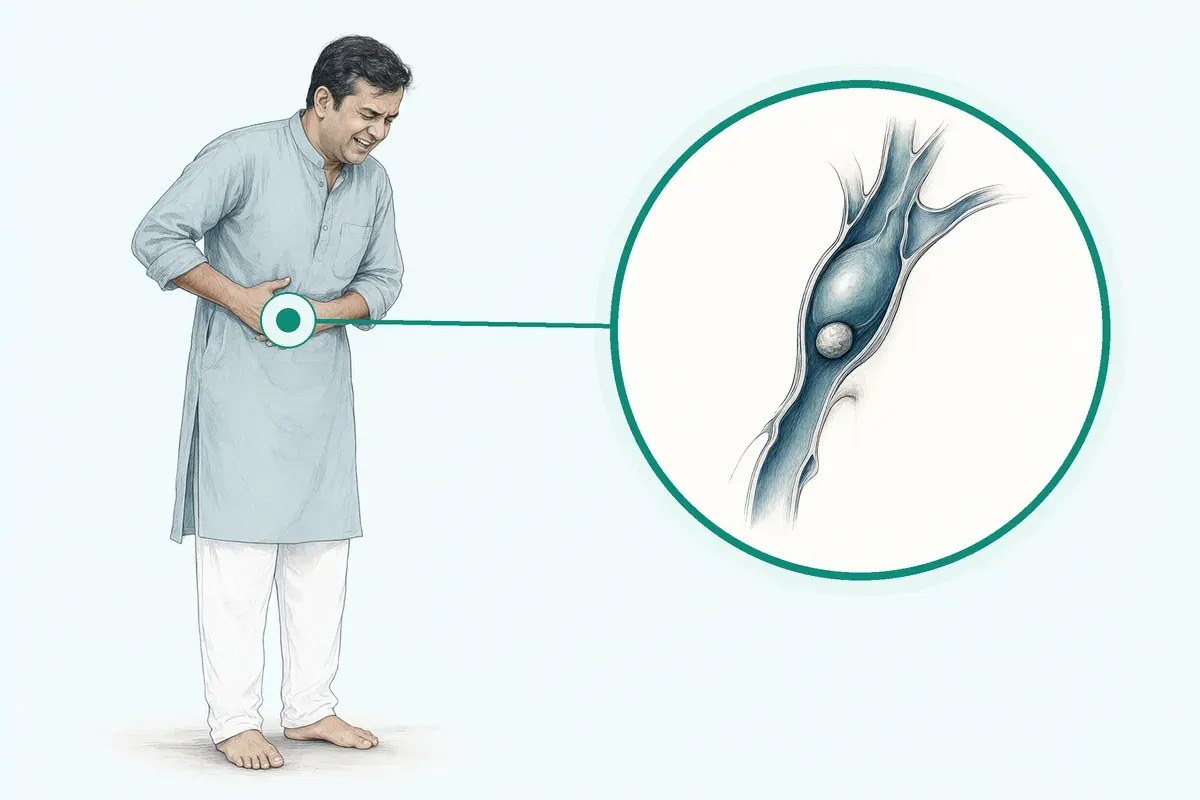
- About a third Acute pancreatitis cases caused by gallstones
- Up to 8 in 10 People with gallstones who never have symptoms
Signs you need emergency care right now
- Yellow eyes or skin (jaundice)
- Dark yellow, orange or brown urine
- Pale, clay-coloured or white stools
- Fever or chills with that pain
A gallstone that moves into the common bile duct can block the flow of bile and cause a medical emergency.
You need to go to the nearest emergency department or call 108 for an ambulance if you notice any one of the following:
- Yellow colour in the whites of your eyes or on your skin (jaundice)
- Urine that turns dark yellow, orange or brown
- Stools that become pale, clay-coloured or white
- Severe pain in the upper right or middle of your abdomen that lasts more than 30 minutes
- Fever or chills along with that pain
- Nausea and vomiting that will not stop
These symptoms mean the bile duct is likely blocked and bile is building up in your liver and bloodstream. The blockage can also trap digestive enzymes in the pancreas, causing pancreatitis, or allow bacteria to grow in the bile ducts, causing a serious infection called cholangitis. Both conditions can become life‑threatening within hours if they are not treated in hospital.
Do not wait for a scheduled surgeon appointment if you have any of these signs. The emergency department can run blood tests and imaging straight away, relieve the blockage if needed, and start antibiotics or other urgent treatment.
The blockage can also trap digestive enzymes in the pancreas, causing pancreatitis, or allow bacteria to grow in the bile ducts, causing a serious infection called cholangitis.
What yellow eyes and skin (jaundice) mean with gallstones
- Bile duct blockage
- Stone blocks the common bile duct
- Bilirubin backs up
- Bile pigment enters the bloodstream
- Liver under pressure
- High risk of infection or pancreatitis
- Needs hospital treatment
- Stone removal and bile drainage required
Jaundice happens when a gallstone blocks the common bile duct and bile cannot reach the intestine. The bile pigment bilirubin then backs up into your bloodstream and turns the whites of your eyes and your skin yellow.
This yellow colour is a clear signal that the blockage is not just in the gallbladder but in the main duct that drains the liver. It means the liver is under pressure and the risk of infection or pancreatitis is high. Jaundice from a bile duct stone almost always needs hospital treatment to remove the stone and drain the bile.
If you notice yellow eyes or skin after a gallstone attack, go to the emergency department the same day. Blood tests will show a raised bilirubin level and liver enzymes, confirming the blockage.
Dark urine and pale or clay-coloured stools
- Bilirubin in urine
- Kidneys filter out excess bilirubin
- No bile in gut
- Stools lose brown colour
- Strong sign of obstruction
- Blockage is complete or near‑complete
- Needs urgent decompression
- Hospital treatment required
When the bile duct is blocked, bilirubin that should go into the gut spills into your blood and is filtered out by your kidneys. This turns your urine dark yellow, orange or brown, often described as the colour of tea or cola.
At the same time, without bile reaching the intestine, your stools lose their normal brown colour and become pale, clay‑coloured or white. These two changes together are a strong sign that the common bile duct is obstructed.
If you see dark urine and pale stools along with gallstone pain, do not wait. These changes mean the blockage is complete or near‑complete and needs urgent decompression in hospital.
Severe belly pain with fever and chills
- Typical pain pattern
- Steady, severe upper abdominal pain
- Fever suggests infection
- Trapped bile has become infected
- Cholangitis or cholecystitis
- Infection of bile ducts or gallbladder
- Go to emergency at once
- Antibiotics, fluids and drainage needed
A stone stuck in the bile duct or the gallbladder neck typically causes steady, severe pain in the upper right or middle abdomen that lasts 30 minutes to several hours.
If fever or chills appear with that pain, it suggests the trapped bile has become infected. This condition, called cholangitis when the bile ducts are infected, or cholecystitis when the gallbladder is infected, can worsen rapidly and lead to sepsis.
Pain that does not settle, especially with fever, nausea or vomiting, means you should go to the emergency department at once. The care team will give antibiotics, fluids and pain relief, and plan a procedure to clear the duct.}]}</think>{
How a gallstone can cause pancreatitis
- Stone blocks pancreatic duct
- At the junction of bile and pancreatic ducts
- Acute pancreatitis
- Sudden, painful inflammation
- Typical symptoms
- Nausea and vomiting that do not settle
- Tests and treatment
- Raised amylase and lipase; ERCP may be needed
A gallstone that moves down the common bile duct can get stuck at the lower end where the bile duct and the pancreatic duct join. This blocks the flow of pancreatic juices, causing the enzymes to back up into the pancreas and start digesting the gland itself. The result is acute pancreatitis, a sudden and painful inflammation that can become severe very quickly.
It usually comes with nausea and vomiting that do not settle. If you have known gallstones and develop this kind of pain, especially with fever or a rapid heartbeat, treat it as an emergency.
Doctors confirm pancreatitis with blood tests that show raised pancreatic enzymes (amylase and lipase) along with liver tests that may also be abnormal. An ultrasound or other imaging can show whether a stone is still blocking the duct.
If gallstones are the cause, your doctor will usually advise removing the gallbladder once the pancreatitis settles, and may clear the bile duct first with a procedure called ERCP.
What is cholangitis and why is it life-threatening
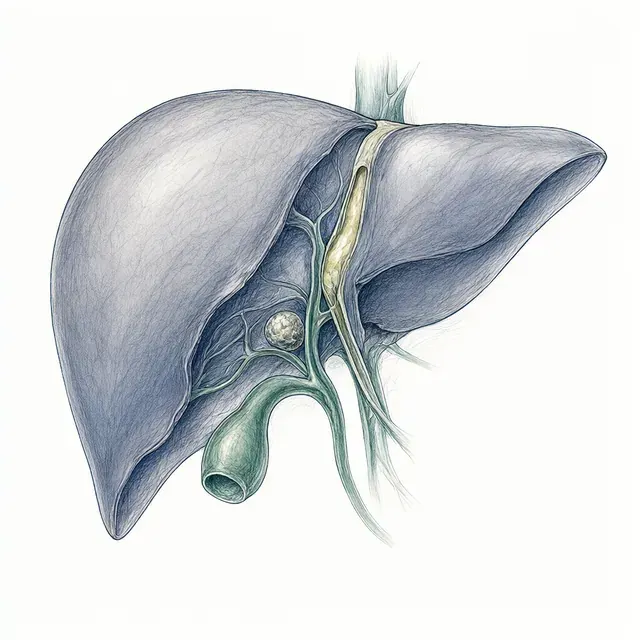 CholangitisInfection of bile ducts caused by a stone blocking the duct
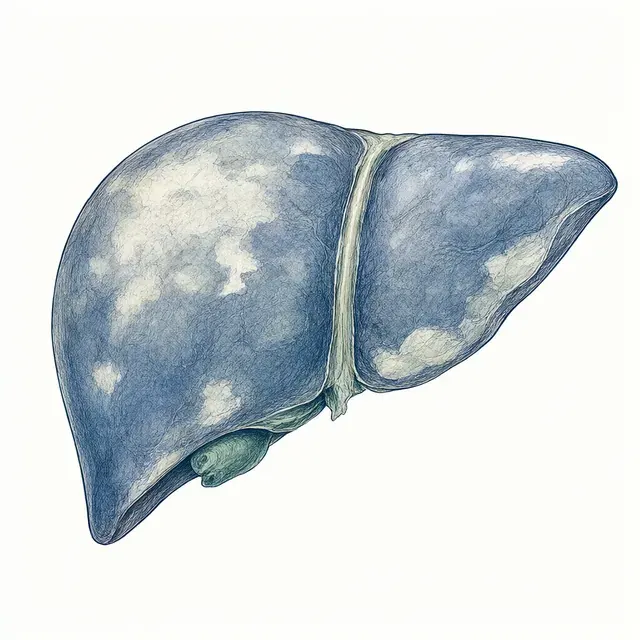 Liver damageCan damage liver quickly may lead to organ failure
- Infection of bile ducts
- Caused by a stone blocking the duct
- Classic warning signs
- Fever with chills, upper right pain, jaundice
- Can damage liver quickly
- May lead to organ failure
- Needs drainage, not just antibiotics
- ERCP usually required
Cholangitis is an infection of the bile ducts that happens when a stone blocks the duct and bile becomes infected. The classic warning signs are fever with chills, pain in the upper right abdomen, and yellow eyes or skin (jaundice).
Because the bile ducts drain the liver, a blockage with infection can damage the liver quickly and lead to organ failure if not treated in hospital. Antibiotics alone are not enough; the blocked duct must be drained, usually with an ERCP procedure, to let the infected bile flow out. This is why cholangitis is treated as a medical emergency.
If you have gallstones and develop a fever with abdominal pain and any yellowing of the eyes or skin, go to the nearest emergency department at once. Do not wait for a routine appointment.
Should you go to the emergency department or wait for a surgeon appointment
Do
- Go to emergency department Severe pain lasting more than a few hours
- Go to emergency department Fever or chills with abdominal pain
- Go to emergency department Yellow eyes or skin
- Go to emergency department Dark urine with pale or clay‑coloured stools
- Go to emergency department Vomiting that prevents keeping fluids down
- Go to emergency department Sudden confusion or drowsiness
Go to the emergency department straight away if you have any one of the following:
- Severe abdominal pain that lasts more than a few hours
- Fever or chills with abdominal pain
- Yellow eyes or skin
- Dark urine with pale or clay-coloured stools
- Vomiting that prevents you from keeping fluids down
- Sudden confusion or drowsiness
These symptoms mean a stone is likely blocking the bile duct or pancreatic duct and needs hospital care tonight.
You can wait for a scheduled surgeon appointment only if you have mild, brief pain that goes away completely, no fever, no yellowing, normal urine and stool colour, and you can eat and drink normally. Even then, tell your doctor about the episode so they can plan the right tests and timing for surgery.
If you are unsure, it is safer to go to the emergency department. The team there can run blood tests and imaging quickly and, if needed, arrange drainage of the bile duct or admission for surgery.
What to tell the doctor and what tests to expect
When you see a doctor, describe the pain: where it is, when it started, how long it lasts, and whether it spreads to the back or right shoulder. Mention any fever, chills, nausea, vomiting, changes in urine or stool colour, and any yellowing of the eyes or skin. Tell them if you have had gallstones before or previous similar attacks.
Common tests include blood tests for:
- Bilirubin
- Liver enzymes
- Complete blood count
- Pancreatic enzymes (amylase and lipase)
An abdominal ultrasound is usually the first scan to look for stones and duct widening. If the ultrasound is unclear or a stone in the common bile duct is suspected, you may have an MRCP (a special MRI of the bile ducts) or an ERCP, which can also remove the stone.
Your doctor will explain which tests you need and why. Ask any questions you have about the plan before you leave.