Plastic Surgery · Jaipur Hospital
Haemangioma Treatment in Jaipur
Worried about a birthmark? Get a clear assessment and a simple plan from our plastic surgery team.
- Serving Jaipur since 1991 (35 years)
- NABH accredited
- 24×7 emergency & ICU
- Cashless: RGHS, MAA Yojana, CGHS + 32 insurers
- Procedure time
- 30 to 90 minutes
- Anaesthesia
- Local or General anaesthesia
- Recovery
- Bruising resolves in 1 to 2 weeks, gradual shrinkage
- Price
- ₹20,000 to ₹80,000typical range in India; ask us for an estimate
When a birthmark causes worry
A mark that grows, bleeds or threatens function
Infantile haemangiomas appear in the first weeks and grow fast. Most shrink on their own, but some ulcerate, bleed, press on the eye or airway, or leave loose skin. Vascular malformations like port-wine stains do not shrink and may darken over time.
-
Rapid growth in early months
The lesion expands quickly during the proliferative phase, pressing on nearby structures.
-
Ulceration and bleeding
Open sores can form, causing pain, infection risk and bleeding that is hard to stop.
-
Vision or breathing risk
Lesions near the eye or airway can affect sight or breathing if they grow unchecked.
-
Port-wine stains persist
Unlike haemangiomas, these malformations do not involute and may thicken with age.
Infantile haemangiomas are the most common benign tumours of infancy and follow a growth then involution pattern.
Why Jaipur Hospital
You worry the mark will harm your child's sight or breathing, or that an ulcer will bleed and hurt, and you need a straight answer fast.
Your care plan
Your first steps with us
- 1 Call or visit OPD for a surgeon consultation
- 2 Review scans and do in-house tests if needed
- 3 Agree a plan: medicine, sclerotherapy or surgery
- 4 Attend follow-up visits until the lesion stabilises
How the operation is done
Procedures take 30 to 90 minutes under local or general anaesthesia as daycare. Bruising resolves in 1 to 2 weeks with gradual shrinkage.
-
Propranolol Medicine
First-line oral beta-blocker for problem infantile haemangiomas; dose adjusted by weight and given with feeds.
-
Sclerotherapy
Sclerosant injection for venous malformations; number of sessions varies by lesion size and response.
-
Surgical Excision
For well-circumscribed or residual lesions after involution; performed by specially trained surgeons.
-
Sirolimus Topical or Oral
Medical therapy for complicated or treatment-resistant cases; requires monitoring for infection risk.
Why patients trust us
- 1991 Serving Jaipur for 35 years
- NABH Accredited hospital
- 1 Plastic Surgery consultants
- 24×7 Emergency, ICU and ambulance
- 35 Cashless schemes and insurers
What research shows about this treatment
-
2 to 12 months
Typical duration of oral propranolol therapy in published studies.
-
1 to 2 weeks
Bruising typically resolves within this period after procedures.
-
low blood sugar
Propranolol can cause hypoglycaemia; doses are given with feeds to reduce this risk.
If it is left untreated
Without treatment, ulcerated lesions can bleed repeatedly and become infected. Lesions near the eye may cause long-term vision loss from astigmatism or optic nerve pressure. Airway lesions can obstruct breathing. Port-wine stains thicken and darken over time, and may signal syndromes affecting the brain or eyes.
Life after treatment
Most families see the mark shrink, colour fade and symptoms ease, with routine follow-up to watch for regrowth.
-
Colour fades, lump softens
Many infantile haemangiomas turn purple and soften within days to weeks of starting medicine.
-
Ulcers heal faster
Pain often drops in days and the wound re-epithelialises quicker with treatment.
-
Fewer surgeries needed
Early medical therapy reduces the chance of needing excision or laser later.
-
Routine check-ups continue
Your surgeon reviews growth at intervals until the lesion is stable or fully involuted.
Meet the team
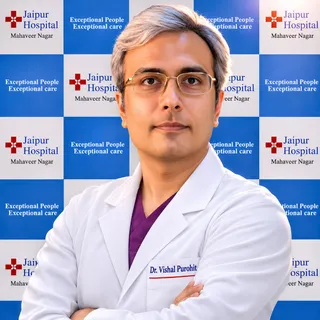
Your plastic surgery doctors
Explore our plastic surgery hospital in Jaipur: every treatment, the doctors and what to expect at your visit.
Frequently asked questions
Questions patients ask about haemangioma treatment
What is haemangioma and vascular malformation treatment?
In short
Haemangioma and vascular malformation treatment at Jaipur Hospital includes medicines, sclerotherapy and surgery for abnormal blood vessel growths. Infantile haemangiomas are common benign tumours that appear in the first weeks of life, grow for several months and then shrink slowly on their own. Vascular malformations such as port-wine stains are present at birth and do not shrink without treatment. The hospital offers propranolol medicine, sclerotherapy injections and surgical excision depending on the type, size and location of the lesion.
In detail
Treatment is chosen after the doctor confirms whether the lesion is a haemangioma or a vascular malformation. Propranolol is the first-line medicine for problem infantile haemangiomas and is given as a liquid during the growth phase, usually until the child is about one year old.
It helps stop the lesion from growing and speeds up shrinking. Sclerotherapy uses a sclerosant injection to shrink venous malformations. Surgical excision is reserved for well-defined lesions or residual tissue after medical therapy.
Sirolimus, topical or oral, is used for complicated cases that do not respond to first-line options. The procedure takes 30 to 90 minutes under local or general anaesthesia and is done as daycare.
A common belief
Many people think every birthmark needs immediate surgery.
What actually happens
In fact most infantile haemangiomas need no treatment at all. Only lesions that threaten vision, breathing or cause ulceration and bleeding need active therapy. The doctor will explain which category your child's lesion falls into.
Your next step at Jaipur Hospital
If you notice a birthmark that is growing quickly, ulcerating, bleeding or near the eye or airway, bring your child to the OPD for an assessment. The surgeon will examine the lesion, discuss the natural history and decide if active treatment is needed.
Most children are reviewed every few months while on medicine. To get a personalised plan and a cost estimate within the typical range of ₹20,000 to ₹80,000, book a consultation at Jaipur Hospital.
Which specialist should I see for this problem?
In short
You should see a plastic surgeon at Jaipur Hospital. Our plastic surgery department manages haemangiomas and vascular malformations with medicines, sclerotherapy and surgical excision. For infants, the surgeon works with paediatricians and anaesthetists for safe propranolol initiation and monitoring.
In detail
Plastic surgeons are trained in the full spectrum: medical therapy with propranolol, sirolimus or topical timolol; sclerotherapy for venous malformations; and surgical excision of residual or well-circumscribed lesions. They assess depth, involvement of vital structures and cosmetic outcome. Complex cases may involve a multidisciplinary team including dermatology, ophthalmology or ENT.
A common belief
Some think a dermatologist or general surgeon is enough.
What actually happens
But plastic surgeons are trained in both medical and surgical management, including cosmetic reconstruction after lesion removal.
Your next step at Jaipur Hospital
Ask your paediatrician or GP for a referral to the plastic surgery OPD at Jaipur Hospital. Bring any previous photos or reports. The first visit includes examination, counselling on natural history and a treatment plan.
What treatment options are available for haemangioma and vascular malformation treatment?
In short
At Jaipur Hospital the treatment options include propranolol medicine, sclerotherapy, surgical excision and sirolimus for complicated cases. Propranolol is the first-line medicine for problem infantile haemangiomas and is given as a liquid during the growth phase. Sclerotherapy uses a sclerosant injection for venous malformations. Surgery is for well-defined lesions or residual tissue after medical therapy. Sirolimus, topical or oral, is reserved for cases that do not respond to first-line treatment.
In detail
The choice depends on the lesion type, size, location, phase and the child's age. Propranolol is started early, usually at 2 to 3 mg per kg per day, and continued for 2 to 12 months with dose adjustments by weight.
Most lesions show colour change and softening within days and involution within weeks. Sclerotherapy shrinks venous malformations over several sessions. Surgical excision is done under general anaesthesia for residual fibrofatty tissue or well-circumscribed lesions. Topical timolol may be used for thin superficial haemangiomas.
Corticosteroids are an alternative if propranolol cannot be used. The procedure takes 30 to 90 minutes as daycare. The typical cost range in India is ₹20,000 to ₹80,000.
A common belief
Some people think laser is the main treatment.
What actually happens
At our hospital we do not use lasers for these conditions. Laser is not offered here for haemangiomas or vascular malformations. The evidence shows propranolol has reduced the need for surgery and laser in many centres. Our team follows the medicine-first approach for haemangiomas and uses sclerotherapy or surgery when indicated.
Your next step at Jaipur Hospital
The surgeon will explain which option suits your child after examination and any needed tests. If propranolol is chosen, the first dose is given in hospital with monitoring. You will receive a measuring syringe and a feeding schedule. Follow-ups are every few months.
For sclerotherapy or surgery, the date is planned after pre-anaesthesia checks. To discuss the right option for your child and get a cost estimate, book a consultation at Jaipur Hospital.
What can I safely do at home to manage haemangioma symptoms?
In short
At home, you can keep the haemangioma clean and protected. If it ulcerates, apply a non-stick dressing as advised by the surgical team at Jaipur Hospital. Give prescribed propranolol exactly as directed, with feeds every twelve hours, using the measuring syringe provided. Avoid tight clothing over the lesion. Do not apply any creams, oils, or home remedies unless the doctor has approved them.
In detail
Evidence shows propranolol must be given with or immediately after food to prevent low blood sugar. Feeds should not be spaced more than five hours apart for infants under three months, or eight hours for older infants.
If the child vomits a dose, skip it and never double up. Stop propranolol temporarily if the child is not eating, vomiting, unusually tired, cool to touch, or wheezing. Teething gels with lidocaine and some asthma medicines interact with propranolol.
For ulcerated lesions, gentle cleaning and appropriate dressings reduce pain and infection risk. The hospital may provide a wound ointment for post-procedure care. Photographs taken at home help track changes between clinic visits.
A common belief
Parents often try home remedies like oils or herbal pastes on the lesion.
What actually happens
These can irritate the skin, worsen ulceration, or cause infection. The only safe topical care is what the surgical team prescribes. Also, never skip or double a propranolol dose, and never give it when the child is fasting or vomiting.
Your next step at Jaipur Hospital
Keep a record of doses, feeding times, and any side effects. Weigh your child regularly as the dose adjusts with weight gain. Attend all follow-up appointments for heart rate, blood pressure, and lesion assessment. Contact the hospital promptly if you notice increased redness, swelling, bleeding, or signs of infection.
How does the term "hemangioma and vascular malformation treatment" relate to haemangioma and vascular malformation treatment?
In short
The term "hemangioma and vascular malformation treatment" is the American spelling of the same medical care offered at Jaipur Hospital. Haemangioma is the British and Indian English spelling; hemangioma is the US spelling. Both words describe the same benign vascular tumours of infancy and the vascular malformations such as venous or capillary malformations that the hospital treats with medicines, sclerotherapy or surgery.
In detail
Evidence defines infantile haemangiomas as the most common benign tumours of infancy, appearing in the first weeks of life and following a growth then involution pattern. Vascular malformations such as port-wine stains are congenital and do not involute spontaneously.
The hospital's service covers both groups: propranolol medicine as first-line for problematic infantile haemangiomas, sclerotherapy for venous malformations, and surgical excision for well-circumscribed or residual lesions. Sirolimus topical or oral therapy is available for complicated cases. The spelling difference does not change the diagnosis, the treatment options or the clinical pathway.
A common belief
People sometimes think the spelling signals a different subtype or a newer therapy.
What actually happens
It does not. The medical evidence, the drug doses, the sclerotherapy technique and the surgical principles are exactly the same regardless of spelling.
Your next step at Jaipur Hospital
If you see either spelling on reports or websites, they refer to the same conditions. Bring any previous records to the OPD. The surgeon will confirm the diagnosis, explain the options and outline the typical timeline.
Which changes in size, colour, bleeding, or symptoms need assessment for haemangioma?
In short
Any rapid increase in size, darkening to purple or black, new bleeding, ulceration, pain, or signs of infection should be assessed promptly. Jaipur Hospital advises that lesions near the eye, airway, lips or nappy area need earlier review because they can affect vision, breathing, feeding or become repeatedly infected.
In detail
During the proliferative phase, haemangiomas grow quickly and vessels are immature. Evidence shows that ulceration, bleeding and infection are common complications that benefit from early treatment. Propranolol can improve symptoms such as pain and bleeding.
Lesions that obstruct vital structures like the airway or eye are listed as indications for early treatment. Colour change from bright red to purple with softening can appear within days of starting propranolol, but new ulceration or worsening bleeding after treatment starts also needs review.
Port-wine stains do not involute and become progressively more disfiguring; they require separate assessment. Any lesion that interferes with function or causes cosmetic concern should be shown to the surgeon.
A common belief
Many haemangiomas shrink on their own, so parents are often told to watch and wait.
What actually happens
But ulceration, infection and obstruction of the eye or airway are clear reasons to act early. Propranolol works well when started during the growth phase.
Your next step at Jaipur Hospital
Take clear photographs every few days if you notice change. Contact the hospital if the lesion bleeds for more than ten minutes, develops an open sore, becomes painful, hot or swollen, or if your child has feeding or breathing difficulty.
How will appearance, function, and realistic expectations be discussed for haemangioma treatment?
In short
At Jaipur Hospital, your surgeon will discuss appearance, function, and realistic expectations during the OPD consultation before any treatment starts. Photographs are taken for the medical record, and the surgeon explains what each option — medicine, sclerotherapy, or surgery — can achieve for your child's specific lesion.
In detail
Infantile haemangiomas often shrink with propranolol, but some leave residual skin changes, fatty tissue, or small vessels. Sclerotherapy for venous malformations reduces bulk and symptoms but may need several sessions. Surgical excision removes the lesion but leaves a scar.
Evidence shows very few patients achieve total clearance with laser therapy, and a significant number fail to respond at all. The surgeon will explain the likely degree of shrinkage, possible residual changes, number of sessions, and the trade-offs between early treatment and watching. Functional risks — vision, airway, feeding — are prioritised over cosmetic outcome.
A common belief
Families sometimes expect the skin to look completely normal.
What actually happens
Evidence shows many haemangiomas leave some texture or colour change even after successful propranolol or laser treatment. Surgery removes the lesion but leaves a scar. The surgeon will not promise perfect skin; they will explain the realistic range of outcomes for your child's specific lesion.
Your next step at Jaipur Hospital
Ask all your questions during the consultation. The surgeon will give a typical cost range of ₹20,000 to ₹80,000 and outline the follow-up schedule.
Which symptoms or changes should prompt me to seek medical advice?
In short
Seek medical advice if the haemangioma grows rapidly, ulcerates, bleeds, becomes painful or infected, or lies near the eye, airway or other vital structure. A lesion that interferes with vision, breathing, feeding or nappy area hygiene also needs review. Jaipur Hospital assesses these signs at the OPD and decides if active treatment is required.
In detail
Infantile haemangiomas often appear shortly after birth and grow over the first few months. Most do not cause problems and shrink over time. However, some can cause complications. Ulceration leads to pain, bleeding and infection risk. Lesions near the eye can affect vision.
Airway lesions can cause breathing difficulty. Large facial lesions may be associated with other anomalies. Port-wine stains do not involute and may thicken or develop nodules over years.
The American Academy of Pediatrics lists life-threatening lesions, ulceration, risk of long-term scarring, airway obstruction and associated congenital anomalies as indications for early treatment. Propranolol can improve symptoms such as pain and bleeding when they occur.
A common belief
Parents often wait hoping the mark will fade.
What actually happens
While many do, delay in high-risk sites can lead to scarring or functional problems that are harder to treat later.
Your next step at Jaipur Hospital
If you notice any of these changes, bring your child to the OPD without delay. The surgeon will examine the lesion, check for associated problems and discuss whether medicine, sclerotherapy or surgery is appropriate. Early review helps prevent complications.
What will the doctor ask and check at the first visit?
In short
At the first visit to Jaipur Hospital the doctor will ask when the mark appeared, how fast it has grown, whether it has ulcerated, bled or caused pain, and if there are any breathing, feeding or vision problems. The doctor will also ask about the child's general health, any medicines, allergies and family history. The child will be weighed and examined.
In detail
The surgeon examines the lesion for size, depth, colour, texture, warmth and pulsatility. Photographs are taken for baseline records. The heart and chest are checked because propranolol affects heart rate and blood pressure. Blood glucose may be measured.
If propranolol is planned, the first dose is given in the hospital with four hours of monitoring for side effects such as slow heart rate, low blood pressure, wheezing or low blood sugar.
The doctor will also ask about feeding patterns because propranolol must be given with food to prevent hypoglycaemia. You will receive a measuring syringe and instructions on dose timing every 12 hours.
A common belief
Some parents expect only a quick look.
What actually happens
In reality the first visit is detailed because propranolol needs careful safety checks. The doctor also teaches you how to measure the dose, when to give it with feeds, and when to hold it if the child is unwell. This education is essential for safe home treatment.
Your next step at Jaipur Hospital
Bring your child's birth details, vaccination record and any previous photos. The visit takes about one to two hours if the first dose is given. After two weeks a review is scheduled to check progress and adjust the dose by weight. Follow-ups continue every few months. To start the assessment and get clear guidance, book a consultation at Jaipur Hospital.
Can a haemangioma improve without a procedure or operation?
In short
Many infantile haemangiomas improve without any procedure or operation. At Jaipur Hospital, our team follows the evidence that most lesions grow for a few months and then shrink slowly on their own. Close observation in the first weeks of life helps identify which ones may need treatment later.
In detail
Infantile haemangiomas are benign vascular tumours that appear shortly after birth, grow rapidly during the proliferative phase, and then undergo spontaneous involution over several years.
Evidence shows that 80 percent of all haemangiomas reach their final size by three months of age and most do not require therapy. The natural history involves gradual replacement of vascular tissue with fat, fibroblasts and connective tissue.
However, lesions near the eye, airway or those that ulcerate, bleed or become infected may need medical or surgical intervention to prevent functional problems.
Propranolol is the first-line medicine for problematic haemangiomas and can speed up shrinkage, but it is only started when clear indications exist.
- Evidence shows that 80 percent of all haemangiomas reach their final size by three months of age and most do not require therapy.
A common belief
Some people think every birthmark needs immediate removal.
What actually happens
In reality, only lesions that threaten vision, breathing or skin integrity need early medicine or surgery. The rest can be watched safely.
Your next step at Jaipur Hospital
If your child has a haemangioma, bring them for an early assessment at Jaipur Hospital. The surgeon will examine the lesion, check for risk factors and decide whether watchful waiting is safe. Follow-up visits are usually scheduled every few months during the first year.
FAQ library
Questions and answers about haemangioma treatment
When you contact us
Get your assessment and plan
Contact Jaipur Hospital for a plastic surgery OPD consultation, in-house tests if needed, a clear explanation of options, a cost estimate and help with cashless schemes.
- A consultation with a plastic surgeon in the OPD
- Your scans and reports reviewed, with tests done in-house if you need them (laboratory, X-ray and imaging)
- Your options explained in plain words, including whether you need surgery at all
- A cost estimate before you decide
- Help with cashless treatment under RGHS, MAA Yojana, CGHS and empanelled insurers and TPAs
- Follow-up visits after your treatment
Overview
Haemangioma Treatment: what to know
What Haemangioma Is and How It Happens
- Birth to weeks Marks appear
- First months Rapid growth
- Later months to years Slow shrinking
A haemangioma is a benign tumour made up of small blood vessels. It is the most common benign tumour of infancy. These marks appear shortly after birth, usually in the first few weeks of life. They grow quickly during the first few months, a phase called the proliferative phase.
During this time the vessels are disorganised and composed of immature endothelial cells. After the growth phase the haemangioma enters a slow involution phase. The vessels mature and enlarge but reduce in number, and fat, fibroblasts and connective tissue replace the vascular tissue. Most infantile haemangiomas do not require therapy and get better without any treatment.
Port-wine stains are different. They are congenital vascular malformations that are present at birth. Unlike haemangiomas, they do not involute spontaneously. They may become progressively more disfiguring as the child grows. When a port-wine stain affects the face, eyes and central nervous system it may be part of Sturge-Weber syndrome.
Symptoms and Warning Signs That Need Urgent Care
- Low blood sugar signs Irritability, tiredness, sweating, shakiness, hunger change
- Other danger signs Not eating, vomiting, very tired, cool or clammy, wheezing
Many haemangiomas cause no problems. Treatment is considered when the lesion is life-threatening, ulcerated, associated with congenital anomalies, at risk of scarring, or obstructs the airway. A haemangioma near the eye may affect vision. Lesions can bleed, become infected and painful. If any of these problems happen, treatment with propranolol can improve symptoms.
Urgent medical attention is needed if your child shows signs of low blood sugar while on propranolol: irritability or restlessness, tiredness or inactivity, increased sweating, shakiness, or a big increase or drop in hunger. Also seek care immediately if your child is not eating, vomiting, unusually tired, cool or clammy to the touch, or wheezing and having trouble breathing. If a dose is vomited, skip that dose and do not re-dose or double up.
Causes and Who Is at Higher Risk
- Uncertain cause
- May relate to abnormal vessel formation
- Propranolol not for all
- Avoid in asthma and some other conditions
- Drug interactions
- Some asthma medicines and lidocaine gels may not work with propranolol
The precise cause of haemangioma is uncertain but may be related to anomalous vessels. Both angiogenesis and vasculogenesis have been proposed as mechanisms contributing to the neovascularisation in haemangioma tumours. Haemangioma progenitor or stem cells, endothelial cells and pericytes have been isolated as cells comprising the haemangioma. Molecular pathways within these cells are implicated in driving the pathogenesis.
Propranolol is not suitable for every child. It should not be given to children with certain health problems, for example asthma. Your doctor will discuss this with you before starting any treatment. Some asthma medicines will not work if your child is taking propranolol. Teething gels containing lidocaine should be avoided while taking propranolol. Always ask your doctor before giving any other medicine while your child is on propranolol.
How Haemangioma Is Diagnosed: Examination and Tests
- Clinical examination Doctor checks appearance, location, growth pattern
- Photographs Taken to track changes over time
- Imaging if needed Ultrasound or MRI for deep or vital lesions
- Baseline checks for propranolol Weight, blood pressure, heart rate, sometimes blood glucose
Diagnosis is usually made by clinical examination. The doctor looks at the appearance, location and growth pattern of the lesion. Photographs are often taken to track changes over time. If the haemangioma is deep or near vital structures, imaging such as ultrasound or MRI may be used to assess the extent.
For infants starting propranolol, a baseline assessment includes weight, blood pressure, heart rate, and sometimes blood glucose. The child is examined by a doctor who checks the heart and chest. Close follow-up in the first weeks of life is crucial to identify at-risk haemangiomas early.
Treatment Options Without Surgery and When Surgery Is Advised
Oral propranolol is now the first-line treatment for infantile haemangioma that needs therapy. It helps stop the haemangioma from growing and can speed up the shrinking process. Treatment should start as early as possible during the growing phase, normally until the child is one year of age. The dose is chosen carefully and adjusted according to weight and response.
The medicine is given twice a day with food to prevent low blood sugar. A minimum of six months of therapy is usually recommended. The duration of propranolol therapy ranges from two to twelve months.
Topical timolol maleate gel or solution may be prescribed for thin or superficial haemangiomas. It is generally preferred to imiquimod. Combined oral and topical beta-blocker therapy has been reported as successful for superficial periocular lesions in the early proliferative stage.
Oral corticosteroids may be used if there are contraindications to propranolol or if the response is inadequate. Intralesional corticosteroid injection can be recommended for focal or bulky lesions in critical locations during proliferation. However, intralesional corticosteroids carry risks such as lid necrosis, depigmentation, fat necrosis, and rarely central retinal artery occlusion after injection of periocular lesions.
Systemic corticosteroids can cause:
- Cushingoid changes
- Growth delay
- Hypertension
- Diabetes
- Rebound growth on stopping
Sirolimus, an mTOR inhibitor, is reserved for treatment-resistant haemangiomas and should be administered only by practitioners experienced with its monitoring requirements and side effects. Oral sirolimus carries increased susceptibility to infection, possible lymphoma risk, and requires therapeutic drug monitoring because of its narrow therapeutic index.
Sclerotherapy with a sclerosant injection is used for venous malformations. Combination of propranolol and sclerotherapy has been reported as effective and safe for infantile parotid haemangiomas.
Surgical excision is considered for well-circumscribed or residual lesions after involution. Surgery on proliferating haemangiomas is potentially hazardous and should be performed only by specially trained surgeons. Laser therapy may be recommended for ulcerated lesions or lesions that obstruct vital structures. Pulsed dye laser is the standard treatment for port-wine stains.
However, very few patients achieve total clearance with pulsed dye laser therapy, and a significant number of lesions fail to respond at all. Recurrence of port-wine stains is frequent because of reformation and reperfusion of blood vessels.
Preparing for haemangioma treatment
Do
- Tell doctor all medicines Including asthma inhalers, lidocaine gels, other beta-blockers
- Bring records and comfort item Immunisation record, regular medicines, comfort item
- Attendant stays with child Throughout the day
Before treatment starts, your doctor will ask about your child's health history and any medicines they take. This includes asthma inhalers, teething gels with lidocaine, or other beta-blockers, because these can interact with propranolol. The doctor will examine the haemangioma, note its size, depth, and location, and check whether it is near the eye, airway, or other vital structures. Photographs are usually taken to track changes over time.
If oral propranolol is planned, your child will be weighed and have their blood pressure, heart rate, and sometimes blood glucose checked before the first dose. The first dose is given in hospital so the team can monitor for any side effects for about four hours. If no problems occur, you can continue the medicine at home twice daily with food.
For sclerotherapy or surgical excision, routine pre-operative blood tests and a fitness check by the anaesthesia team are done. You will be told when to stop eating and drinking before the procedure. Bring any regular medicines, the child's immunisation record, and a comfort item for the waiting period. An attendant should stay with the child throughout the day.
How haemangioma treatment is done
Treatment depends on the type of vascular lesion, its size, depth, location, and whether it is causing problems. Your surgeon or doctor will explain which option suits your child.
- Propranolol medicine: This is the first-line medical treatment for problematic infantile haemangiomas. It is given as a liquid by mouth, usually twice a day with feeds to prevent low blood sugar. The dose is calculated by weight and adjusted as your child grows. Treatment continues through the growing phase, typically until about one year of age. Stopping too early can allow the haemangioma to regrow, but treatment can be restarted if needed.
- Sclerotherapy: A sclerosant medicine is injected into the abnormal veins of a venous malformation to make them shrink and close off. It is done under local or general anaesthesia and takes about 30 to 90 minutes. More than one session may be needed.
- Surgical excision: This is considered for well-defined lesions or for residual tissue after medical treatment has done its work. The operation is done under general anaesthesia and takes 30 to 90 minutes. The surgeon removes the lesion and closes the wound with stitches.
- Sirolimus (topical or oral): This mTOR inhibitor is reserved for complicated or treatment-resistant cases and is given only by doctors experienced in its monitoring requirements. Blood levels must be checked regularly because the drug has a narrow therapeutic index.
On the day of a procedure, you will report to the admission area. For daycare procedures, discharge is usually the same day once your child is eating, drinking, and comfortable.
Risks and possible complications of haemangioma treatment
- Corticosteroids
- Cushingoid changes, growth delay, diabetes, hypertension, infections, rebound growth
- Sirolimus
- Infection risk, regular blood monitoring, theoretical lymphoma risk
- Sclerotherapy and surgery
- Pain, bruising, swelling, skin changes, nerve injury, bleeding, infection, scarring
Most children tolerate propranolol well, but side effects can occur. Common ones include disturbed sleep, tummy ache, cold hands and feet, wheeze or cough, and a slow heart rate. Low blood sugar is rare but serious; signs are irritability, unusual tiredness, sweating, shakiness, or a sudden change in appetite. If you notice these, seek medical help immediately. Propranolol is not started in children with certain conditions such as asthma.
Topical timolol is more potent than oral propranolol and can cause systemic absorption, especially over ulcerated or thick lesions; it is used with caution. Systemic corticosteroids carry risks of Cushingoid changes, growth delay, diabetes, hypertension, infections, and rebound growth when stopped.
Intralesional steroids can cause skin thinning, pigment changes, fat necrosis, and rarely adrenal suppression or retinal artery occlusion if injected near the eye.
Sirolimus increases infection risk and requires regular blood monitoring; long-term use carries a theoretical risk of lymphoma. Interferon alfa is rarely used because it can cause fever, chills, joint pains, retinal vasculopathy, and potentially irreversible spastic diplegia, especially in children under one year.
Sclerotherapy risks include pain, bruising, swelling, skin discolouration, and rarely nerve injury or skin necrosis. Surgical risks include bleeding, infection, wound breakdown, and scarring. Recurrence of port-wine stains after laser treatment is frequent because vessels can reform. In one study, no complications of propranolol or sclerotherapy occurred during the medication period.
Recovery and aftercare for haemangioma treatment
- Days Colour change and softening may appear
- Years after stopping Haemangioma continues to shrink slowly
After a daycare procedure such as sclerotherapy or excision, bruising and swelling usually settle in one to two weeks. Your child can eat and drink normally once fully awake. Pain is usually mild and managed with paracetamol syrup if needed. Keep the dressing clean and dry; the nurse will tell you when it can be removed. Stitches, if any, are usually dissolvable or removed at a follow-up visit.
For oral propranolol, give the medicine every 12 hours with a feed or meal. Never double a missed dose; if your child vomits a dose, skip it. Do not give propranolol if your child is fasting for surgery, not eating well, vomiting, unusually tired, cool or clammy, or wheezing.
Your child will be reweighed in clinic every few months and the dose adjusted. Photographs are repeated to track progress.
A minimum of six months of propranolol therapy is typical, and the total duration ranges from two to twelve months. Colour change and softening can appear within days, with involution over weeks. After treatment stops, the haemangioma continues to shrink slowly over years.
Call the hospital or visit the emergency department if your child develops a rash, difficulty breathing, persistent vomiting, extreme drowsiness, cold sweats, or any sign of low blood sugar. For surgical wounds, call if there is increasing redness, swelling, pus, or fever.
Results of haemangioma treatment
In studies, oral propranolol leads to rapid haemangioma shrinkage. Colour change and softening are often seen within 24 hours, and most lesions continue to improve until nearly flat with much less colour. One study reported reductions in both volume and astigmatism for periocular lesions, with only one of 18 children stopping because of side effects.
Propranolol reduced the need for surgery by 61% and for any invasive treatment by 56% in a cohort of 58 children. The mean treatment duration in that study was 7.6 months at 2 mg/kg per day.
Combined propranolol and sclerotherapy for parotid haemangiomas was effective and safe, with satisfied aesthetic outcomes in all patients. The median age at treatment start was about five months, and an average of two sclerotherapy sessions were given.
Systemic corticosteroids show variable response: excellent in about 30%, questionable in 40%, and no response in 30% of patients under close observation. Response rates range from under 40% to over 90% depending on dose, duration, and age at start. Intralesional steroids are most effective at two weeks but may show effect up to two months later.
Oral sirolimus showed a positive response in five of eight treatment-resistant cases in a systematic review. Pulsed dye laser for port-wine stains achieves total clearance in very few patients, and a significant number do not respond at all. Recurrence is frequent because vessels can reform. Surgical excision of involuted lesions is common and generally gives good cosmetic results.
Cost and insurance for haemangioma treatment in Jaipur
The typical price range for haemangioma treatment in India is ₹20,000 to ₹80,000. The final cost depends on the type of treatment (medicine, sclerotherapy, or surgery), the number of sessions needed, the anaesthesia used, and whether any imaging or blood monitoring is required. Medicines such as propranolol syrup are taken for months, so the pharmacy cost adds up over time. Sclerotherapy may need multiple injections. Surgery includes operation theatre charges, anaesthesia, and histology if tissue is sent for examination.
Jaipur Hospital is a NABH-accredited multispeciality hospital. It accepts patients under RGHS, MAA Yojana, CGHS, and a panel of private insurers and TPAs. If you are covered under one of these schemes, bring your card and any pre-authorisation letter. The hospital has a 24-hour emergency department, in-house pharmacy, diagnostic laboratory, and modular operation theatres. For an estimate specific to your child's plan, ask at the admission desk or call the hospital.