
Plastic Surgery · Jaipur Hospital
Skin Cancer Surgery in Jaipur
A suspicious skin lesion needs proper assessment and a clear surgical plan.
- Serving Jaipur since 1991 (35 years)
- NABH accredited
- 24×7 emergency & ICU
- Cashless: RGHS, MAA Yojana, CGHS + 32 insurers
- Operation time
- 1 to 3 hours
- Anaesthesia
- Local or General anaesthesia
- Recovery
- Wound healing in 2 to 3 weeks, suture removal 10 to 14 days
- Price
- ₹40,000 to ₹1,50,000typical range in India; ask us for an estimate
A lesion that will not heal
A skin change that does not go away can be cancer
A new growth, a sore that will not heal, or a mole that changes shape or colour may be a skin malignancy. Waiting lets it grow deeper and wider, making treatment more complex.
-
Growth that bleeds or crusts
A lump or sore that bleeds, scabs over and bleeds again without injury.
-
Changing mole or spot
Asymmetry, irregular border, colour variation, diameter over 6 mm, or evolution over weeks.
-
Scar-like patch
A shiny, tight area that looks like a scar but appears without a previous wound.
-
Delay increases extent
Larger tumours need wider excision and more complex reconstruction.
With standard wide local excision, less than 1% of the margins are examined microscopically.
Why Jaipur Hospital
You worry the lesion will keep growing while you wait for answers and wonder how the scar will look on your face or body.
Your care plan
Your first steps with us
- 1 Call or visit OPD for a surgeon consultation.
- 2 Complete required scans and blood tests in-house.
- 3 Undergo wide excision with reconstruction as planned.
- 4 Attend follow-up visits for suture removal and wound check.
How the operation is done
The tumour is removed with a margin of healthy tissue. The defect is then closed with a local flap or skin graft. Surgery takes one to three hours under local or general anaesthesia.
-
Wide Local Excision
The tumour is removed with a clinical safety margin of normal skin around it.
-
Mohs Micrographic Surgery
Layer-by-layer removal with microscopic margin control during the procedure, if facility is available.
-
Local Flap Reconstruction
Adjacent tissue is moved to close the wound, matching colour and texture.
-
Skin Graft Reconstruction
A split or full-thickness graft from another site covers larger defects.
Why patients trust us
- 1991 Serving Jaipur for 35 years
- NABH Accredited hospital
- 1 Plastic Surgery consultants
- 24×7 Emergency, ICU and ambulance
- 35 Cashless schemes and insurers
What research shows about surgical treatment
-
Healing rate up to 99%
Mohs micrographic surgery achieves a healing rate of up to 99% for high-risk skin cancer.
-
Lowest recurrence rate
Mohs surgery has the lowest recurrence rate of any treatment for skin cancer.
-
Wound healing in 2 to 3 weeks
Typical wound healing after excision and reconstruction takes two to three weeks.
If it is left untreated
Untreated skin cancer grows deeper and wider, invading muscle, cartilage or bone. It can ulcerate, bleed and become infected. Some types spread to lymph nodes and distant organs, making later treatment more extensive and less effective.
Life after treatment
Most people return to normal activity within a few weeks. The wound matures over months and follow-up checks monitor for recurrence.
-
Wound heals in weeks
Sutures are usually removed at 10 to 14 days and the wound continues to strengthen.
-
Scar fades over months
The scar reddens at first then usually lightens and softens over six to twelve months.
-
Regular skin checks
Most people need periodic skin examinations to catch any new or recurrent lesions early.
-
Sun protection routine
Daily sunscreen, hats and protective clothing reduce the risk of future skin cancers.
Meet the team
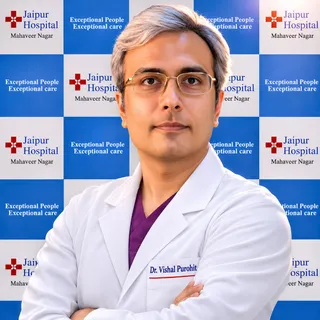
Your plastic surgery doctors
Explore our plastic surgery hospital in Jaipur: every treatment, the doctors and what to expect at your visit.
Frequently asked questions
Questions patients ask about skin cancer surgery
What does skin cancer excision and reconstruction involve?
In short
Skin cancer excision and reconstruction at Jaipur Hospital removes the tumour with a margin of healthy tissue and then repairs the wound. The operation takes one to three hours under local or general anaesthesia. Reconstruction uses a local flap or a skin graft depending on the size and site of the defect. Most patients go home the same day or stay one to two nights.
In detail
The surgeon first performs a wide local excision, taking the visible tumour with a clinical safety margin. If Mohs micrographic surgery is available, the tumour is removed layer by layer and each layer is checked under a microscope until margins are clear.
Evidence shows Mohs checks 100 percent of deep and lateral margins while wide local excision checks less than one percent.
After the cancer is removed, the defect is closed with a local flap that moves adjacent tissue or a split or full thickness skin graft for larger defects. The choice depends on defect size, location and tissue availability.
- Evidence shows Mohs checks 100 percent of deep and lateral margins while wide local excision checks less than one percent.
A common belief
Many people think the tumour is simply cut out and stitched.
What actually happens
In reality, margins must be checked. Mohs surgery examines one hundred percent of margins layer by layer, while wide excision checks less than one percent. The reconstruction method depends on the defect size and site.
Your next step at Jaipur Hospital
You will attend an outpatient consultation where the surgeon examines the lesion and explains the planned margins and reconstruction method. Preoperative tests are arranged and a date is scheduled. Wound healing takes two to three weeks and sutures are removed at ten to fourteen days. The typical cost range is forty thousand to one lakh fifty thousand rupees.
Which tests and scans do I need before skin cancer excision and reconstruction?
In short
Before skin cancer excision and reconstruction at Jaipur Hospital, you usually need a confirmed biopsy report. Blood tests such as haemoglobin, complete blood count, bleeding time, clotting time, blood sugar, liver and kidney function are common. An ECG and chest X ray may be required if you are over forty five or have medical conditions. Imaging such as ultrasound, CT or MRI is only needed if deep invasion or nodal spread is suspected.
In detail
The biopsy establishes the diagnosis and tumour type. Routine blood work checks your fitness for anaesthesia and surgery. Evidence from preoperative protocols shows that patients with comorbidities or those having general anaesthesia need baseline cardiac and respiratory evaluation.
For most cutaneous malignancies confined to the skin, no cross sectional imaging is required. If the tumour is thick, ulcerated or fixed to deeper structures, the surgeon may order ultrasound of regional nodes or a CT scan to stage the disease. Mohs surgery does not require additional imaging beyond the clinical assessment.
A common belief
Many patients expect a full body scan for every skin cancer.
What actually happens
In reality, most early skin cancers need only a biopsy and basic blood work. Imaging is reserved for thicker or ulcerated tumours where staging changes management.
Your next step at Jaipur Hospital
The surgeon reviews your biopsy and orders the necessary tests during the preoperative visit. Most tests are done in the hospital laboratory and results are available within a day.
You will receive clear instructions on when to stop eating and drinking and which medicines to hold. The typical cost range for the procedure is forty thousand to one lakh fifty thousand rupees.
How painful is skin cancer excision and reconstruction and the early recovery?
In short
During skin cancer excision and reconstruction at Jaipur Hospital, you will not feel pain because the procedure is done under local or general anaesthesia. After surgery, most patients have mild to moderate discomfort at the wound and donor site if a graft was taken. Pain is usually well controlled with prescribed oral analgesics for a few days.
In detail
The level of discomfort depends on the extent of excision, reconstruction type and location. A simple excision with primary closure causes less soreness than a flap or graft. Graft donor sites, often the thigh or upper arm, can feel like a graze for several days.
Swelling and bruising are common around the eyes or face. Your surgeon will prescribe appropriate pain relief, typically paracetamol with or without a mild opioid for the first forty-eight to seventy-two hours.
Avoid aspirin or ibuprofen unless cleared by your surgeon, as they may increase bleeding. Keep the head elevated if the surgery was on the face or scalp to reduce throbbing.
A common belief
Some people expect severe pain or, conversely, no discomfort at all.
What actually happens
The truth is in between: a simple excision hurts less than a flap or graft. Donor site soreness often surprises patients more than the cancer site itself. Regular painkillers for the first forty-eight hours make a big difference.
Your next step at Jaipur Hospital
Take pain medication on schedule for the first two days rather than waiting for pain to become severe. Most patients need little or no medication by day four to five.
Contact the hospital if pain worsens suddenly, if you notice spreading redness, increasing swelling or discharge. The typical price range for the procedure is forty thousand to one lakh fifty thousand rupees.
How long does recovery usually take after skin cancer surgery?
In short
Recovery after skin cancer surgery at Jaipur Hospital usually takes two to three weeks for the wound to heal. Sutures are removed at 10 to 14 days. You may go home the same day or stay one to two nights depending on the size of the excision and the type of reconstruction. Most people resume light daily activities within a few days.
In detail
The operation lasts one to three hours under local or general anaesthesia. A wide local excision removes the tumour with a clinical margin. The defect is closed with a local flap or a skin graft.
Flaps heal by primary intention and grafts need a new blood supply from the wound bed, which takes about five to seven days to establish. Swelling and bruising peak at 48 hours and then subside.
You will be advised to keep the operated part elevated and avoid stretching the area for two weeks. Heavy lifting and strenuous exercise are restricted for three to four weeks. Follow‑up visits check graft take, flap viability and suture line healing. The hospital provides a written recovery timeline and a contact number for any concerns.
A common belief
Many patients expect to be fully active in a few days.
What actually happens
In reality, flaps and grafts need protection from tension and trauma for two to three weeks to avoid breakdown.
Your next step at Jaipur Hospital
Plan for one to two weeks off work if your job involves physical effort; desk work can often resume sooner. Attend the suture removal appointment at 10 to 14 days. Keep the dressing dry and intact until your surgeon says otherwise. Report any increasing pain, redness, discharge or fever immediately.
What do the type, grade, and stage mean for skin cancer?
In short
The type tells you which skin cell the cancer started in, such as basal cell carcinoma, squamous cell carcinoma or melanoma. The grade describes how abnormal the cells look under the microscope and how fast they may grow. The stage tells how far the cancer has spread — whether it is only in the skin, involves lymph nodes or has reached distant organs.
In detail
These three factors guide the treatment plan. Low-risk basal cell carcinomas may need only a small margin excision. High-grade or thick melanomas need wider margins and possibly sentinel node biopsy. Mohs surgery is chosen for certain high-risk types or sites where tissue sparing matters.
In studies of advanced squamous cell carcinoma, stage and biomarker status decided the systemic therapy. For early skin cancer, type, grade and stage decide the surgery margin, the reconstruction method and whether further treatment is needed.
A common belief
People often confuse grade and stage.
What actually happens
Grade is about cell appearance; stage is about spread. Both affect the margin your surgeon takes and whether you need a flap, a graft or node checks. Drug therapy trials use stage and biomarkers; surgery uses them to plan margins and reconstruction.
Your next step at Jaipur Hospital
Your biopsy report will include the type, grade and stage. Your surgeon will explain what they mean for your case and recommend the appropriate excision and reconstruction. Further imaging or node assessment may be advised for higher stages.
How will appearance, function, and realistic expectations be discussed for skin cancer surgery?
In short
At Jaipur Hospital, your surgeon will discuss the expected appearance and function after skin cancer surgery during the preoperative consultation. The size and location of the defect, the reconstruction method — whether primary closure, local flap or skin graft — and the likely scar pattern are explained using diagrams. Functional impact such as eyelid position, lip movement or joint mobility is assessed. Realistic expectations about healing time, scar maturation over six to twelve months, and possible need for revision are set before surgery.
In detail
Wide local excision margins are determined by tumour type and thickness, which dictates the defect size. Mohs surgery, where available, minimises the defect by checking 100 percent of margins.
Local flaps borrow adjacent tissue with its own blood supply, giving good colour and texture match but leaving a secondary scar. Skin grafts, split or full thickness, cover larger areas but may differ in colour, texture and contraction.
The surgeon explains which option suits your site and why. The surgeon explains how the scar typically looks at different healing stages. Potential complications such as graft failure, flap compromise, wound dehiscence or sensory change are discussed.
If adjuvant radiotherapy is planned, its effect on scar quality is also mentioned. The goal is a shared understanding of the likely aesthetic and functional result.
- Mohs surgery, where available, minimises the defect by checking 100 percent of margins.
A common belief
Patients sometimes expect an invisible scar.
What actually happens
In reality, every excision leaves a scar that matures over months. Flaps and grafts have trade-offs in colour match and texture. Understanding these before surgery avoids disappointment later.
Your next step at Jaipur Hospital
You will have the opportunity to ask questions and express concerns before signing consent. A follow-up visit at one to two weeks assesses early healing, and later visits monitor scar maturation. You can book a consultation at Jaipur Hospital to discuss appearance, function and expectations for your skin cancer surgery.
Why might my doctor recommend skin cancer excision and reconstruction?
In short
Your doctor may recommend skin cancer excision and reconstruction at Jaipur Hospital when a skin lesion is confirmed or strongly suspected to be malignant. The aim is to remove the tumour completely with a margin of healthy tissue to reduce the risk of recurrence. Reconstruction then restores the wound, preserving function and appearance. The procedure is advised for basal cell carcinoma, squamous cell carcinoma, melanoma and other skin malignancies.
In detail
Surgery remains the primary treatment for most skin cancers because it provides tissue for pathological confirmation that margins are clear. Wide local excision with clinical safety margins is standard for many tumours.
Mohs micrographic surgery is preferred for high-risk tumours on the face, ears, scalp or hands where tissue preservation is critical; it allows layer-by-layer margin control and in studies shows a healing rate up to ninety-nine percent.
Reconstruction with a local flap or skin graft is needed when direct closure would distort important structures such as the eyelid, lip or nose. The choice depends on tumour type, size, depth, location and your overall health.
A common belief
Some patients expect creams or light therapy to be enough.
What actually happens
For invasive skin cancers, topical treatments do not reach deep tumour cells. Surgery provides tissue for margin assessment, which is the only way to confirm complete removal.
Your next step at Jaipur Hospital
Your surgeon will review the biopsy report, examine the lesion and discuss the recommended margin and reconstruction option. You will receive information on hospital stay, recovery timeline and the typical price range of forty thousand to one lakh fifty thousand rupees.
How should I prepare in the days before skin cancer excision and reconstruction?
In short
In the days before skin cancer excision and reconstruction at Jaipur Hospital, you should complete all prescribed blood tests and investigations. Inform the surgeon about every medicine, supplement and herbal product you take. Stop smoking as it impairs wound healing. Arrange for an attendant to accompany you and stay overnight if admission is planned. Keep the surgical site clean and avoid applying creams or ointments unless directed.
In detail
Preoperative preparation focuses on optimising healing and reducing complications. Evidence shows smoking reduces flap and graft survival. The surgeon may prescribe preoperative antibiotics depending on the site and your health.
Blood thinners such as aspirin, clopidogrel or warfarin often need to be stopped or bridged several days before surgery under medical guidance. Herbal products like ginkgo, garlic or ginseng can increase bleeding risk. You will receive written instructions on fasting, medication adjustments and skin preparation.
The operation takes one to three hours and you may go home the same day or stay one to two nights.
A common belief
Patients often continue blood thinners or herbal supplements without telling the surgeon, which increases bleeding and can compromise a flap or graft.
What actually happens
Smoking is a major risk for wound breakdown. A clear preoperative plan reduces these risks.
Your next step at Jaipur Hospital
Confirm your admission time and fasting instructions with the hospital. Pack loose clothing that does not rub the operative site. Bring your regular medicines in their original packets. The typical cost range is forty thousand to one lakh fifty thousand rupees. Wound healing takes two to three weeks and sutures are removed at ten to fourteen days.
What are the common side effects and the less common serious complications of skin cancer surgery?
In short
Common side effects after skin cancer surgery at Jaipur Hospital include swelling, bruising, mild pain and a small amount of oozing from the wound. These usually settle within a few days. Less common serious complications are wound infection, bleeding that needs a return to theatre, poor healing of a flap or graft, and numbness if a nerve is affected.
In detail
The operation removes the tumour with a margin of healthy tissue and often uses a local flap or skin graft to close the defect.
Handling of tissue and the creation of a new blood supply for a graft or flap can lead to temporary swelling and bruising. Infection occurs in a small number of cases and is usually managed with antibiotics.
Flap or graft failure is uncommon but may need a second procedure. Nerve injury causing numbness is rare and often improves over months.
The evidence on systemic therapy for advanced disease shows grade 3 or 4 adverse events in 13 to 35 percent of patients, but those rates relate to immunotherapy and chemotherapy, not to the surgical procedure itself.
A common belief
People often confuse surgical risks with the high rates of severe side effects seen in immunotherapy or chemotherapy studies for advanced cancer.
What actually happens
Those systemic treatment rates do not apply to wide excision and reconstruction.
Your next step at Jaipur Hospital
Your surgeon will explain the specific risks for your tumour site and reconstruction type before you sign consent. You will receive written wound care instructions and a date for suture removal at 10 to 14 days. Contact the hospital sooner if you notice increasing redness, spreading warmth, heavy bleeding, fever or sudden severe pain.
Which symptoms are expected after skin cancer surgery, and which need urgent medical attention?
In short
Expected symptoms after skin cancer surgery at Jaipur Hospital include mild to moderate pain, swelling, bruising, a tight feeling over a flap or graft, and a small amount of serous ooze on the dressing for the first 24 to 48 hours. These improve steadily each day.
In detail
The procedure removes the tumour with a margin and reconstructs the defect with a local flap or skin graft. Tissue handling causes an inflammatory response, hence pain and swelling.
A flap relies on its own blood supply; a graft must develop new vessels from the wound bed. Both processes create a sensation of tightness and some bruising. Serous fluid is normal as lymphatics reseal.
Warning signs that need urgent review are bright red spreading erythema, increasing heat, pus, sudden severe pain not relieved by prescribed medication, heavy bleeding that soaks the dressing, a flap that looks dusky or black, a graft that lifts off the bed, or a fever above 38 degrees Celsius. These may indicate infection, haematoma, or vascular compromise requiring prompt intervention.
A common belief
Patients often wait too long when a flap changes colour, thinking bruising is normal.
What actually happens
A dusky flap signals vascular trouble that must be addressed within hours to save the tissue.
Your next step at Jaipur Hospital
You will receive a written list of normal versus concerning symptoms at discharge. Take prescribed pain relief regularly for the first 48 hours. Keep the area elevated and avoid stretching.
If any urgent symptom appears, call the hospital or visit the 24‑hour emergency department without waiting for your next appointment.
FAQ library
Questions and answers about skin cancer surgery
When you contact us
Get a clear surgical plan
Contact Jaipur Hospital for a consultation, in-house investigations, a cost estimate and help with cashless schemes.
- A consultation with a plastic surgeon in the OPD
- Your scans and reports reviewed, with tests done in-house if you need them (laboratory, X-ray and imaging)
- Your options explained in plain words, including whether you need surgery at all
- A cost estimate before you decide
- Help with cashless treatment under RGHS, MAA Yojana, CGHS and empanelled insurers and TPAs
- Follow-up visits after your treatment
Overview
Skin Cancer Surgery: what to know
What skin cancer is and how it develops
- Basal cell carcinoma
- Grows slowly, rarely spreads
- Squamous cell carcinoma
- Can grow quickly, may spread
- Melanoma
- Most serious, can spread widely
Skin cancer is an abnormal growth of skin cells. It usually starts in the outermost layer of the skin, the epidermis, when the normal cycle of cell growth and death is disrupted.
The three most common types are:
- Basal cell carcinoma
- Squamous cell carcinoma
- Melanoma
Basal cell carcinoma grows slowly and rarely spreads to other parts of the body. Squamous cell carcinoma can grow more quickly and has a higher chance of spreading if not treated early. Melanoma begins in the pigment-producing cells called melanocytes and is the most serious form because it can spread to lymph nodes and distant organs.
Ultraviolet radiation from sunlight is the main factor that damages the DNA in skin cells. Over time, this damage builds up and can cause cells to multiply out of control. The damage may happen after years of daily sun exposure or after episodes of intense sunburn, especially in childhood. Artificial sources such as tanning beds also increase the risk.
In some people, skin cancer appears on areas that are not usually exposed to the sun, which suggests that other factors such as genetics or a weakened immune system can play a part.
Symptoms and warning signs that need urgent care the same day
- Bleeding mole without injury Bleeds without any injury
- Rapid growth or pain Grows fast or becomes painful
- Non-healing ulcer over two weeks Ulcer does not heal in two weeks
- Dark streak under nail widening New pigmented line or widening streak
The most common sign of skin cancer is a change on the skin that does not heal. You may notice a new growth, a sore that bleeds or crusts over and then reopens, or a change in an existing mole.
For basal cell carcinoma, the lesion often looks like a pearly or waxy bump, sometimes with visible blood vessels, or a flat, flesh-coloured or brown scar-like patch. Squamous cell carcinoma may appear as a firm, red nodule or a flat lesion with a scaly, crusted surface.
Melanoma is often recognised by the ABCDE rule:
- Asymmetry (one half does not match the other)
- Border irregularity (edges are ragged or blurred)
- Colour variation (shades of brown, black, pink, red, white or blue)
- Diameter larger than 6 millimetres
- Evolving (the spot changes in size, shape, colour or elevation)
Certain symptoms need medical attention on the same day. A mole or spot that bleeds without injury, grows rapidly, becomes painful, or develops an ulcer that does not heal within two weeks should be examined promptly. A new pigmented line under a fingernail or toenail, or a dark streak that widens, also needs urgent evaluation.
If you have a history of skin cancer and notice a new lump in the neck, armpit or groin, seek care the same day because it may indicate spread to lymph nodes.
Causes and who is at higher risk
- Fair skin that burns easily
- Less natural pigment protection
- History of severe sunburns
- Especially blistering burns in childhood
- Personal or family history
- Previous skin cancer or family cases
- Weakened immune system
- From HIV or transplant medicines
The primary cause of skin cancer is ultraviolet radiation from the sun or from artificial sources such as tanning beds. People with fair skin that burns easily, freckles, light-coloured eyes, or red or blond hair have less natural pigment protection and are at higher risk.
A history of severe sunburns, especially blistering burns in childhood or adolescence, significantly increases the chance of developing skin cancer later in life. Living at high altitude or in regions with intense sunlight year-round also raises exposure.
Other risk factors include:
- A personal or family history of skin cancer
- A large number of moles or unusual-looking moles (dysplastic naevi)
- A weakened immune system due to conditions such as HIV or medicines taken after an organ transplant
Exposure to certain chemicals, such as arsenic, and previous radiation therapy to the skin can increase risk in the treated area. Age is a factor because the cumulative effect of sun exposure grows over time, but skin cancer can occur in younger adults as well.
How skin cancer is diagnosed: examination and tests
- Full skin examination Doctor checks entire skin surface with dermatoscope
- Biopsy if suspicious Shave, punch or excisional biopsy performed
- Pathology report Type, depth, margins and other features assessed
- Further tests if needed Sentinel node biopsy, ultrasound or imaging for spread
Diagnosis begins with a thorough skin examination by a doctor. The doctor will look at the entire skin surface, including the scalp, between the toes, and under the nails, often using a dermatoscope, a handheld magnifying device with a light that lets the doctor see patterns in the lesion not visible to the naked eye.
If a spot looks suspicious, a biopsy is performed to confirm the diagnosis. The type of biopsy depends on the size and location of the lesion. A shave biopsy removes the top layers of skin with a blade. A punch biopsy uses a small circular tool to remove a deeper core of tissue.
An excisional biopsy removes the entire lesion with a margin of normal skin and is often used when melanoma is suspected.
The tissue sample is sent to a pathology laboratory where a pathologist examines it under a microscope. The report will state the type of skin cancer, how deep it goes (Breslow thickness for melanoma), whether the margins are clear, and other features such as ulceration or mitotic rate that help guide treatment. For melanoma and high-risk squamous cell carcinoma, additional tests may be needed to check for spread.
These can include:
- A sentinel lymph node biopsy
- Ultrasound of the regional lymph nodes
- Imaging such as CT, MRI or PET-CT scans
Blood tests are not used to diagnose skin cancer but may be done to assess general health before surgery.
Treatment options without surgery and when surgery is advised
Non-surgical treatments are considered for certain early or superficial skin cancers, or when surgery is not possible due to the patient's health. Topical creams containing imiquimod or 5-fluorouracil can be used for superficial basal cell carcinoma and actinic keratosis, a precancerous condition. These creams stimulate the immune system or damage abnormal cells directly.
Photodynamic therapy uses a light-sensitive drug applied to the skin followed by exposure to a specific wavelength of light to destroy cancer cells. Cryotherapy freezes the lesion with liquid nitrogen and is suitable for very superficial lesions.
Radiotherapy may be offered for patients who cannot have surgery, for tumours in difficult locations, or as an additional treatment after surgery in high-risk cases.
Surgery is the primary treatment for most skin cancers because it allows complete removal of the tumour with a margin of healthy tissue, and the specimen can be examined to confirm that no cancer cells remain at the edges. Wide local excision is the standard surgical method for basal cell carcinoma, squamous cell carcinoma and melanoma.
The surgeon removes the tumour with a clinical safety margin of normal skin around it. For high-risk tumours, especially on the face, ears, hands or genitals, Mohs micrographic surgery may be advised. In Mohs surgery, the tumour is removed layer by layer and each layer is examined under a microscope immediately.
This process continues until no cancer cells are seen at any margin, preserving as much healthy tissue as possible. After the cancer is removed, the wound may be closed directly, covered with a skin graft, or reconstructed with a local flap using nearby tissue. Your surgeon will discuss which technique is appropriate for your tumour type, size, location and depth.
Preparing for skin cancer surgery
Do
- Bring list of all medicines Include blood thinners, aspirin, herbal supplements
- Wear loose, comfortable clothing Should not rub against surgical site
- Bring an attendant To stay with you and help you get home
Your surgeon will explain the operation and ask about your general health, any medicines you take, and any allergies. Bring a list of your current medicines, including blood thinners, aspirin, or herbal supplements, because some may need to be stopped a few days before the procedure.
If you have a heart condition, diabetes, or take steroids, tell your surgeon so the anaesthesia plan can be adjusted. You will usually have a pre-anaesthesia check-up that may include blood tests, an ECG, and a chest X-ray, depending on your age and medical history.
If the surgery is under general anaesthesia, you must not eat or drink for at least six hours before the scheduled time. For local anaesthesia, a light meal is usually allowed unless your surgeon advises otherwise. Wear loose, comfortable clothing that does not rub against the surgical site.
Bring an attendant who can stay with you and help you get home afterwards. If you are admitted overnight, carry your regular medicines, toiletries, and any mobility aids you use.
How skin cancer surgery is done
The operation removes the tumour with a margin of healthy tissue to reduce the chance of leaving cancer cells behind. Your surgeon will discuss which technique suits the type, size, and site of your cancer.
Wide local excision removes the visible tumour with a measured clinical margin of normal skin around it; the specimen is sent to the laboratory for margin assessment.
Mohs micrographic surgery removes the tumour in thin layers, and each layer is examined under a microscope while you wait; if cancer cells are seen at any edge, another layer is taken only from that area until all margins are clear.
This method checks 100 percent of the deep and side margins and is often used for high-risk cancers on the face or other cosmetically sensitive areas.
After the cancer is removed, the wound may be closed directly with stitches, covered with a local flap that moves adjacent skin and tissue into the defect, or repaired with a skin graft taken from another part of your body.
Split-thickness grafts use a thin layer of skin; full-thickness grafts use the full skin thickness and are chosen based on the size and location of the defect. The operation usually takes one to three hours. Anaesthesia may be local with sedation or general, depending on the extent of surgery and your preference.
You will be in a modular operation theatre with monitoring throughout. Most patients go home the same day, but some stay one to two nights if the reconstruction is larger or if observation is needed.
Risks and possible complications of skin cancer surgery
- Bleeding, infection, delayed healing
- Common early problems after surgery
- Haematoma or seroma
- May need drainage
- Graft or flap loss
- Partial or complete loss if blood supply inadequate
- Numbness or altered sensation
- Common around scar, often improves over months
All operations carry some risk.
Common early problems include:
- Bleeding
- Wound infection
- Delayed healing
The surgical site may develop a haematoma or seroma, which sometimes needs drainage. Skin grafts or flaps can have partial or complete loss if the blood supply is not adequate; this may require further dressing changes or a second procedure.
Numbness or altered sensation around the scar is common and often improves over months, but can be long-term in some areas. Scars mature over six to twelve months; they may become raised, widened, or pigmented.
In studies of systemic immunotherapy for advanced head and neck squamous cell carcinoma, grade 3 or 4 treatment-related adverse events occurred in 13 percent of patients receiving pembrolizumab and in 36 percent receiving standard chemotherapy. In another trial, 18 percent of patients on nivolumab had grade 3 or 4 treatment-related adverse events compared with 63 percent on chemotherapy.
The most frequent serious events in those studies were anaemia, decreased neutrophil count, and liver enzyme elevations. Treatment-related deaths were reported in a small number of patients receiving immunotherapy or chemotherapy.
These figures come from studies of advanced disease treated with drugs, not from skin cancer surgery itself, but they show the range of serious side effects that can occur with cancer treatments in general. Your surgeon will discuss the specific risks for your operation and how they are managed.
Recovery and aftercare after skin cancer surgery
- Same day Monitored in recovery area until awake and comfortable
- 48 hours Usually can shower if wound is sealed
- 10 to 14 days Stitches typically removed
After the operation you will be monitored in the recovery area until you are fully awake and comfortable. If you had a local anaesthetic, you can usually eat and drink straight away. Pain is usually mild to moderate and is managed with paracetamol or a prescribed analgesic; avoid aspirin or ibuprofen unless your surgeon agrees, as they can increase bleeding.
Keep the dressing clean and dry. You will be told when you can shower, usually after 48 hours if the wound is sealed. Stitches are typically removed at 10 to 14 days. Wound healing takes about two to three weeks, but the scar continues to mature for months.
If you have a skin graft, the donor site will also need dressings and may feel like a graze for a week or two. Avoid stretching or putting tension on the operated area for at least three weeks. Do not smoke, as smoking reduces blood flow and increases the risk of graft or flap failure. Attend all follow-up appointments so your surgeon can check the wound and the pathology report.
Contact the hospital if you notice:
- Increasing redness
- Swelling
- Warmth
- Pus
- A foul smell
- Bleeding that does not stop with gentle pressure
- Fever above 38 degrees Celsius
- Sudden severe pain
Your attendant should help with daily activities for the first few days if the surgery was on the face, hands, or a weight-bearing area.
Results of skin cancer surgery
The aim of surgery is to remove the cancer completely with clear margins. In studies of Mohs micrographic surgery for high-risk skin cancers, healing rates of up to 99 percent have been reported, and this method has the lowest recurrence rate of any treatment for skin cancer.
With wide local excision, the margin status is assessed after the specimen is processed; in general, less than 1 percent of the total margin length is examined microscopically. Recurrence depends on the tumour type, size, depth, and whether margins are clear.
For advanced head and neck squamous cell carcinoma treated with systemic therapy, median overall survival in one trial was 7.5 months with nivolumab versus 5.1 months with standard therapy, and the 1-year survival rate was 36 percent versus 16.6 percent.
In another study, pembrolizumab alone improved overall survival compared with cetuximab plus chemotherapy in a subgroup with high PD-L1 expression, and pembrolizumab with chemotherapy improved survival in the total population. These survival figures are from studies of advanced or metastatic disease treated with immunotherapy or chemotherapy, not from early skin cancer surgery, but they illustrate outcomes in more advanced cases.
Your surgeon will explain what the pathology report means for your risk of recurrence and whether further treatment such as radiotherapy or systemic therapy is recommended.
Cost and insurance for skin cancer surgery in Jaipur
The typical price range for wide excision with reconstruction in India is Rs 40,000 to Rs 1,50,000. The final cost depends on the size and site of the tumour, the type of reconstruction (direct closure, local flap, or skin graft), the choice of anaesthesia, the length of hospital stay, and whether Mohs micrographic surgery is used.
Daycare procedures cost less than those needing one or two nights in hospital. Jaipur Hospital is a NABH-accredited multispeciality hospital established in February 1991. It accepts patients under RGHS, MAA Yojana, CGHS, and a panel of private insurers and TPAs.
The hospital has a 24-hour emergency department, in-house pharmacy, diagnostic laboratory and imaging, modular operation theatres, and an intensive care unit. For an estimate specific to your case, contact the hospital on 0141-2551500, 0141-2554139, or 7414 001 001, or email [email protected]. The hospital is at S16A-17, Mahaveer Nagar, Near Gopalpura Flyover, Main Tonk Road, Jaipur, Rajasthan 302018.