
Plastic Surgery · Jaipur Hospital
Thread Lift in Jaipur
Sagging skin makes you look tired. We assess, explain options, and give a clear plan.
- Serving Jaipur since 1991 (35 years)
- NABH accredited
- 24×7 emergency & ICU
- Cashless: RGHS, MAA Yojana, CGHS + 32 insurers
- Procedure time
- 45 to 60 minutes
- Anaesthesia
- Local anaesthesia
- Recovery
- Bruising settles in 5 to 7 days
- Price
- ₹30,000 to ₹80,000 per areatypical range in India; ask us for an estimate
Face looks tired, loose
Skin sags but surgery feels like too much
You see jowls, a soft jawline, or hollow cheeks. A full facelift means general anaesthesia, a hospital stay, and weeks off work. You want a lift without the operation.
-
Jowls and jawline droop
The lower face loses definition, making you look older than you feel.
-
Cheeks flatten and fall
Volume shifts down, deepening lines beside the mouth.
-
Brow and under-eye heaviness
Eyes look tired; the brow sits lower than before.
-
Surgery feels too big a step
General anaesthesia, long recovery, and higher cost hold you back.
-
Want a lift, not a new face
You prefer subtle, natural improvement over dramatic change.
Thread lifting is a minimally invasive alternative to facial rhytidectomy using absorbable sutures to suspend ptotic skin.
Why Jaipur Hospital
You worry that looking tired affects how people treat you at work and at home, but you cannot take weeks off for a surgical recovery.
Your care plan
Your first steps with us
- 1 Call or visit OPD for a plastic surgery consultation
- 2 Surgeon examines you, reviews scans, orders in-house tests if needed
- 3 Receive a plain-word plan with thread options and a cost estimate
- 4 Have the procedure under local anaesthesia and go home the same day
how the operation is done
Under local anaesthesia, your surgeon inserts absorbable threads through a fine needle or cannula. The threads anchor and lift sagging tissue while stimulating collagen. The procedure usually takes 45 to 60 minutes and you go home the same day.
-
PDO Threads
Polydioxanone threads dissolve in about six months, giving lift and collagen stimulation.
-
PCL Threads
Polycaprolactone threads last longer and provide sustained support.
-
PLLA Threads
Poly-L-lactic acid threads focus on collagen induction for gradual tightening.
-
Barbed vs Smooth
Barbed threads grip tissue for lifting; smooth threads tighten and stimulate collagen.
Why patients trust us
- 1991 Serving Jaipur for 35 years
- NABH Accredited hospital
- 1 Plastic Surgery consultants
- 24×7 Emergency, ICU and ambulance
- 35 Cashless schemes and insurers
what research shows about this treatment
-
1 to 3 years
Studies report visible lifting lasts one to three years before threads fully absorb.
-
complications under 5%
Absorbable thread lifts showed overall complication rates below five percent in clinical series.
-
bruising settles in 5 to 7 days
Most patients see bruising and swelling resolve within a week after the procedure.
If it is left untreated
Without treatment, sagging deepens gradually. Jowls become more pronounced, nasolabial folds deepen, and the jawline loses definition. Skin laxity does not improve on its own.
life after treatment
Most people see an immediate subtle lift that improves over weeks as collagen builds. Bruising fades in about a week. Normal routine resumes quickly.
-
Subtle lift shows right away
You notice a gentle elevation of sagging areas once swelling settles.
-
Skin feels firmer over months
Collagen production continues for months, improving texture and tightness.
-
Back to routine quickly
Most people return to work the same day or the next day.
-
Option to repeat later
If you like the result, the procedure can be repeated when effects fade.
Meet the team
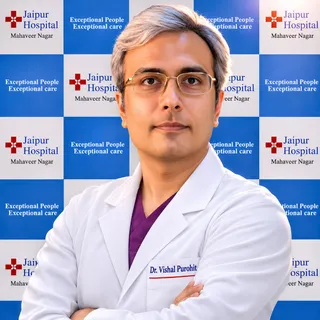
Your plastic surgery doctors
Explore our plastic surgery hospital in Jaipur: every treatment, the doctors and what to expect at your visit.
Frequently asked questions
Questions patients ask about thread lift
What does a thread lift involve?
In short
A thread lift at Jaipur Hospital is a non-surgical procedure that uses absorbable sutures to lift sagging skin and stimulate collagen. The surgeon inserts medical-grade threads under the skin through a thin needle or cannula. The threads have tiny barbs or cones that anchor the tissue and pull it into a tighter position. The procedure takes about 45 to 60 minutes under local anaesthesia.
In detail
The surgeon marks the entry points and the path the threads will follow. After numbing the area with local anaesthetic, a thin needle or cannula places the threads beneath the skin. Barbed threads grip the tissue to create a mechanical lift.
Smooth threads stimulate collagen without lifting. The threads dissolve over several months, but the collagen they trigger can support the skin for one to three years. Studies show complication rates under five percent, with bruising and swelling as the most common side effects.
A common belief
Many people think a thread lift gives the same dramatic result as a surgical facelift.
What actually happens
Evidence shows the changes are subtle and temporary, lasting one to three years. It is not a replacement for surgery when sagging is severe.
Your next step at Jaipur Hospital
You can go home the same day. Bruising usually settles in five to seven days. Avoid rubbing your face, sleeping on your side, and strenuous exercise for two to three weeks. Your surgeon will give you specific aftercare instructions.
Do I need an examination, tests, or a test patch before a thread lift?
In short
Yes, a face-to-face examination is required before a thread lift at Jaipur Hospital. The surgeon assesses your skin laxity, facial anatomy, symmetry and medical history to decide if you are a suitable candidate. Routine blood tests may be advised to check clotting and infection markers, especially if you have a medical condition. There is no skin test patch for absorbable threads because the materials are well established and hypoallergenic.
In detail
The consultation includes marking the proposed entry points and thread vectors on your face. The surgeon reviews any medications, supplements or allergies that could affect bleeding or healing.
If you have a history of keloid scarring, autoimmune disease or clotting disorders, additional clearance may be needed. Evidence shows complication rates are low when patient selection is careful.
The surgeon also explains the thread types available (PDO, PCL, PLLA, barbed or smooth) and sets realistic expectations for the degree of lift. No allergy test is standard because the suture materials are absorbable surgical polymers with a long safety record.
A common belief
Some people assume a thread lift can be done on the spot.
What actually happens
Proper assessment reduces the risk of asymmetry, thread visibility or poor lift. The surgeon also checks for conditions like bleeding disorders or active skin infection that would make the procedure unsafe.
Your next step at Jaipur Hospital
Bring a list of current medicines and any previous cosmetic procedures to the consultation. If blood tests are ordered, they are done at the hospital's in-house laboratory. Once cleared, the procedure can be booked as an outpatient visit.
What side effects are common, and what serious complications should I discuss for a thread lift?
In short
At Jaipur Hospital, common side effects after a thread lift include bruising, swelling, tenderness, and mild discomfort. These usually settle within 5 to 7 days. Serious complications are rare but can include infection, thread migration, visible or palpable threads, skin puckering, asymmetry, and nerve injury causing altered sensation. Your surgeon will discuss these risks before the procedure.
In detail
Evidence from large studies shows ecchymosis (bruising) occurs in about 19% of patients, swelling in about 17%, and tenderness in about 10%. Infection, haematoma, and paresthesia are each reported in under 3%.
Barbed threads and PCL threads are associated with higher rates of swelling and bruising. Dimpling or a "pop" sensation under the skin can occur but typically resolves in 2 to 3 weeks. The success of the procedure depends heavily on the practitioner's skill. Your surgeon will explain which risks apply to your anatomy and thread choice.
A common belief
Many patients expect zero downtime.
What actually happens
In reality, bruising and swelling are normal and take up to a week to fade. The rare complications like thread migration or infection are why surgeon experience matters. PCL threads and barbed threads tend to cause more swelling.
Your next step at Jaipur Hospital
After the procedure, apply cold packs as advised and avoid pressure on the face. Take prescribed pain relief if needed. Watch for increasing redness, warmth, discharge, fever, or worsening pain, and contact the hospital immediately if these occur.
A follow-up visit will be scheduled to check healing. To understand the full risk profile for your case, book a consultation at Jaipur Hospital.
How does the term "interferential therapy" relate to a thread lift?
In short
At Jaipur Hospital, interferential therapy is a physiotherapy modality that uses electrical currents for pain relief and muscle stimulation. It has no role in a thread lift procedure. A thread lift is a minimally invasive cosmetic treatment that inserts absorbable sutures under the skin to lift sagging tissue and stimulate collagen. The two are unrelated.
In detail
Interferential therapy belongs to the domain of physical rehabilitation, used for conditions like muscle spasm, joint stiffness, or post-operative pain management in orthopaedics or sports injury.
A thread lift is performed by a plastic surgeon under local anaesthesia using needles or cannulas to place PDO, PCL, or PLLA threads. The mechanism is mechanical lifting plus a foreign-body collagen response. There is no electrical or energy-based component in a thread lift. The hospital's physiotherapy department offers interferential therapy for appropriate rehabilitation needs, separate from aesthetic procedures.
A common belief
The names sound technical, so patients sometimes confuse energy-based devices with thread procedures.
What actually happens
Thread lifts are purely mechanical and biological: sutures lift tissue and trigger collagen. No lasers, radiofrequency, or electrical currents are involved at this hospital.
Your next step at Jaipur Hospital
If you are exploring treatments for facial sagging, a thread lift consultation will focus on your skin laxity, anatomy, and goals. If you have a musculoskeletal condition that might benefit from interferential therapy, the physiotherapy team can assess you separately.
The two services do not overlap. To discuss whether a thread lift suits your concerns, book a consultation at Jaipur Hospital.
What product will be used for the thread lift, and how will its suitability be checked?
In short
At Jaipur Hospital, your surgeon selects absorbable threads such as PDO, PCL or PLLA based on the area treated and the degree of lift you need. The choice is made during the consultation after the surgeon examines your skin laxity, reviews your medical history and discusses the result you are hoping for.
In detail
PDO threads are the most common and dissolve in about six months while stimulating collagen. PCL threads last longer and may produce more swelling and bruising. PLLA threads use tiny cones to grip tissue and encourage collagen over a longer period.
Barbed threads give a mechanical lift; smooth threads focus on collagen induction. Evidence shows barbed threads carry a higher complication rate than smooth or coned threads, and floating threads more than fixed ones.
Your surgeon will explain which material matches your anatomy and goals, and will confirm you have no allergy to the suture material before proceeding.
A common belief
Many people think one thread type fits all.
What actually happens
In reality, barbed threads lift more but have higher complication rates, while smooth threads mainly stimulate collagen. PCL threads last longer but may cause more bruising. The surgeon matches the material to your anatomy, not to a standard protocol.
Your next step at Jaipur Hospital
You will meet the surgeon in the OPD for a face-to-face assessment. The surgeon marks the entry points, chooses the thread type and explains the expected lift. If you agree, the procedure can be scheduled as an outpatient visit.
How will appearance, function, and realistic expectations be discussed for the thread lift?
In short
At Jaipur Hospital, the consultation focuses on what a thread lift can and cannot achieve. The surgeon examines your facial structure, skin quality and degree of sagging, then explains that the lift is subtle, temporary and does not replace a surgical facelift. You will see where the threads will go and what degree of lift is realistic for your anatomy.
In detail
Evidence shows results are subtle and temporary, lasting one to three years. A thread lift lifts the face by a few millimetres and stimulates collagen. It does not remove excess skin or address deep volume loss.
Patients with moderate laxity in the mid-30s to mid-50s age group tend to be most satisfied. Those over 55 often benefit more from surgery.
The surgeon will also discuss whether combining the thread lift with other treatments such as fillers or neurotoxins may give a more balanced result. You are encouraged to ask questions and express concerns. The goal is informed consent based on realistic expectations, not marketing promises.
A common belief
Many clinics show dramatic before-and-after photos that create false expectations.
What actually happens
At Jaipur Hospital, we do not use patient photos for marketing. The conversation is honest: a few millimetres of lift, collagen stimulation for one to three years, and the option to repeat.
Your next step at Jaipur Hospital
The consultation lasts 20 to 30 minutes in the OPD. You may bring photographs of your desired look. The surgeon marks the proposed vectors and explains the recovery timeline. No pressure is placed on you to book immediately.
Am I a suitable candidate for a thread lift?
In short
A thread lift at Jaipur Hospital is usually suitable for adults in their mid-thirties to mid-fifties with mild to moderate facial sagging who want a subtle improvement without surgery. Good general health is required. People with severe sagging, active skin infections, blood clotting disorders, or who are pregnant are not ideal candidates. Your surgeon will assess your skin laxity, medical history, and expectations at the consultation.
In detail
Evidence indicates the most suitable results occur in patients with moderate laxity of the cheeks, jowls, or jawline. Those over fifty-five often benefit more from a surgical facelift. Conditions such as uncontrolled diabetes, bleeding disorders, or medications that thin the blood may increase risk.
The procedure is done under local anaesthesia, so it can be an option for people who cannot have general anaesthesia due to heart or lung conditions. The surgeon evaluates skin quality, degree of sagging, and whether the desired lift is realistic with threads alone.
A common belief
A thread lift does not replace a surgical facelift for severe sagging.
What actually happens
People with bleeding disorders, active infections, or who are pregnant should not have it. Those over fifty-five often get better, longer-lasting results from surgery.
Your next step at Jaipur Hospital
Bring a list of your medicines and any past cosmetic treatments to the consultation. The surgeon will examine your face, discuss your goals, and advise if a thread lift is appropriate or if another treatment would serve you better.
What should I tell the clinician about medicines, allergies, pregnancy, or previous treatment before a thread lift?
In short
Before a thread lift at Jaipur Hospital, tell the surgeon about every medicine you take, including blood thinners, aspirin, anti-inflammatory drugs, supplements like fish oil or vitamin E, and any herbal products. Disclose all allergies, especially to local anaesthetics, suture materials or antiseptics. Inform the team if you are pregnant, planning pregnancy or breastfeeding. Share details of any previous facial surgery, thread lifts, fillers, neurotoxin injections or skin treatments.
In detail
Medicines and supplements that affect clotting can increase bruising and haematoma risk. The surgeon may ask you to stop certain items temporarily, but only after consulting your prescribing doctor. Allergies to lidocaine or chlorhexidine change the preparation protocol.
Pregnancy and breastfeeding are standard reasons to postpone elective cosmetic procedures. Previous treatments alter the tissue planes and may affect thread placement or increase complication risk. A history of cold sores may require antiviral prophylaxis. Full disclosure lets the surgeon plan the safest approach and choose the appropriate thread type.
A common belief
Patients often forget supplements like fish oil or vitamin E that increase bruising.
What actually happens
They may not mention a filler placed years ago that changes the tissue layers. Complete disclosure prevents complications such as haematoma, infection or thread malposition.
Your next step at Jaipur Hospital
Bring a written list of medicines, supplements and past procedures to the consultation. The surgeon will advise which items to pause and when to restart them.
If you develop an illness or start a new medicine before the appointment, call the hospital to update the team.
What would make a thread lift unsuitable or riskier for me?
In short
A thread lift at Jaipur Hospital may be unsuitable if you have severe skin laxity, active skin infection, a bleeding or clotting disorder, uncontrolled diabetes, or a history of poor wound healing. Pregnancy and certain autoimmune conditions also increase risk. Your surgeon assesses these factors at the consultation.
In detail
Evidence indicates ideal candidates have mild to moderate sagging, typically in the mid-30s to mid-50s age group. Patients over 55 often benefit more from surgical facelift. Conditions that affect clotting or immunity raise the chance of haematoma, infection or delayed healing.
Recent weight changes and family history of clotting disorders are also reviewed. The procedure is not a substitute for volume loss that needs fillers or for dynamic wrinkles that need neurotoxins.
A common belief
Some people believe a thread lift works for everyone because it is minimally invasive.
What actually happens
In reality, the threads need enough healthy tissue to grip, and certain medical conditions impair healing or raise complication rates.
Your next step at Jaipur Hospital
Bring a list of your medicines and medical history to the appointment. The surgeon will examine your skin quality and discuss whether a thread lift matches your goals or if another option is safer.
Who will perform the thread lift procedure?
In short
At Jaipur Hospital, the thread lift is performed by a qualified plastic surgeon from our Plastic Surgery department. The surgeon has completed recognised training in plastic surgery and carries out absorbable suture lifts as part of routine practice in the hospital's modular operation theatres.
In detail
Evidence emphasises that the success of a thread lift heavily relies on the skills and expertise of the practitioner. Complication rates are lower when the procedure is done by a trained, licensed provider.
Our surgical team follows a sterile technique using local anaesthesia with a topical numbing agent. The surgeon marks the vector lines, inserts the threads with a fine needle or cannula, and adjusts the tension to achieve a balanced lift.
Because the procedure is done under local anaesthesia, you remain awake and can give feedback during the treatment. The hospital's NABH accreditation means the theatre, nursing support and emergency backup meet national safety standards.
A common belief
Some clinics allow nurses or non-specialist doctors to place threads.
What actually happens
Evidence shows outcomes depend strongly on the practitioner's skill. At Jaipur Hospital, only a plastic surgeon does the procedure, with full theatre support and emergency backup if needed.
Your next step at Jaipur Hospital
You will meet the operating surgeon at the pre-procedure consultation in the OPD. The surgeon explains the steps, confirms the thread type and answers your questions. The procedure takes 45 to 60 minutes and you go home the same day.
FAQ library
Questions and answers about thread lift
When you contact us
Get a clear plan and cost estimate
Contact Jaipur Hospital for a plastic surgery OPD consultation, in-house tests if needed, and a written cost estimate before you decide.
- A consultation with a plastic surgeon in the OPD
- Your scans and reports reviewed, with tests done in-house if you need them (laboratory, X-ray and imaging)
- Your options explained in plain words, including whether you need surgery at all
- A cost estimate before you decide
- Help with cashless treatment under RGHS, MAA Yojana, CGHS and empanelled insurers and TPAs
- Follow-up visits after your treatment
Overview
Thread Lift: what to know
What a thread lift treats: facial sagging and how it happens
- Facial sagging
- Downward shift of skin and soft tissue
- Collagen and elastin loss
- Proteins that keep skin firm decrease with age
- Fat pad changes
- Cheek fat shrinks and moves down
- Thread lift action
- Mechanical lift plus collagen stimulation
Facial sagging is the gradual downward shift of skin and soft tissue that gives the face a tired or aged look. It happens because collagen and elastin, the proteins that keep skin firm and elastic, decrease with age. Fat pads in the cheeks shrink and move down, and the ligaments that hold them weaken. Gravity then pulls the loosened skin toward the jawline, creating jowls, deepening the nasolabial folds, and flattening the midface.
A thread lift is a nonsurgical cosmetic procedure that lifts sagging skin and stimulates collagen production to give the face or neck a more youthful appearance. Absorbable threads are placed under the skin through a thin needle or cannula.
The threads have tiny barbs or cones that anchor to the tissue; when the surgeon gently pulls them, the skin is lifted mechanically. At the same time, the presence of the threads triggers the body's healing response, which increases collagen in the treated area. The threads dissolve over several months, but the new collagen can support the skin for one to three years.
A thread lift is a minimally invasive alternative to a surgical facelift. It creates subtle changes rather than dramatic ones. It is often called a lunchtime facelift because the procedure is quick and downtime is minimal.
The treatment can target:
- Midface
- Jowls
- Jawline
- Brow
- Under‑eye area
- Forehead
- Cheeks
- Neck
Symptoms of facial sagging and warning signs that need urgent care
- Discharge from insertion points Green, black, brown or red discharge
- Fever May indicate infection
- Pain not improving with pain relief Needs prompt assessment
- Worsening swelling and bruising May indicate complication
You may notice a loss of definition along the jawline, deeper lines running from the nose to the corners of the mouth, flattening of the cheeks, heaviness in the lower face, or skin that hangs loosely under the chin and on the neck. These changes develop slowly and do not cause pain.
After a thread lift, common temporary effects include:
- Bruising
- Swelling
- Tenderness
- A feeling of tightness
- Mild discomfort at the insertion sites
Dimpling or a popping sensation under the skin can also occur and usually settles within two to three weeks.
Contact your surgeon on the same day if you develop any of the following: green, black, brown or red discharge from the insertion points; fever; pain that does not improve with the recommended pain relief; or swelling and bruising that worsen instead of improving. These may indicate infection or another complication that needs prompt assessment.
Causes of facial sagging and who is at higher risk
- Natural ageing
- Collagen declines, elastin loses recoil, fat descends
- Lifestyle factors
- Sun, smoking, weight changes, genetics speed up sagging
- Higher risk conditions
- Blood clotting disorders, active infections, thick scars
The main cause of facial sagging is the natural ageing process. Collagen production declines, elastin fibres lose their recoil, and the deep fat compartments of the face lose volume and descend. Sun exposure, smoking, repeated weight loss and gain, and genetic factors can speed up these changes.
A thread lift is generally suited to adults in their mid‑30s to mid‑50s who have mild to moderate skin laxity and are in good health. People with certain medical conditions — such as high blood pressure, diabetes or heart disease — may still be candidates because the procedure uses only local anaesthesia and avoids the risks of general anaesthesia.
Those with blood clotting disorders, active skin infections, or a tendency to form thick scars are at higher risk of complications. Your surgeon will review your medical history, current medications, and any previous facial procedures before advising whether a thread lift is appropriate for you.
How facial sagging is assessed: examination and tests
Assessment begins with a consultation in the outpatient department. Your surgeon will ask about your concerns, medical history, and any medications or supplements you take. The face is examined in a sitting and lying position to evaluate the degree of sagging, skin quality, fat distribution, and asymmetry.
Standardised photographic scales such as the Wrinkle Severity Rating Scale may be used to grade the depth of folds like the nasolabial fold.
No special imaging or laboratory tests are routinely required for a thread lift. If you have a medical condition that could affect healing or anaesthesia — for example a bleeding disorder or uncontrolled diabetes — your surgeon may request basic blood tests or a clearance from your physician before proceeding. The surgeon will also mark the planned entry points and thread vectors on your skin before the procedure.
Non‑surgical options for facial sagging and when surgery is advised
Several nonsurgical treatments can improve early signs of ageing. Dermal fillers restore volume in the cheeks and soften deep folds. Neurotoxin injections relax the muscles that cause dynamic wrinkles such as frown lines and crow's feet. Skin‑tightening devices that use ultrasound or radiofrequency energy stimulate collagen over a series of sessions.
Medical‑grade skincare with retinoids, antioxidants and sunscreen supports skin quality. A thread lift adds a mechanical lift to these approaches and can be combined with fillers or neurotoxins for a more complete result.
A surgical facelift (rhytidectomy) is usually advised when sagging is severe, when there is significant excess skin, or when a patient wants a longer‑lasting and more dramatic correction. Most people over 55 with advanced laxity tend to benefit more from surgery.
A thread lift is not a replacement for a facelift; it is another means of achieving facial rejuvenation and delaying the need for surgery. Your surgeon will discuss the expected degree of lift, the likely duration of results, and the trade‑offs so you can decide which option fits your goals and health status.
Preparing for a thread lift
Before your thread lift at Jaipur Hospital, your surgeon will review your medical history and examine the areas you want to treat. The doctor will ask about any blood clotting disorders, recent weight changes, and medicines you take, especially blood thinners or supplements that can increase bruising.
You should bring a list of all current medicines and any recent test reports. If you have high blood pressure, diabetes or heart disease, a thread lift can still be an option because it avoids general anaesthesia. Your surgeon will advise which medicines to pause before the procedure and will confirm that you are fit for local anaesthesia.
Fasting is not required for local anaesthesia. Wear loose, comfortable clothing that does not need to be pulled over your head. An attendant can accompany you and drive you home afterwards.
How a thread lift is done
- Mark entry points and thread paths Surgeon marks planned vectors on skin
- Apply numbing agent and local anaesthetic Topical and injected anaesthesia
- Pull threads to lift skin mechanically Barbs or cones anchor to tissue
A thread lift is a nonsurgical procedure that lifts sagging skin and stimulates collagen production. At Jaipur Hospital the procedure is performed under local anaesthesia in an outpatient setting. The surgeon first marks the entry points and the planned path of the threads.
A topical numbing agent and local anaesthetic are applied so you do not feel pain during the insertion. Using a thin needle or cannula, the surgeon places absorbable threads under the skin. The threads have tiny barbs or cones that anchor to the underlying tissue; when gently pulled they lift the skin. The procedure takes about 45 to 60 minutes.
Several thread materials are available. PDO (polydioxanone) threads are the most common and dissolve in about six months. PCL (polycaprolactone) threads last longer. PLLA (poly-L-lactic acid) threads act mainly as collagen stimulators. Barbed or coned threads give a mechanical lift; smooth threads stimulate collagen with less lift. Your surgeon will advise which type suits your skin laxity and goals.
The treatment can address:
- Jowls
- Jawline
- Cheeks
- Brow
- Under-eye area
- Forehead
- Neck
You may feel light pressure or a tightening sensation during the procedure. After the threads are placed, the cannula is removed and you can go home the same day.
Risks and possible complications of a thread lift
- about 19 percent Bruising
- about 17 percent Swelling
- about 10 percent Tenderness
- about 2.5 percent Infection
Thread lifts are considered low risk, but side effects and complications can occur. In studies the most frequent complications were bruising (ecchymosis) in about 19 percent of patients, swelling in about 17 percent, and tenderness in about 10 percent. Haematoma occurred in less than 1 percent, paresthesia in about 1 percent, and infection in about 2.5 percent.
Complications were generally mild. Barbed threads and PCL threads were associated with more swelling and bruising than smooth or fixed threads.
Other possible issues include:
- Dimpling
- A popping sensation under the skin
- Thread migration
- Puckering
- Visible or palpable threads
Achieving perfect symmetry can be challenging and the result depends heavily on the surgeon's skill. Allergic reactions to the thread material are rare but possible. If a thread is too tight or awkwardly placed it can cause pain under the skin.
Contact the hospital promptly if you notice green, black, brown or red discharge, fever, or pain that does not settle. Patients who already have migraines should discuss this with their doctor before the procedure. Future lift procedures may be more difficult because of scarring from the threads.
Recovery and aftercare after a thread lift
- Same day or next day Return to work
- 5 to 7 days Bruising and swelling settle
- 2 to 3 weeks Soreness, tightness, strange sensation may last
- 1 to 2 weeks Avoid rubbing face, side sleeping, strenuous exercise, saunas, extreme expressions
- 2 to 3 weeks Postpone dental appointments
You can go home immediately after the procedure. Most people return to work the same day or the next day. Bruising and swelling usually settle within 5 to 7 days. You may feel soreness, tightness, or a strange sensation under the skin for up to 2 to 3 weeks. Over-the-counter pain relief and cold packs for the first 2 to 3 days help reduce discomfort and swelling.
For the first 1 to 2 weeks avoid:
- Rubbing your face vigorously
- Sleeping on your side
- Strenuous exercise
- Saunas
- Extreme facial expressions
Your surgeon may advise skipping moisturiser for the first few weeks. Dental appointments should be postponed for about 2 to 3 weeks. If you notice increasing pain, spreading redness, discharge, or fever, call the hospital straight away. A follow-up visit is usually scheduled to check healing and the position of the threads.
Results of a thread lift
- right after procedure Immediate lift visible
- 6 to 9 months Threads dissolve
- 1 to 3 years Collagen maintains improvement
- 15 to 20 percent Complication rate in one study
Results are visible immediately after the threads are placed, though swelling and bruising may hide the full effect for a few days. The lift is subtle and natural looking; a thread lift does not give the dramatic change of a surgical facelift. In studies, aesthetic scores improved in all cases right after the procedure.
The threads dissolve over 6 to 9 months, but the collagen they stimulate can maintain the improvement for 1 to 3 years. Some patients notice a secondary rejuvenation effect that lasts 3 years or more. If you like the result you can have the procedure again.
About 15 to 20 percent of patients in one study experienced complications such as dimpling. Outcomes depend on skin quality, the degree of sagging, and the surgeon's technique. The procedure is most effective for mild to moderate sagging; severe laxity usually needs a surgical facelift. Your surgeon will discuss realistic expectations before you decide.
Cost and insurance for a thread lift in Jaipur
At Jaipur Hospital the typical price range for a thread lift is ₹30,000 to ₹80,000 per area treated. The final cost depends on the number of areas, the type of threads used (PDO, PCL or PLLA), and the number of threads required.
A thread lift costs less than a surgical facelift; one commentary estimated it at about 40 percent of a facelift cost.
Jaipur Hospital is a NABH-accredited multispecialty hospital established in 1991. We accept patients under RGHS, MAA Yojana, CGHS and a panel of private insurers and TPAs. Cosmetic procedures such as thread lifts are usually not covered by these schemes, so you should check with your insurer or TPA before booking.
The hospital has an in-house pharmacy, diagnostic laboratory, imaging, modular operation theatres and 24-hour emergency and ambulance services. For an estimate specific to your treatment plan, please contact the hospital on 0141-2551500, 0141-2554139 or 7414 001 001, or email [email protected].