
Plastic Surgery · Jaipur Hospital
Tummy Tuck (Abdominoplasty) in Jaipur
Loose abdominal skin and weak muscles? Get a clear assessment and a surgical plan at Jaipur Hospital.
- Serving Jaipur since 1991 (35 years)
- NABH accredited
- 24×7 emergency & ICU
- Cashless: RGHS, MAA Yojana, CGHS + 32 insurers
- Operation time
- 2 to 4 hours
- Anaesthesia
- General anaesthesia
- Recovery
- Back to desk work in 3 to 4 weeks
- Price
- ₹1,50,000 to ₹3,50,000typical range in India; ask us for an estimate
Loose skin, weak core
Excess skin and muscle separation that diet and exercise cannot fix
After pregnancy or major weight loss, the abdominal wall often stays stretched. Skin hangs in folds. Muscles stay separated. Clothes do not fit. Back ache and skin irritation are common.
-
Skin folds and irritation
Hanging skin traps sweat and causes rashes or infections in the fold.
-
Core weakness and back ache
Separated muscles give poor support, leading to posture problems and chronic back pain.
-
Clothes never fit right
No size accommodates both the waist and the overhanging apron of skin.
-
Embarrassment in daily life
Changing rooms, swimwear and intimacy become sources of anxiety.
A tummy tuck removes excess skin and fat and tightens muscles in the abdominal wall.
Why Jaipur Hospital
You worry about the scar, the time off work, and whether the result will last if your weight changes.
Your care plan
Your first steps with us
- 1 Call or visit for an OPD consultation with a plastic surgeon
- 2 Complete required blood tests and imaging in our in-house lab
- 3 Undergo surgery with general anaesthesia and stay 2 to 3 nights
- 4 Attend follow-up visits and resume desk work in 3 to 4 weeks
How the operation is done
Under general anaesthesia, the surgeon removes excess skin and fat, tightens the separated rectus muscles, and repositions the umbilicus. The procedure usually takes 2 to 4 hours.
-
Full Abdominoplasty
Hip-to-hip incision with umbilical transposition for complete abdominal wall correction.
-
Mini Abdominoplasty
Shorter incision limited to the lower abdomen below the umbilicus.
-
Extended Abdominoplasty
Includes flank and lateral thigh contouring beyond the standard hip-to-hip incision.
-
Fleur-de-Lis Abdominoplasty
Vertical and horizontal excision for patients after massive weight loss.
Why patients trust us
- 1991 Serving Jaipur for 35 years
- NABH Accredited hospital
- 1 Plastic Surgery consultants
- 24×7 Emergency, ICU and ambulance
- 35 Cashless schemes and insurers
What research shows about abdominoplasty outcomes
-
about 1 week off work
On average, patients need at least one week off work after surgery.
-
4 to 6 weeks before strenuous exercise
Exceptionally active patients must postpone strenuous exercise for four to six weeks.
-
scars fade but may remain widened
Scars continue to improve for up to one year, though some may stay widened.
If it is left untreated
Without surgery, the skin fold can develop chronic rashes or infections. Core weakness may worsen back pain and limit physical activity. The abdominal contour will not improve with exercise alone.
Life after treatment
Most people return to desk work in 3 to 4 weeks and see final contour at 3 months. Scars fade over a year. Stable weight maintains the result.
-
Flatter abdominal profile
Most people achieve a smoother, firmer contour that fits clothing better.
-
Improved core strength
Tightened muscles usually give better posture support and reduce back ache.
-
Less skin irritation
Removing the overhang typically stops recurrent rashes in the skin fold.
-
Confidence in daily activities
Most people feel more comfortable in swimwear, changing rooms and intimacy.
Meet the team
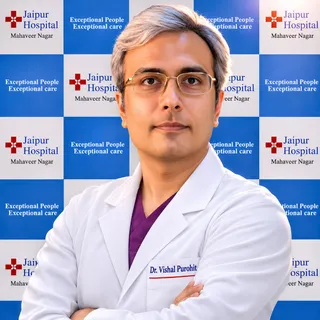
Your plastic surgery doctors
Explore our plastic surgery hospital in Jaipur: every treatment, the doctors and what to expect at your visit.
Frequently asked questions
Questions patients ask about tummy tuck (abdominoplasty)
What does abdominoplasty involve?
In short
Abdominoplasty at Jaipur Hospital removes excess skin and fat from the abdomen and tightens the underlying muscles. The operation takes two to four hours under general anaesthesia. You usually stay in hospital for two to three nights. The surgeon chooses the technique based on how much skin and muscle laxity you have.
In detail
The surgeon makes an incision low on the abdomen, often from hip to hip for a full abdominoplasty, and repositions the navel. Separated rectus muscles are stitched together to firm the abdominal wall. A mini abdominoplasty uses a shorter incision for the lower abdomen only.
An extended or fleur-de-lis pattern may be used when there is excess tissue on the flanks or after massive weight loss. The procedure is not a weight-loss operation; it contours the abdomen after weight or pregnancy changes.
A common belief
Many people think it is a weight-loss surgery.
What actually happens
It is not. It reshapes the abdomen after the weight is already stable. The scar runs low across the belly and its length depends on how much skin is removed.
Your next step at Jaipur Hospital
You will meet your surgeon for a consultation and examination. Photographs are taken for records. The surgeon explains which technique suits you and discusses the typical price range of ₹1,50,000 to ₹3,50,000. You receive instructions on stopping certain medicines and arranging an attendant.
Which tests and scans do I need before abdominoplasty?
In short
Before abdominoplasty at Jaipur Hospital, you usually need routine blood tests such as haemoglobin, blood group, clotting profile, blood sugar, and liver and kidney function. A chest X-ray and ECG are standard for general anaesthesia fitness. Your surgeon may order an ultrasound of the abdomen if a hernia is suspected.
In detail
The pre-anaesthesia check ensures you can tolerate general anaesthesia safely. Blood tests screen for anaemia, infection risk, and clotting ability. The ECG checks heart rhythm, and the chest X-ray rules out lung disease.
If you have medical conditions like diabetes or hypertension, additional reports from your physician may be asked for.
No specialised imaging like CT or MRI is routine unless the surgeon finds a specific concern during examination, such as a ventral hernia that might need repair at the same time.
A common belief
Patients often expect a long list of special scans.
What actually happens
In reality, only basic fitness tests are routine. Extra imaging is ordered only when the surgeon suspects something specific, like a hernia.
Your next step at Jaipur Hospital
All tests can be done at the in-house diagnostic laboratory at Jaipur Hospital. Results are typically available within a day. The anaesthesia team reviews them before surgery.
How painful is tummy tuck surgery and the early recovery?
In short
You will be asleep under general anaesthesia during tummy tuck surgery at Jaipur Hospital, so you will not feel pain during the operation. After surgery, your abdomen will feel sore and tight. Discomfort is usually most noticeable in the first week and improves steadily over the following weeks.
In detail
General anaesthesia keeps you comfortable during the two to four hour operation. Once the anaesthetic wears off, you may feel tired, disoriented and sore around the abdomen. A pulling or tight sensation is common as the tightened muscles and skin heal.
Bruising and numbness often appear in the first weeks. Your surgeon will advise which pain relievers are safe for you and the most suitable positions to sit or lie down to minimise discomfort. Most people start feeling more like themselves after a couple of weeks, though full recovery takes longer.
A common belief
Many people expect sharp pain, but the main sensation is a dull ache and pulling as the muscles heal.
What actually happens
Numbness and bruising are normal and fade with time.
Your next step at Jaipur Hospital
Plan for at least one week off work, with desk work usually possible in three to four weeks. Avoid strenuous activity and heavy lifting for four to six weeks. Take prescribed pain medication as directed and wear any support garment provided. Keep follow-up appointments so your surgeon can check healing.
How long does recovery usually take after a tummy tuck?
In short
You can usually return to desk work in three to four weeks. Strenuous exercise should be postponed for four to six weeks. Final results may take up to three months to appear and the scar continues to improve for up to one year. Jaipur Hospital follows this typical timeline.
In detail
Evidence shows that immediately after surgery you will be under observation until the anaesthetic wears off. During the first week it is normal to feel discomfort. You should start feeling more like yourself after a couple of weeks. Bruising and numbness are common.
You may feel a tightness or pulling sensation around your abdomen as you heal. On average you will need at least one week off work. If you are exceptionally physically active you will have to postpone strenuous exercise for four to six weeks.
It could take up to three months to see the final result and the scar will continue to improve further for up to one year.
A common belief
Many people expect a two-week bounce-back.
What actually happens
Abdominal muscle tightening and skin healing need longer protection than skin-only procedures.
Your next step at Jaipur Hospital
Follow your surgeon's specific instructions on activity, wound care and compression garments. Walk gently from day one but avoid running or lifting heavy objects. Attend all follow-up visits. Gradually increase activity as approved.
Are my expectations realistic for my anatomy and health for a tummy tuck?
In short
A tummy tuck removes excess skin and fat and tightens abdominal muscles. It is not a weight loss solution. Results can last a long time but weight changes can affect the outcome. Jaipur Hospital evaluates your anatomy, health and goals at consultation to determine if your expectations are realistic.
In detail
Evidence shows that a tummy tuck addresses a protruding stomach or loose sagging skin. The results are long-lasting but changes to your weight can affect the outcome over time. A tummy tuck does not prevent weight gain.
You may need to adjust your lifestyle to maintain the results, like eating nutritious foods and exercising. The ideal candidate should be at a stable weight, not planning future pregnancy, and in good general health. Your surgeon will discuss what your specific anatomy can achieve.
A common belief
Many people expect the surgery to keep them slim forever.
What actually happens
Future weight gain or pregnancy will stretch the repaired tissues again.
Your next step at Jaipur Hospital
Bring photos of your desired outcome to the consultation. Be honest about your weight history and future plans. Your surgeon will explain what is achievable for your body type.
How will appearance, function, and realistic expectations be discussed for a tummy tuck?
In short
At Jaipur Hospital, the consultation for a tummy tuck covers the planned changes to your abdominal contour, the functional effect of muscle tightening, and what you can realistically expect. The surgeon examines your skin quality, muscle separation, fat distribution and any hernias. You discuss your goals, the technique options and the likely scar pattern. The conversation is two-way and tailored to your anatomy.
In detail
A tummy tuck removes excess skin and fat and repairs the rectus abdominis muscles. This can improve core strength, reduce back strain from muscle separation and remove skin folds that cause rashes.
The surgeon explains how much skin can be removed, where the incisions will lie and how the navel will be repositioned.
You learn the limits: the procedure does not treat stretch marks above the navel, does not prevent future weight gain and does not substitute for weight loss. Pre-existing asymmetry, rib cage shape and pelvic structure influence the final shape.
You receive information on recovery, activity restrictions, scar care and possible complications such as seroma, infection or wound healing delay. All questions are answered before you decide.
A common belief
Some patients expect a flat stomach regardless of their starting anatomy.
What actually happens
The surgeon explains limits set by skin elasticity, muscle quality, bone structure and healing. You learn the trade-offs so you can decide with full information.
Your next step at Jaipur Hospital
The consultation lasts as long as needed. You may bring an attendant. After the discussion, you receive a summary of the plan and the typical price range of ₹1,50,000 to ₹3,50,000.
Why might my doctor recommend abdominoplasty?
In short
A doctor may recommend abdominoplasty at Jaipur Hospital when you have excess abdominal skin, stubborn fat deposits, or separated muscles that do not improve with diet and exercise. Common reasons include changes after pregnancy or significant weight loss. The procedure firms and flattens the abdomen when non-surgical measures have not worked.
In detail
Pregnancy and weight fluctuations stretch the skin and the rectus abdominis muscles. Once stretched, the skin often loses elasticity and cannot shrink back. The muscle separation, called diastasis recti, weakens the core and can cause a bulge.
Abdominoplasty removes the redundant skin and fat and repairs the muscle layer. It is not a substitute for weight loss. Candidates should be at a stable weight and not planning future pregnancies, as these can reverse the improvement.
A common belief
It is not a shortcut for weight loss.
What actually happens
The results last only if your weight stays stable. Future pregnancy can stretch the repair again, so timing matters.
Your next step at Jaipur Hospital
Your surgeon will assess your abdomen, review your medical history, and discuss your goals. If you are still losing weight or plan more children, the surgeon will advise waiting. You will receive a personalised estimate within the typical range of ₹1,50,000 to ₹3,50,000.
How should I prepare in the days before abdominoplasty?
In short
In the days before abdominoplasty at Jaipur Hospital, you should stop smoking and tobacco use completely, as they impair healing. Eat balanced, nutritious meals and stay hydrated. Arrange for an attendant to stay with you in hospital and drive you home. Prepare loose, comfortable clothing that opens at the front.
In detail
Your surgeon will give a specific list of medicines to pause, usually blood thinners, aspirin, and non-steroidal anti-inflammatory drugs, several days before surgery. Do not stop any prescribed medicine without the surgeon's approval. Avoid herbal supplements like garlic, ginkgo, or ginseng that can increase bleeding.
Shower with an antiseptic soap the night before and the morning of surgery. Do not apply lotions or oils. Fast from midnight before the operation as instructed by the anaesthesia team.
A common belief
Many patients keep taking supplements like fish oil or vitamin E, not realising they increase bleeding risk.
What actually happens
Tell your surgeon everything you take, even herbal products.
Your next step at Jaipur Hospital
Fill any prescribed post-operative medicines beforehand so they are ready at home. Set up a recovery area with pillows to keep your hips and knees slightly bent, which reduces tension on the incision. The typical hospital stay is two to three nights.
What are the common side effects and the less common serious complications of a tummy tuck (abdominoplasty)?
In short
Common side effects after a tummy tuck at Jaipur Hospital include bruising, swelling, numbness around the incision, and a feeling of tightness or pulling in the abdomen. These usually improve over weeks. Less common but serious complications can include infection, seroma (fluid build-up), haematoma (blood collection), poor wound healing, or a blood clot in the legs. Your surgeon will discuss these risks at your consultation.
In detail
Evidence shows early wound complications such as seroma or haematoma occur in about 11 percent of cases, while wound infections are seen in roughly 8 percent.
Scarring is inevitable; the scar runs low across the abdomen and its length depends on how much skin is removed. A mini abdominoplasty typically leaves a shorter scar. Scars fade over a year but may remain widened in some patients.
Serious complications like deep vein thrombosis or pulmonary embolism are rare but require urgent care. Smoking significantly increases the risk of wound healing problems and infection.
A common belief
People often focus only on the scar, but the main early risks are wound healing issues and fluid collections.
What actually happens
Smoking makes these much more likely. The scar itself fades over a year but never disappears completely.
Your next step at Jaipur Hospital
Follow all post-operative instructions on wound care, activity limits, and wearing a compression garment. Attend every follow-up visit so your surgeon can check healing and drain any fluid if needed.
Seek immediate medical attention if you develop sudden shortness of breath, chest pain, calf swelling, fever, or increasing redness and discharge from the wound.
Which symptoms are expected after a tummy tuck (abdominoplasty), and which need urgent medical attention?
In short
Expected symptoms after a tummy tuck at Jaipur Hospital include soreness, bruising, swelling, numbness around the incision, and a tight pulling sensation in the abdomen. These improve over weeks. Contact your surgeon immediately if you develop fever, increasing redness or warmth around the wound, foul-smelling discharge, sudden severe pain, calf swelling, shortness of breath, or chest pain.
In detail
Normal healing involves bruising and numbness that can last several weeks. A seroma (fluid collection) may form and feel like a soft swelling; your surgeon can drain it at a follow-up.
Wound infections occur in about 8 percent of cases and usually present with spreading redness, heat, and pus. A haematoma (blood collection) causes sudden swelling and pain.
Blood clots in the leg (deep vein thrombosis) cause calf pain and swelling; if a clot travels to the lungs it causes sudden breathlessness and chest pain — both are emergencies.
- Wound infections occur in about 8 percent of cases and usually present with spreading redness, heat, and pus.
A common belief
Patients often wait too long hoping a problem will settle.
What actually happens
A hot, red wound or a swollen calf needs same-day evaluation. Early treatment prevents a small issue from becoming a major setback.
Your next step at Jaipur Hospital
Check your wound daily. Keep it clean and dry as instructed. Take prescribed pain relief and antibiotics if given. Walk gently several times a day to promote circulation. Do not ignore new or worsening symptoms. Call the hospital or go to the emergency department for any of the urgent signs listed.
FAQ library
Questions and answers about tummy tuck (abdominoplasty)
When you contact us
Get your surgical plan and estimate
Contact Jaipur Hospital for an OPD consultation with our plastic surgery team to review your case and receive a cost estimate before you decide.
- A consultation with a plastic surgeon in the OPD
- Your scans and reports reviewed, with tests done in-house if you need them (laboratory, X-ray and imaging)
- Your options explained in plain words, including whether you need surgery at all
- A cost estimate before you decide
- Help with cashless treatment under RGHS, MAA Yojana, CGHS and empanelled insurers and TPAs
- Follow-up visits after your treatment
Overview
Tummy Tuck (Abdominoplasty): what to know
What a tummy tuck (abdominoplasty) is
- Removes excess skin and fat
- From the abdomen
- Tightens abdominal muscles
- Repairs muscle separation
- Not a weight loss solution
- For body contouring after weight changes
A tummy tuck (abdominoplasty) is a plastic surgery procedure that removes excess skin and fat from your abdomen and tightens the muscles in your abdominal wall. It firms, flattens and smooths the abdomen. The procedure addresses a protruding stomach or loose, sagging skin that does not improve with diet or exercise.
It is not a weight loss solution, but it can help you get the look you want after changes to your body size.
Symptoms and warning signs that need urgent care the same day
- Severe pain, bleeding or swelling Contact provider right away
- Signs of infection Increasing redness, warmth or fever
The condition itself is not an illness, so there are no medical symptoms that require urgent care before surgery. After a tummy tuck, you should contact a healthcare provider right away if you experience severe pain, bleeding or swelling. Signs of infection such as increasing redness, warmth or fever also need prompt attention. If you notice any of these complications after surgery, seek care the same day.
Causes and who is at higher risk
- Pregnancy
- Stretches muscles and skin
- Significant weight loss
- Leaves excess skin
- Ageing
- Reduces skin elasticity
- Smoking
- Increases complications and delays healing
Excess abdominal skin and weakened muscles commonly develop after pregnancy, significant weight loss or ageing. Your muscles and skin can stretch after pregnancy, which can affect the outcome of this procedure. You may be a suitable candidate if you are at a stable weight, do not smoke and have realistic expectations.
If you are in the process of reaching your ideal weight, you should not undergo a tummy tuck right away. If you plan on expanding your family, your surgeon will recommend you postpone a tummy tuck. Smoking tobacco products can increase the risk of complications and delay healing.
If you smoke, you will have to stop for a certain period your provider sets, often at least one month before surgery and at least two weeks after. You may have an increased risk of complications if you have an underlying health condition that affects your blood circulation or wound healing.
How it is diagnosed: examination and tests
Before a tummy tuck procedure, you will meet with a plastic surgeon for a consultation. Your surgeon will learn more about your medical history, goals and the results you want. Your provider will take photographs of your abdominal area to compare the before and after results of your procedure.
A physical examination of your abdomen checks:
- The amount of excess skin
- Fat
- The degree of muscle separation
No special scans or blood tests are required for the diagnosis itself, but routine pre-operative investigations may be ordered to ensure you are fit for general anaesthesia.
Treatment options without surgery, and when surgery is advised
Non-surgical options include maintaining a stable weight through balanced nutrition and regular exercise, which can improve abdominal tone but cannot remove excess skin or repair separated muscles. Skin tightening devices, injections or topical treatments do not achieve the same result as surgery.
Surgery is advised when excess skin and fat persist despite a stable weight, when abdominal muscles remain separated (diastasis recti) causing a bulge, or when the appearance affects your confidence and daily comfort.
Your surgeon will discuss the type of abdominoplasty that suits you — full, mini, extended or fleur-de-lis — based on the amount of tissue to be removed and the area involved.
Preparing for a tummy tuck operation
- Consultation and photographs Medical history, goals, before photos
- Stop blood-thinning medicines and supplements Includes aspirin and NSAIDs
- Stop smoking for set period At least one month before, two weeks after
Before a tummy tuck procedure, you will meet with a plastic surgeon for a consultation. Your surgeon will learn more about your medical history, current health and the results you want. Your provider will take photographs of your abdominal area to compare the before and after results of your procedure.
Your surgeon may instruct you to stop taking certain blood-thinning medications and dietary supplements for a period before and after the surgery. This includes aspirin and nonsteroidal anti-inflammatories (NSAIDs). Do not stop taking any medications unless a healthcare provider approves it.
If you smoke, you will have to stop for a period your provider sets. For example, you may need to stop using tobacco products for at least one month before surgery and for at least two weeks after. Smoking tobacco products can increase the risk of complications and delay healing.
If you are in the process of reaching your ideal weight, do not undergo a tummy tuck right away. If you plan on expanding your family, your surgeon will recommend you postpone a tummy tuck. Your surgeon will also recommend you eat well-balanced, complete meals before and after the procedure. Achieving proper nutrition can help your body heal.
On the day of your procedure, you will receive general anaesthesia. This will put you to sleep so you will not feel any pain. The operation usually takes 2 to 4 hours. You will need to fast for several hours before the anaesthetic; your anaesthetist will give you the exact timing.
Bring an attendant who can stay with you and drive you home after discharge. Pack comfortable, loose clothing that does not press on your abdomen, any regular medicines you have been told to continue, and personal items for a 2 to 3 night hospital stay.
How a tummy tuck operation is done
A tummy tuck (abdominoplasty) is a procedure to remove excess skin and fat from your abdomen. A plastic surgeon will remove excess fat and skin and tighten muscles in your abdominal wall. The steps vary based on what type your surgeon performs. Depending on the results you want, a tummy tuck can take anywhere from one to five hours. At Jaipur Hospital, the typical operation time is 2 to 4 hours under general anaesthesia.
Your surgeon will advise which technique suits you. The main options are:
- Full Abdominoplasty: Hip-to-hip incision with umbilical transposition.
- Mini Abdominoplasty: Shorter incision for lower abdomen only.
- Extended Abdominoplasty: Includes flank and lateral thigh contouring.
- Fleur-de-Lis Abdominoplasty: Vertical and horizontal excision for massive weight loss.
A shorter procedure, like a mini abdominoplasty, usually results in a smaller scar. The size of the scar depends on the amount of extra skin your surgeon will remove. After the procedure, you will be under observation until your anaesthetic wears off and your surgeon approves you to go home.
You will need to have someone with you who can drive you home after surgery. If possible, ask a friend or family member for help at home during the first day.
Risks and possible complications of a tummy tuck
- 19 percent Early wound complications
- 8 percent Early wound infections
- 11 percent Early seroma or haematoma
- 10 percent Early reoperation
A tummy tuck is generally a safe procedure, but as with any surgery, there are risks.
Complications of a tummy tuck may include:
- Infection
- Bleeding
- Seroma (fluid collection)
- Haematoma (blood collection)
- Poor wound healing
- Changes in skin sensation
- Asymmetry
A tummy tuck causes scarring on your abdomen. The scar will form at the incision site(s). Scars will fade with time, but some may remain widened.
In studies of abdominal wall reconstruction, the weighted mean incidence of early wound complications was 19 percent. The weighted mean incidence of early wound infections was 8 percent. The weighted mean incidence of early seroma or haematoma formation was 11 percent. The weighted mean incidence of early reoperation was 10 percent.
The weighted mean incidence of late hernia recurrence was 8 percent. The weighted mean incidence of late mesh explantation was 2 percent. Contact a healthcare provider if you notice complications or experience severe pain, bleeding or swelling. Contact a healthcare provider right away if you experience complications after surgery.
Recovery and aftercare after a tummy tuck
- Immediately after Tired, sore, disoriented; pain relief given
- First week Discomfort normal; walk carefully, no heavy lifting
- Couple of weeks Feeling more like yourself; bruising and numbness common
- 3 to 4 weeks Typical return to desk work at Jaipur Hospital
Immediately after tummy tuck surgery, you may feel tired and disoriented as the anaesthetic wears off. Your abdomen will feel sore after the procedure. Your provider will let you know what kind of pain relievers are safe for you to take for discomfort.
Your surgeon will also tell you about the most suitable way to sit or lie down so you will be in the least amount of pain. Your plastic surgeon will give you specific instructions to follow after surgery to help you heal.
You should limit excessive physical activity immediately after surgery — especially strenuous activities — until your healthcare provider approves it. You can get up and walk around carefully but avoid running or lifting heavy objects. During the first week, it is normal to feel discomfort. You should start feeling more like yourself after a couple of weeks.
Bruising and numbness are common during this time. You may feel a tightness or pulling sensation around your abdomen as you heal. This will go away.
After a tummy tuck, you will need to limit your activities. If you are exceptionally physically active, you will have to postpone strenuous exercise for four to six weeks. On average, you will need at least one week off work after the surgery. At Jaipur Hospital, the typical recovery for desk work is 3 to 4 weeks.
It could take up to three months to see the final result. In addition, the scar will continue to improve further for up to one year. Call the hospital if you develop a fever, increasing redness or warmth around the wound, sudden swelling, severe pain not relieved by prescribed medicine, or any fluid leaking from the incision.
Results of a tummy tuck: how well it works and recurrence
- Results are long-lasting
- Weight changes can affect outcome over time
- Not a weight loss solution
- Does not prevent weight gain
- Pregnancy can affect outcome
- Muscles and skin can stretch after pregnancy
The results of a tummy tuck are long-lasting, but changes to your weight can affect the outcome of the procedure over time. A tummy tuck does not prevent weight gain. Weight fluctuations can affect the outcome over time. You may need to adjust your lifestyle to maintain the results, like eating nutritious foods and exercising.
Everyone has a different, often personal reason for undergoing this procedure. The benefits may vary from person to person. A tummy tuck can address a protruding stomach or loose or sagging skin. A tummy tuck is not a weight loss solution, but it can help you get the look you want after changes to your body size.
Your muscles and skin can stretch after pregnancy, which can affect the outcome of this procedure. In studies of abdominal wall reconstruction with mesh, the technique is reliable and durable, with a 5 percent recurrence rate at 2 years. Mesh implantation during abdominal wall reconstruction decreases rates of ventral hernia recurrence. Recurrence rates were highest for onlay or interposition reinforcement.
Cost and insurance for a tummy tuck in Jaipur
The typical price range for a tummy tuck in India is ₹1,50,000 to ₹3,50,000. The final cost depends on the type of abdominoplasty performed, the complexity of the case, the length of the hospital stay, and whether any additional procedures are done at the same time. Jaipur Hospital is a NABH-accredited multispeciality hospital established in February 1991.
The hospital accepts patients under RGHS, MAA Yojana, CGHS, and a panel of private insurers and TPAs. Cosmetic procedures are usually not covered by these schemes; your surgeon can clarify what applies in your case. For an estimate, contact the hospital on 0141-2551500, 0141-2554139, or 7414 001 001, or email [email protected].