
Plastic Surgery · Jaipur Hospital
VAC Dressing (Negative Pressure Wound Therapy) in Jaipur
Wounds that will not heal? We assess, plan and apply vacuum-assisted closure therapy.
- Serving Jaipur since 1991 (35 years)
- NABH accredited
- 24×7 emergency & ICU
- Cashless: RGHS, MAA Yojana, CGHS + 32 insurers
- Procedure time
- 30 to 60 minutes
- Anaesthesia
- Local anaesthesia or sedation
- Recovery
- Dressing changes every 2 to 3 days for weeks
- Price
- ₹5,000 to ₹15,000 per sessiontypical range in India; ask us for an estimate
Wounds that stall
Your wound is not closing despite regular dressings
Fluid builds up, edges stay apart and infection risk rises. Daily dressing changes hurt and disrupt work or home life. You worry the wound will worsen or need major surgery.
-
Fluid and swelling persist
Exudate pools in the wound, slowing new tissue growth and increasing discomfort.
-
Infection risk stays high
Bacteria thrive in moist, open wounds, raising the chance of deeper infection.
-
Daily changes disrupt life
Frequent clinic visits or home nursing take time, cost money and cause pain.
-
Healing feels stuck
Weeks pass with little visible progress, creating anxiety about long-term outcomes.
Delayed wound healing particularly in difficult wounds and in elderly with co morbidities is a major concern.
Why Jaipur Hospital
You are tired of painful dressing changes, the smell, the cost and the fear that the wound may never close.
Your care plan
Your first steps with us
- 1 Call or visit OPD for surgeon assessment
- 2 Get scans and lab tests done in-house
- 3 Start VAC therapy with a clear dressing schedule
- 4 Attend follow-ups until the wound is ready for closure
How VAC dressing is applied
After cleaning and debridement, foam or gauze is placed in the wound, sealed with adhesive film and connected to a suction device. The machine runs at a set pressure. Dressings are usually changed every two to three days.
-
Standard VAC therapy
Continuous negative pressure at 125 mmHg removes fluid and draws wound edges together.
-
Instillation VAC (VAC Veraflo)
Periodic topical solution instillation combined with suction for wounds needing irrigation.
-
Prevena incision management
Prophylactic use on closed surgical incisions to reduce complications in high-risk cases.
-
Bridge dressing technique
Protects exposed vessels, bone or hardware while applying negative pressure around them.
Why patients trust us
- 1991 Serving Jaipur for 35 years
- NABH Accredited hospital
- 1 Plastic Surgery consultants
- 24×7 Emergency, ICU and ambulance
- 35 Cashless schemes and insurers
What studies report about VAC therapy
-
RR 0.54 for wound infection
Patients receiving NPWT had about half the wound infection rate of those with standard dressings.
-
RR 0.48 for seroma
Seroma formation was reduced by more than half with incisional NPWT compared with standard dressings.
-
RR 1.40 for healed wounds
Pooled data suggest NPWT may increase the proportion of wounds healed by 40 percent versus dressings.
If it is left untreated
If left untreated, complex wounds can deepen, infect bone, lead to sepsis or require amputation, especially in diabetes. Early aggressive intervention reduces morbidity, prolonged treatment and major reconstructive surgery.
Life after VAC therapy
Most people see the wound shrink, become cleaner and reach a stage where it can close on its own or with a smaller procedure.
-
Smaller, cleaner wound
Negative pressure removes fluid and bacteria, so the wound bed looks healthier at each change.
-
Fewer dressing visits
Changes every two to three days replace daily gauze changes, giving you more normal days.
-
Ready for closure
Granulation tissue fills the defect, allowing the surgeon to close it simply or let it heal.
-
Less chance of big surgery
Good wound bed preparation often avoids the need for flaps or grafts.
Meet the team
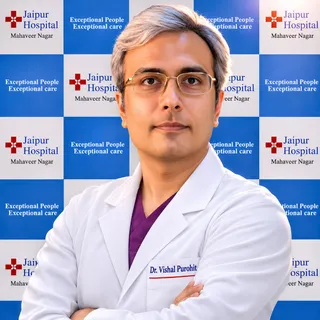
Your plastic surgery doctors
Explore our plastic surgery hospital in Jaipur: every treatment, the doctors and what to expect at your visit.
Frequently asked questions
Questions patients ask about vac dressing (negative pressure wound therapy)
What does negative pressure wound therapy involve?
In short
Negative pressure wound therapy at Jaipur Hospital uses a vacuum device to remove fluid and bacteria from a wound. A foam or gauze dressing is placed on the wound, sealed with an adhesive film, and connected to a pump that creates controlled suction. This helps the wound shrink and encourages healthy tissue to grow.
In detail
The procedure starts with thorough cleaning and debridement of the wound. Sterile foam is cut to fit, a fenestrated tube is embedded in the foam, and the area is sealed airtight with adhesive tape. The tube connects to a vacuum pump with a collection canister.
The machine delivers continuous or intermittent suction, typically between 50 and 125 mmHg. This negative pressure removes excess fluid, reduces swelling, lowers bacterial load, improves blood flow, and stimulates granulation tissue and new blood vessel formation. Dressings are usually changed every two to three days.
The therapy can be used for open wounds, complex acute wounds, or as preparation for skin grafts and flaps. It is also applied on closed surgical incisions to prevent complications.
A common belief
Many people think it is just a fancy bandage.
What actually happens
In fact, the controlled negative pressure actively changes the wound environment by reducing swelling, improving blood flow, and stimulating new tissue growth at a cellular level.
Your next step at Jaipur Hospital
Your surgeon will assess your wound and decide if this therapy is suitable. If approved, the first application takes about 30 to 60 minutes under local anaesthesia or sedation. You may stay for day care or one to three nights.
Dressing changes continue every two to three days for several weeks. The typical cost per session ranges from ₹5,000 to ₹15,000.
What happens during the first session of negative pressure wound therapy?
In short
During the first session at Jaipur Hospital, your surgeon cleans the wound thoroughly, removes dead tissue, and ensures bleeding is controlled. A sterile foam or gauze dressing is cut to fit the wound, a fenestrated tube is placed in the foam, and the area is sealed with an adhesive film. The tube connects to a vacuum pump and canister.
In detail
The procedure takes 30 to 60 minutes under local anaesthesia or sedation. After debridement and haemostasis, the foam dressing is applied. The fenestrated tube is embedded in the foam and the wound is sealed airtight with adhesive tape.
The tube connects to a vacuum pump with a fluid collection container. The machine is programmed to deliver continuous or intermittent suction, usually between 50 and 125 mmHg.
The negative pressure draws wound fluid into the canister, reduces swelling, lowers bacterial load, and stimulates granulation tissue. You may stay for day care or one to three nights depending on the wound complexity and your overall health. The dressing remains in place for two to three days before the first change.
A common belief
It is not just sticking on a bandage.
What actually happens
The wound must be thoroughly debrided and haemostasis achieved first. The seal must be airtight for the suction to work, and the pressure setting is chosen specifically for your wound type.
Your next step at Jaipur Hospital
After the first application, you will return for dressing changes every two to three days. Each session costs typically ₹5,000 to ₹15,000. The total number of sessions depends on how your wound responds. Your surgeon will monitor progress at each change.
How soon should I notice an improvement with VAC dressing therapy?
In short
With VAC dressing therapy at Jaipur Hospital, many patients see the wound look cleaner and smaller within the first week, but the exact timing depends on the wound type, size, and your overall health. Studies show median healing time can be several weeks shorter than with standard dressings, yet individual results vary.
In detail
Negative pressure removes excess fluid, reduces swelling, lowers bacterial load, and stimulates granulation tissue and new blood vessel growth.
In research, the hazard ratio for faster healing with NPWT compared with moist dressings was about 1.8 to 1.9, meaning healing occurred nearly twice as fast on average. However, chronic wounds, diabetic foot ulcers, and wounds with exposed bone or hardware may take longer. Your surgeon assesses progress at each dressing change, usually every two to three days.
A common belief
Some people expect the wound to close in days.
What actually happens
Evidence shows NPWT speeds healing compared with standard dressings, but it is not instant. Chronic or complex wounds still need time and regular monitoring.
Your next step at Jaipur Hospital
Expect dressing changes every two to three days for several weeks. The device runs continuously; you keep it on day and night. Improvement is tracked by wound measurements, photographs, and the amount of fluid in the canister. If the wound does not show healthy granulation tissue after two weeks, the plan may be adjusted.
How does the term NPWT relate to negative pressure wound therapy?
In short
NPWT is the standard medical abbreviation for negative pressure wound therapy. At Jaipur Hospital, both terms describe the same treatment: a sealed dressing connected to a vacuum pump that applies controlled negative pressure to a wound. The therapy removes fluid, reduces swelling, and encourages healthy tissue growth.
In detail
Negative pressure wound therapy involves placing an open-cell foam or gauze over the wound, sealing it with an adhesive film, and connecting it to a suction device. The machine delivers continuous or intermittent suction, typically between 50 and 125 mmHg.
NPWT is synonymous with topical negative pressure and vacuum therapy. The branded name VAC (vacuum-assisted closure) is also used interchangeably.
Studies confirm NPWT promotes angiogenesis, granulation tissue formation, and reduces bacterial load and oedema, creating an environment that supports healing in complex acute and chronic wounds.
A common belief
Patients sometimes think NPWT is a newer or different version.
What actually happens
It is not. The terms are used interchangeably in medical notes, research, and conversation.
Your next step at Jaipur Hospital
Your surgeon will use the term NPWT or VAC therapy in your notes and discussions. The procedure takes 30 to 60 minutes to apply, usually under local anaesthesia or sedation. Dressing changes occur every two to three days for several weeks. The typical cost range in India is ₹5,000 to ₹15,000 per session.
Why is the wound not healing?
In short
A wound may not heal due to poor blood supply, infection, diabetes, pressure, or the presence of dead tissue. At Jaipur Hospital, our surgical team assesses each factor to find the cause of delayed healing in your case.
In detail
Delayed healing is common in difficult wounds and in elderly patients with comorbidities. Factors include reduced tissue perfusion, bacterial colonisation, persistent inflammation, and mechanical stress on the wound edges.
Negative pressure wound therapy helps by stabilising the wound environment, reducing oedema, lowering bacterial load, improving perfusion, and stimulating granulation tissue and angiogenesis. These changes create conditions that support the natural healing cascade and can prepare the wound for closure or simpler reconstruction.
A common belief
Many patients assume more time or stronger antibiotics will fix it.
What actually happens
In reality, the wound environment itself must be changed — reducing swelling, clearing bacteria, and stimulating blood vessel growth — which is what negative pressure therapy does.
Your next step at Jaipur Hospital
Your surgeon will examine the wound, review your medical history, and may order tests to identify the specific barriers to healing. This assessment usually happens at the first consultation. Once the cause is known, a tailored plan including VAC therapy can be started.
How will appearance, function, and realistic expectations be discussed?
In short
At Jaipur Hospital, your surgeon will discuss the expected wound appearance, functional outcome and realistic timelines during the consultation and at each follow-up visit. The conversation is based on your wound type, overall health and response to therapy.
In detail
Negative pressure wound therapy reduces wound volume, promotes granulation and prepares the wound for closure, which may be spontaneous healing, skin grafting or flap surgery.
Studies show VAC therapy can reduce wound size more effectively than conventional dressings and may lower the need for complex plastic procedures. However, complete healing time varies widely.
In studies of diabetic foot ulcers, median healing was 21 days shorter with NPWT, but many wounds required weeks to months. Functional outcome depends on the wound location, depth and whether underlying structures such as tendons or bone were involved.
Your surgeon will explain what improvement looks like at each stage, what final appearance to expect and any likely limitations in movement or sensation.
A common belief
Patients sometimes expect the wound to close completely within days.
What actually happens
In reality, VAC therapy shrinks the wound and builds healthy tissue, but full closure may take weeks and sometimes needs a skin graft or flap. Function depends on how deep the wound was and what structures were involved.
Your next step at Jaipur Hospital
You will have the opportunity to ask questions at every dressing change and scheduled review. Photographs and wound measurements are used to track progress objectively. If healing stalls, the plan is adjusted promptly.
Who is likely to benefit from negative pressure wound therapy?
In short
Patients with complex, non-healing wounds, open fractures, dehisced surgical wounds, diabetic foot ulcers, or large wounds needing preparation for grafts or flaps may benefit from negative pressure wound therapy at Jaipur Hospital. It is also used on closed incisions in high-risk patients to prevent infection and seroma.
In detail
Evidence shows this therapy helps wounds that are slow to heal due to poor blood supply, infection, or underlying conditions like diabetes. It reduces wound volume, promotes granulation tissue, and lowers bacterial load.
In studies, it lowered surgical site infection rates and seroma formation compared with standard dressings. It is used for open abdominal wounds, dehisced sternal wounds after cardiac surgery, and lower limb open fractures.
For closed incisions, incisional negative pressure wound therapy is applied immediately after surgery in patients at high risk of wound complications.
The therapy is not suitable for everyone; wounds with untreated osteomyelitis, exposed blood vessels or organs, malignancy in the wound, or necrotic tissue with eschar need evaluation first.
A common belief
It is not for every wound.
What actually happens
Wounds with active untreated bone infection, exposed major vessels, or cancer in the wound bed need different treatment first. A proper surgical assessment is essential before starting.
Your next step at Jaipur Hospital
Your surgeon will review your wound type, medical history, and overall health to decide if you are a candidate. If suitable, treatment can start after a consultation. Sessions last 30 to 60 minutes with dressing changes every two to three days. Typical cost per session is ₹5,000 to ₹15,000.
How long does a negative pressure wound therapy session last?
In short
A negative pressure wound therapy session at Jaipur Hospital typically lasts 30 to 60 minutes. This includes wound cleaning, debridement if needed, application of the foam dressing, sealing, and connecting the vacuum device. The first session may take the full hour, while subsequent dressing changes can be quicker.
In detail
The procedure time covers thorough wound preparation, which is essential for the therapy to work. The surgeon removes non-viable tissue, ensures haemostasis, cuts the foam to fit the wound contours, embeds the fenestrated tube, and creates an airtight seal with adhesive film.
The pump is then programmed to the prescribed pressure, usually between 50 and 125 mmHg. Once the device is running and the seal is confirmed, the session ends. The dressing stays in place continuously for two to three days.
You may be in the hospital for day care or stay one to three nights for the initial application, depending on the wound and your health.
Subsequent dressing changes are done in the outpatient department or at home with a visiting nurse, each taking a similar amount of time.
A common belief
The time is not just for putting on a dressing.
What actually happens
Proper debridement, haemostasis, and an airtight seal are critical. If the seal leaks, the therapy does not work. That is why each change is done carefully by trained staff.
Your next step at Jaipur Hospital
Plan for about an hour per visit. Dressing changes occur every two to three days for several weeks. The typical cost per session is ₹5,000 to ₹15,000. Your surgeon will advise on the expected total duration at your consultation.
How will progress be measured during VAC dressing therapy?
In short
At Jaipur Hospital, progress during VAC dressing therapy is measured at each dressing change, typically every two to three days. The surgical team records wound dimensions, depth, the amount and type of exudate, the appearance of granulation tissue, and the volume of fluid collected in the canister. Photographs may be taken for comparison.
In detail
Negative pressure wound therapy works by removing fluid, reducing oedema, and stimulating granulation and angiogenesis. Objective tracking lets the team see if the wound is moving through the expected phases: less exudate, healthy pink granulation tissue filling the defect, and shrinking wound edges.
Studies report that NPWT reduces wound volume more effectively than conventional dressings. The canister volume gives a daily measure of fluid removal. Wound tracing or digital planimetry provides surface area reduction. These data guide decisions on continuing, adjusting, or stopping therapy.
A common belief
Patients often think feeling better means healing.
What actually happens
But a wound can feel fine while still having poor granulation or hidden fluid. Objective measurements catch problems early.
Your next step at Jaipur Hospital
You will attend the hospital or clinic for each dressing change. The nurse or surgeon cleans the wound, applies new foam, and reseals the dressing. They note changes in size, depth, and tissue quality.
If granulation tissue is not improving after two weeks, the surgeon may change the pressure setting, switch to instillation VAC, or plan surgical closure.
How does the term vacuum-assisted closure relate to negative pressure wound therapy?
In short
Vacuum-assisted closure, often shortened to VAC, is a branded name for negative pressure wound therapy. At Jaipur Hospital, the terms are used interchangeably. Both refer to a sealed dressing attached to a vacuum pump that applies controlled negative pressure to remove fluid and promote healing.
In detail
The technique places foam or gauze in the wound, seals it with an adhesive drape, and connects a fenestrated tube to a suction device with a collection canister. The machine delivers continuous or intermittent negative pressure, usually 50 to 125 mmHg.
VAC therapy is a specific commercial system, but the generic therapy is called negative pressure wound therapy or NPWT. Studies describe VAC as an effective method for difficult wounds, reducing wound volume and the need for complex reconstructive procedures.
The principles of fluid removal, oedema reduction, bacterial load decrease, and granulation stimulation are the same regardless of the name used.
A common belief
People often assume VAC is a special upgrade.
What actually happens
It is simply one commercial system. The healing mechanism is identical to generic NPWT.
Your next step at Jaipur Hospital
Your surgeon may write VAC therapy or NPWT in your plan. Application takes 30 to 60 minutes under local anaesthesia or sedation. Dressings are changed every two to three days. The typical price range in India is ₹5,000 to ₹15,000 per session.
FAQ library
Questions and answers about vac dressing (negative pressure wound therapy)
When you contact us
Get your wound assessed this week
Contact Jaipur Hospital for an OPD consultation with our plastic surgery team to review your wound and discuss a VAC therapy plan.
- A consultation with a plastic surgeon in the OPD
- Your scans and reports reviewed, with tests done in-house if you need them (laboratory, X-ray and imaging)
- Your options explained in plain words, including whether you need surgery at all
- A cost estimate before you decide
- Help with cashless treatment under RGHS, MAA Yojana, CGHS and empanelled insurers and TPAs
- Follow-up visits after your treatment
Overview
VAC Dressing (Negative Pressure Wound Therapy): what to know
What VAC dressing is and how it helps wound healing
- Controlled suction
- Portable pump creates negative pressure around 125 mmHg
- Removes fluid and bacteria
- Drains excess into a canister
- Improves blood flow
- Stimulates new tissue and tiny vessels
- Used for complex wounds
- Open fractures, diabetic ulcers, surgical wounds
Negative pressure wound therapy, often called VAC dressing or vacuum-assisted closure, is a treatment that uses controlled suction to help complex wounds heal. A special foam or gauze dressing is placed on the wound and sealed with an adhesive film. A small tube connects the dressing to a portable pump that creates negative pressure, usually around 125 mmHg.
This suction draws excess fluid and bacteria away from the wound into a canister, reduces swelling, and encourages healthy granulation tissue to form.
The therapy works by stabilising the wound environment, improving blood flow, and stimulating the growth of new tissue and tiny blood vessels.
It is used for many types of difficult wounds, including:
- Open fractures
- Diabetic foot ulcers
- Wounds that have opened after surgery
- Large abdominal or chest wounds that need time before they can be closed
In some cases it is applied to a closed surgical incision right after an operation to lower the chance of infection or fluid build-up.
At Jaipur Hospital the procedure takes about 30 to 60 minutes and is done under local anaesthesia or light sedation. It may be managed as a day-care visit or with a short stay of one to three nights. Dressings are usually changed every two to three days and treatment continues for several weeks depending on how the wound responds.
Symptoms of a wound that may need VAC therapy and when to seek urgent care
- High fever or chills Possible serious infection
- Rapidly spreading redness or red streaks Sign of worsening infection
- Sudden severe pain May indicate complication
- Dressing loose or leaking Seal broken
A wound that is not healing as expected may show:
- Increasing redness
- Warmth
- Swelling
- Pain around the edges
You may notice thick, foul-smelling discharge or pus, or the wound may look deeper and larger over time. In people with diabetes, a foot ulcer that does not shrink after several weeks of standard care is a common reason to consider this therapy.
Seek medical attention on the same day if you develop:
- A high fever
- Chills
- Rapidly spreading redness or red streaks from the wound
- Sudden severe pain
- Heavy bleeding that does not stop with gentle pressure
These can be signs of a serious infection or other complication that needs immediate treatment.
If you are already using a VAC device at home, contact your care team right away if the alarm sounds and does not clear, if the dressing becomes loose or leaks, if you see bright red blood in the tubing or canister, or if pain increases sharply during or between dressing changes.
Causes of complex wounds and factors that raise your risk
- Trauma and surgery
- Open fractures, incision reopening, infection
- Diabetes and poor circulation
- Long-standing ulcers
- Burns and pressure injuries
- Also need advanced therapy
- Conditions that slow healing
- Diabetes, malnutrition, obesity, weak immunity, steroids, older age
Complex wounds often start from trauma such as an open fracture where the bone breaks through the skin, from surgery where the incision reopens or becomes infected, or from long-standing ulcers linked to diabetes or poor circulation. Burns, pressure injuries, and wounds after major abdominal or heart surgery can also need advanced therapy.
Healing is slower when blood supply is reduced, when infection is present, or when the person has conditions such as diabetes, malnutrition, obesity, or a weakened immune system. Older age and certain medications like steroids can also delay healing. Identifying these risk factors early allows the team to start aggressive treatment before the wound deteriorates further.
How the wound is assessed before VAC dressing is advised
Your surgeon will examine the wound closely, measuring its size, depth, and the type of tissue at the base. They will check for signs of infection, exposed bone, tendon, or hardware, and assess the blood supply to the area. Photographs and tracings are often taken to track progress over time.
Blood tests such as a complete blood count, inflammatory markers, and blood sugar levels help gauge infection risk and overall health. If bone infection is suspected, imaging like X-ray, MRI, or CT may be ordered. A wound swab or tissue biopsy can identify the bacteria involved and guide antibiotic choices.
The decision to use VAC therapy is based on the wound type, your general condition, and whether simpler dressings have already been tried.
Non-surgical wound treatments and when surgery becomes the next step
- Standard care first Cleaning, debridement, moist dressings, antibiotics, offloading, nutrition, sugar control
- VAC if wound does not improve Large, deep, heavily exuding, exposed bone or vessels
- VAC as bridge to closure Reduces size, stimulates granulation for graft, flap or primary closure
Before VAC therapy is considered, standard care includes:
- Regular cleaning
- Debridement of dead tissue
- Appropriate dressings to keep the wound moist but not macerated
- Antibiotics if infection is present
- Offloading pressure from the area — especially for diabetic foot ulcers
Good nutrition and blood sugar control are essential throughout.
If the wound does not improve after a reasonable period, or if it is large, deep, heavily exuding, or has exposed structures like bone or vessels, VAC dressing may be recommended to prepare the wound bed for closure.
In many cases VAC therapy is used as a bridge to reduce the wound size and stimulate granulation so that a skin graft, flap, or primary closure can be done later with a higher chance of success.
Your surgeon will discuss the expected timeline, the number of dressing changes, and whether you will need a planned operation after the VAC phase. The typical cost per session in India ranges from ₹5,000 to ₹15,000; the total depends on how many sessions are needed and whether you stay in hospital or attend as a day-care patient.
Preparing for VAC dressing application
Before the procedure your surgeon will review your wound and your general health. You may need blood tests, wound swabs or imaging to check for infection or exposed structures. Tell your doctor about every medicine you take, especially blood thinners, steroids or diabetes drugs, because they can affect healing and bleeding risk.
If you take blood thinners your doctor will advise when to stop or adjust them. You will be asked not to eat or drink for at least six hours before the procedure if sedation is planned. Wear loose clothing that gives easy access to the wound site.
Bring any previous wound photographs, culture reports and a list of dressings you have used. An attendant should come with you to help after the procedure and to learn dressing care if you will need changes at home.
How VAC dressing is applied
The procedure takes 30 to 60 minutes and is done under local anaesthesia or sedation. Your surgeon first cleans the wound thoroughly and removes dead tissue. Haemostasis is achieved so the wound bed is dry. A foam or gauze dressing cut to the wound shape is placed on the wound.
A fenestrated tube is embedded in the foam and the whole area is sealed with an adhesive film to make it airtight. The tube is connected to a portable vacuum pump with a fluid collection canister. The pump delivers continuous or intermittent negative pressure, usually between 50 and 125 mmHg.
The device may be battery powered or run on mains electricity. An alarm sounds if the battery is low or the seal breaks.
Several techniques are available.:
- Standard VAC therapy uses continuous negative pressure at 125 mmHg
- Instillation VAC (VAC Veraflo) adds periodic instillation of a topical solution such as saline or an antiseptic
- Prevena incision management applies a simplified device over a closed surgical incision to protect it
- The bridge dressing technique protects exposed vessels, tendons or hardware by bridging the foam over them
Your surgeon will advise which technique suits your wound. After the device is started you stay in the day care area or are admitted for one to three nights depending on the wound size and your general condition. Nursing staff check the seal, monitor the canister and manage pain. New tubing and dressings are used for each patient; the pump may be reused after cleaning.
Risks and possible complications of VAC dressing
- 15 of 24 knee incisions Skin blistering near joints
- 7.1 per cent Deep surgical site infection NPWT
- 8.1 per cent Deep surgical site infection standard care
Negative pressure wound therapy is generally well tolerated. The most common problem reported in studies is skin blistering around the adhesive film, especially near joints such as the knee. In one study 15 of 24 knee incisions treated with incisional NPWT developed blisters; these were described as minor and most pronounced around the knees.
Blisters usually heal with simple dressings once the device is removed. Deep surgical site infection rates in studies were similar between NPWT and standard dressings: 7.1 per cent in the NPWT group versus 8.1 per cent with standard care, a difference that was not statistically significant.
Other possible disadvantages include:
- Pain during dressing changes
- Discomfort from the pump noise
- The need to carry the device
If the seal leaks the alarm will sound; nursing staff or your attendant can often re‑seal it.
Rare complications include:
- Bleeding if a vessel is exposed
- Maceration of surrounding skin
- Allergic reaction to the adhesive
Your surgeon will assess whether you have any condition that makes NPWT unsuitable, such as untreated osteomyelitis, malignancy in the wound, or exposed blood vessels that cannot be bridged safely.
Recovery and aftercare after VAC dressing
- During therapy Wound shrinks, granulation fills defect, fluid and bacteria removed, pump runs continuously
- Alarm sounds Check seal and battery; contact hospital if bleeding, pain, fever, foul smell, device fails
- Follow-up At each dressing change surgeon assesses healing and decides when to stop
- After device removed Simpler dressing for a few days until fully closed; advised on activities and physiotherapy
Dressings are changed every two to three days, usually on the third day. Each change takes 20 to 40 minutes and is done under local anaesthesia or light sedation if needed. You may feel a pulling sensation when the foam is removed; pain relief is given beforehand.
The wound gradually becomes smaller as the edges are drawn together and healthy granulation tissue fills the defect. Fluid and bacteria are removed into the canister, which reduces swelling and bacterial load. The pump runs continuously; you can move around the ward or at home with the portable device. Keep the tubing free of kinks and the canister upright. If the alarm sounds, check the seal and the battery.
Contact the hospital if you notice:
- Bright red bleeding
- Increasing pain
- Fever
- A foul smell from the canister
- If the device stops working and cannot be restarted
Follow‑up appointments are scheduled at each dressing change so your surgeon can assess healing and decide when to stop therapy. The speed of healing depends on the wound type, size and your overall health; in studies median time to healing was shorter with NPWT than with moist dressings.
After the device is removed you may need a simpler dressing for a few days until the wound is fully closed. You will be advised when you can return to normal activities and whether physiotherapy is needed.
Results of VAC dressing in studies
- about 40 per cent (relative risk 1.40) Healed wounds increase
- relative risk 0.33 (uncertain evidence) Amputation risk in diabetic foot wounds
In studies negative pressure wound therapy increased the proportion of wounds that healed compared with standard dressings. Pooled data from several trials suggest NPWT may increase the number of healed wounds by about 40 per cent (relative risk 1.40). For diabetic foot ulcers and postoperative foot wounds, low‑certainty evidence indicates NPWT may increase healing and reduce time to healing.
In one large trial of severe open lower limb fractures there was no statistically significant difference in disability scores at 12 months between NPWT and standard dressings. The number of deep surgical site infections was similar between groups.
NPWT was associated with a significant reduction in seroma formation (relative risk 0.48) and a reduction in wound infection (relative risk 0.54) in some meta‑analyses, though the quality of evidence was rated moderate for infection and seroma and low for dehiscence.
The number needed to treat to avoid one seroma was three, to avoid one infection was 25, and to avoid one wound dehiscence was 17 (not statistically significant). Amputation risk in diabetic foot wounds was lower in NPWT groups in some studies (relative risk 0.33) but the evidence is uncertain.
NPWT reduces wound oedema, bacterial load and stimulates granulation tissue and angiogenesis, which improves the chance of primary closure and may reduce the need for plastic reconstructive procedures. High‑level evidence of long‑term functional benefit and cost‑effectiveness remains limited, and further trials are ongoing.
Cost and insurance for VAC dressing in Jaipur
A typical VAC dressing session at Jaipur Hospital costs between ₹5,000 and ₹15,000.
The price varies with:
- The size and complexity of the wound
- The type of device used (standard VAC, instillation VAC, Prevena or bridge dressing)
- The number of dressing changes required
- Whether you stay as a day‑care patient or are admitted for one to three nights
Consumables such as foam, tubing, canisters and adhesive film are included in the session cost. Medicines, investigations and any additional procedures are billed separately.
Jaipur Hospital is empanelled under:
- RGHS
- MAA Yojana
- CGHS
- A panel of private insurers and TPAs
If you are covered under one of these schemes, bring your scheme card and any pre‑authorisation letter. The hospital’s insurance desk can help verify coverage and estimate your out‑of‑pocket amount. For patients paying directly, an estimate can be provided after the surgeon assesses the wound. Payment can be made at the in‑house pharmacy counter or through the billing office.