

Urology · Jaipur Hospital
Bladder and Voiding Disorders in Jaipur
Leaks, urgency or trouble emptying? We assess the cause and give you a clear plan.
- Serving Jaipur since 1991 (35 years)
- NABH accredited
- 24×7 emergency & ICU
- Cashless: RGHS, MAA Yojana, CGHS + 22 insurers
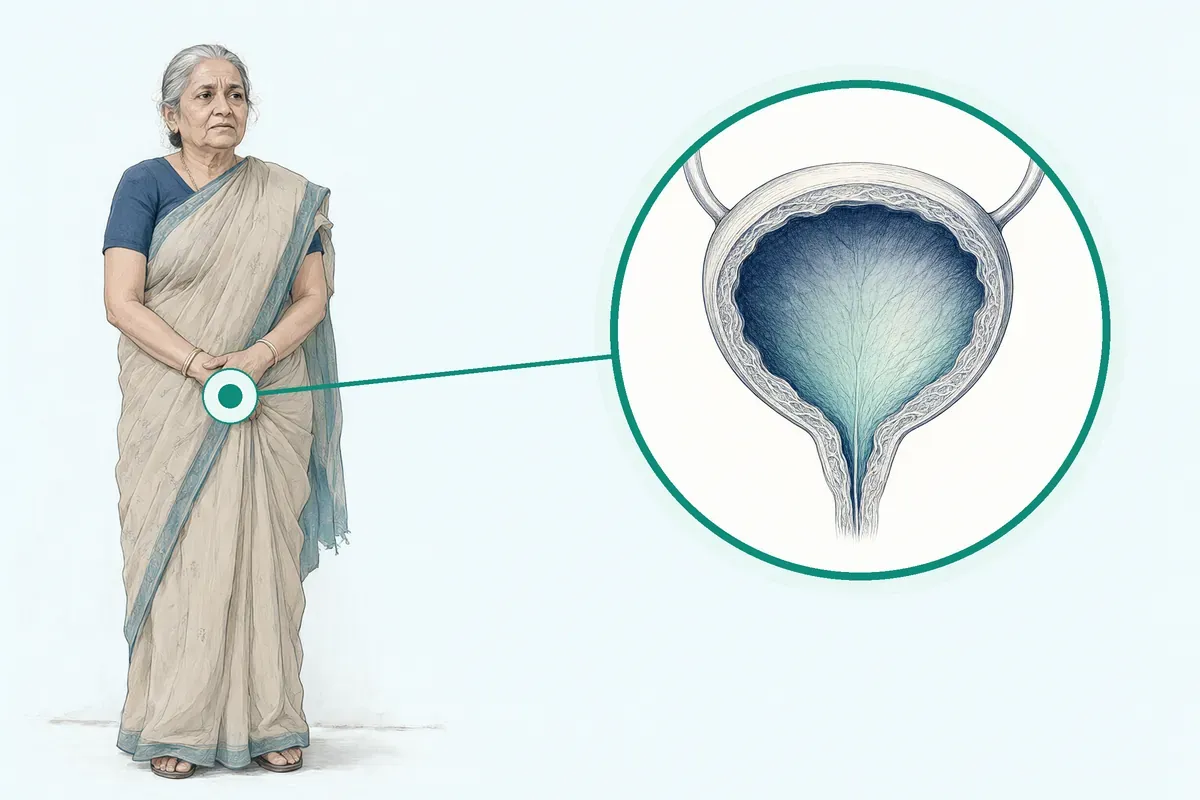
- Procedure time
- 30 to 60 minutes
- Anaesthesia
- Local or spinal anaesthesia
- Recovery
- Varies by procedure, typically 1 to 2 weeks
- Price
- ₹30,000 to ₹1,80,000typical range in India; ask us for an estimate
Bladder control disrupts daily life
You leak, rush to the toilet, or cannot empty fully
Urinary incontinence and retention make you plan every outing around a toilet. Leaks cause embarrassment, skin irritation and disturbed sleep. Retention raises infection risk. The cause may be muscle weakness, nerve signals, blockage or bladder overactivity.
-
Stress leaks
Urine escapes when you cough, sneeze, lift or exercise.
-
Urge incontinence
Sudden, strong need to pass urine that you cannot hold.
-
Incomplete emptying
You feel the bladder is never fully empty after passing urine.
-
Night-time waking
Getting up multiple times at night breaks sleep and causes fatigue.
-
Recurrent infections
Repeated urinary tract infections from retained urine or catheter use.
Overactive bladder is a mix of symptoms that may cause you to pee more often, have strong urges to pee, leak pee and have to pee at night.
Why Jaipur Hospital
You worry that leaks will happen at work or a family function, that you will smell of urine, or that surgery means a long recovery and high cost.
Your care plan
Your first steps with us
- 1 Call or visit OPD for urology consultation
- 2 Complete urodynamics and imaging in-house
- 3 Review options with your surgeon and get a cost estimate
- 4 Have procedure as daycare or one-night stay and attend follow-up
How the operation is done
Procedures take 30 to 60 minutes under local or spinal anaesthesia. Most are daycare or need one night in hospital. Recovery is typically one to two weeks.
-
Urodynamic Study
Pressure-flow study to diagnose voiding dysfunction and guide treatment choice.
-
Botox Bladder Injection
Botulinum toxin injected into the bladder wall to relax overactive muscle; effect lasts several months and can be repeated.
-
Mid-urethral Sling (TOT/TVT)
Tension-free tape placed under the urethra to support it and stop stress leaks; mesh stays in body permanently.
-
TURBT
Transurethral resection of bladder tumour for diagnosis and removal of abnormal growths.
Why patients trust us
- 1991 Serving Jaipur for 35 years
- NABH Accredited hospital
- 24×7 Emergency, ICU and ambulance
- 25 Cashless schemes and insurers
What research shows about these treatments
-
Effect can last several months
Botulinum toxin injections into the bladder can relieve urge incontinence for several months and the injections can be repeated if they help.
-
Sling surgery can cause new voiding problems
Studies note sling surgery may cause continued or new problems urinating in some patients.
-
Botox may require catheter use
After bladder Botox injections, some people find it difficult to empty their bladder completely and need to learn clean intermittent catheterisation.
If it is left untreated
Untreated incontinence can lead to skin breakdown, repeated urinary tract infections, and reduced participation in work and social activities. Retention increases the risk of bladder stones and kidney damage over time.
Life after treatment
Most people regain confidence to go out, sleep through the night, and manage daily routines without constant toilet planning.
-
Fewer leaks
Most people see a significant reduction in leakage episodes after appropriate treatment.
-
Better sleep
Night-time toilet trips usually decrease, improving rest and daytime energy.
-
More freedom
You can travel, attend functions and exercise without mapping every toilet.
-
Lower infection risk
Complete bladder emptying reduces the chance of recurrent urinary tract infections.
Meet the team
Our Urology specialists
Care led by Jaipur Hospital's urology consultants, backed by round-the-clock surgical, diagnostic and critical care support.
Frequently asked questions
Questions patients ask about bladder and voiding disorders
Which problems are assessed under bladder and voiding disorders?
In short
At Jaipur Hospital, bladder and voiding disorders cover a range of conditions that affect how you store and pass urine. These include stress urinary incontinence, urge incontinence, overactive bladder, chronic urinary retention, and voiding dysfunction. The service also evaluates bladder tumours that may need transurethral resection. Each problem is assessed with a structured clinical pathway.
In detail
Evidence shows that lower urinary tract symptoms (LUTS) can arise from bladder muscle overactivity, urethral sphincter weakness, outlet obstruction, or neurological impairment. Guidelines recommend a stepwise approach: history, validated symptom scores, physical examination, urinalysis, post-void residual measurement, and uroflowmetry.
Urodynamic pressure-flow studies are reserved for specific indications before surgery or when the underlying pathophysiology is unclear. Bladder diaries help quantify frequency, urgency, and leakage patterns. This systematic assessment separates storage problems from emptying problems and guides the choice between conservative, pharmacologic, and surgical options.
A common belief
Many people think incontinence is just one condition.
What actually happens
In reality, storage and emptying problems have different causes and need different tests. Treating the wrong type can make symptoms worse.
Your next step at Jaipur Hospital
Your first step is an OPD consultation where the urologist will take a detailed history, perform an examination, and order basic tests such as urinalysis and uroflowmetry. A bladder diary may be started at that visit.
Based on findings, the surgeon will advise whether urodynamics or imaging are needed. To begin assessment, book a consultation at Jaipur Hospital.
How will the doctor decide which tests I need?
In short
The urologist at Jaipur Hospital selects tests based on your symptom pattern, examination findings, and initial results. If you have storage symptoms like urgency and frequency, a bladder diary and urodynamics may be needed. If voiding symptoms dominate, uroflowmetry and post-void residual guide the next step. Haematuria triggers cystoscopy and imaging. Guidelines reserve pressure-flow studies for specific indications before surgery or when the pathophysiology is unclear.
In detail
Evidence-based pathways recommend a tiered approach. All patients get urinalysis, post-void residual, and uroflowmetry. Bladder diaries quantify storage symptoms. Urodynamic pressure-flow studies are indicated only when the diagnosis remains uncertain after initial evaluation, before invasive treatment, or when neurological causes are suspected.
Cystoscopy is performed to exclude bladder or urethral pathology before surgical therapy. Upper tract imaging is reserved for large residuals, haematuria, or stone history. PSA in men is ordered only if it changes management. This stepwise strategy avoids unnecessary invasive tests while targeting the underlying mechanism.
A common belief
Patients often expect every test at once.
What actually happens
Guidelines say do the basics first: urine check, flow test, bladder scan. Only if the picture is unclear or surgery is planned do you need urodynamics or cystoscopy. This avoids unnecessary procedures.
Your next step at Jaipur Hospital
After the first visit, the surgeon will explain which tests are indicated and why. Most basic tests are done in the hospital's diagnostic lab on the same day. Urodynamics and cystoscopy are scheduled as day procedures. You will receive preparation instructions.
How soon should I expect improvement after the chosen treatment for bladder and voiding disorders?
In short
The time to see improvement depends on the specific treatment you receive for bladder and voiding disorders. At Jaipur Hospital, our surgical team explains the expected timeline during your consultation so you know what to anticipate after your procedure.
In detail
For mid-urethral sling surgery for stress incontinence, many patients notice less leakage within days to a few weeks, though full healing takes one to two weeks.
Botox bladder injections for overactive bladder usually start working within one to two weeks and the effect can last several months; repeat injections are often needed every six months.
After TURBT for bladder tumours, recovery from the procedure itself is about one to two weeks, but further treatment depends on pathology results.
Pelvic floor muscle training and bladder training, if prescribed, typically need at least six to eight weeks of daily practice to show benefit. Medicines such as antimuscarinics or mirabegron are started at a low dose and increased over several weeks. Your surgeon will give you a personalised timeline based on the procedure and your health.
A common belief
A common belief is that surgery gives instant results.
What actually happens
In reality, tissues need time to heal, and treatments like Botox or muscle training work gradually. Stopping medicines too early or skipping exercises can delay progress.
Your next step at Jaipur Hospital
After your procedure, you will receive clear discharge instructions and a follow-up appointment. Most patients go home the same day or after one night. If symptoms do not improve as expected, contact the hospital promptly.
Could urgency, frequency, pain, or leakage have more than one cause?
In short
Yes, urinary urgency, frequency, pain, or leakage often have more than one cause. At Jaipur Hospital, our urology team performs a thorough assessment to identify all contributing factors before recommending treatment.
In detail
Overactive bladder symptoms can arise from bladder muscle overactivity, nerve damage, infection, certain medicines, or fluid intake habits. Stress incontinence may coexist with urge incontinence (mixed incontinence). Bladder outlet obstruction, constipation, or pelvic organ prolapse can also cause similar symptoms.
In men, an enlarged prostate commonly contributes. Bladder tumours may present with urgency, frequency, or blood in urine. A detailed history, physical examination, urinalysis, bladder diary, post-void residual measurement, and urodynamic studies help separate these causes.
Identifying the right cause is essential because treatments differ: antimuscarinics or Botox for overactive bladder, slings for stress incontinence, TURBT for tumours, and catheterisation or surgery for retention.
A common belief
Many people treat only one symptom, like taking medicine for urgency when the real issue is also a blockage or weak pelvic floor.
What actually happens
Treating just one part often leads to poor results.
Your next step at Jaipur Hospital
If you have any of these symptoms, do not assume a single cause. Book a consultation at Jaipur Hospital for a complete evaluation including urodynamics if needed. The correct diagnosis guides the most effective treatment plan for you.
How can I decide whether to seek advice about cystoscopy?
In short
Cystoscopy is a telescope examination of the bladder and urethra. You should seek advice if you have blood in the urine, recurrent infections, unusual urinary symptoms or if your doctor needs to check the bladder before surgery. Jaipur Hospital offers this as a daycare procedure under local or spinal anaesthesia.
In detail
Guidelines recommend cystoscopy only when findings may change treatment, such as suspected bladder or urethral pathology, before minimally invasive therapies, or to evaluate haematuria. It allows direct vision of tumours, stones, strictures or inflammation. The procedure takes about fifteen to thirty minutes.
A thin flexible or rigid scope is passed through the urethra. Most people go home the same day with mild burning on passing urine for a short period.
A common belief
Some people think cystoscopy is routine for every urinary symptom.
What actually happens
Guidelines say it should be done only when the result will change management, such as ruling out a tumour or stricture. It is a short daycare test, not a major operation.
Your next step at Jaipur Hospital
If you notice pink or red urine, persistent pain, frequent infections or have been advised to have a bladder check, do not delay. Your urologist will explain the indication and any preparation needed.
Which urinary symptoms need urgent assessment?
In short
Seek urgent assessment if you cannot pass urine at all, have severe lower abdominal pain with a full bladder, see heavy blood clots in the urine, develop fever with flank pain or notice sudden incontinence with leg weakness or numbness. Jaipur Hospital has a 24×7 emergency department and urology on-call for these situations.
In detail
Acute urinary retention is a medical emergency; the bladder must be drained immediately to prevent kidney damage. Gross haematuria with clots can indicate a tumour, trauma or stone causing obstruction. Fever with loin pain suggests upper tract infection or pyelonephritis, which can progress to sepsis.
New neurological symptoms such as saddle anaesthesia or leg weakness with bladder changes may signal cauda equina syndrome, requiring urgent imaging and decompression. Do not wait for symptoms to settle.
A common belief
Some people try to wait out retention or heavy bleeding.
What actually happens
Retention can damage kidneys within hours. Clots can block the urethra completely. Fever with back pain means the infection has reached the kidney. Leg weakness with bladder changes may be a spinal emergency. Do not self-manage these.
Your next step at Jaipur Hospital
If any of these symptoms occur, go to the emergency department without delay. Bring a list of medicines and any recent imaging. The urology team will assess, drain the bladder if needed and arrange urgent tests.
Which symptoms should prompt me to see a specialist?
In short
You should see a specialist at Jaipur Hospital if you leak urine when you cough, sneeze, or exercise; feel a sudden strong urge to pass urine that you cannot control; pass urine more than eight times a day; wake up more than once at night to urinate; strain to start the stream; feel the bladder is not empty after passing urine; or see blood in the urine.
In detail
Guidelines define overactive bladder as urinary urgency, usually with frequency and nocturia, with or without urge incontinence. Stress incontinence is leakage on effort or exertion. Voiding dysfunction includes hesitancy, weak stream, intermittency, and incomplete emptying. Haematuria always warrants investigation to exclude bladder tumours.
The AUA and NICE pathways recommend specialist referral when symptoms are bothersome, affect quality of life, or when conservative measures have failed. Early assessment prevents complications such as recurrent infections, upper tract damage from high post-void residuals, and progression of underlying pathology.
A common belief
People often wait years, thinking leakage is normal with age or after childbirth.
What actually happens
It is common but not normal. Delaying care can lead to infections, kidney strain, and more complex surgery later.
Your next step at Jaipur Hospital
Keep a simple bladder diary for three days before your appointment: note fluid intake, voiding times, volumes if you can measure them, and leakage episodes. Bring a list of current medicines. The urologist will review the diary, examine you, and order urinalysis and uroflowmetry.
How will the results change my care plan?
In short
Test results at Jaipur Hospital directly shape your care plan by confirming the type of dysfunction. Urodynamics showing detrusor overactivity supports Botox bladder injection. Stress incontinence with urethral hypermobility on studies may lead to a mid-urethral sling. High post-void residual with poor contractility may need clean intermittent catheterisation. Bladder tumour on cystoscopy leads to transurethral resection. Each finding matches a specific pathway.
In detail
Evidence shows that pressure-flow studies differentiate detrusor underactivity from bladder outlet obstruction, which require opposite treatments. Botox is indicated for refractory overactive bladder after antimuscarinics or beta-3 agonists fail.
Mid-urethral slings (TOT/TVT) are the standard surgical option for urodynamic stress incontinence with proven long-term safety data. Bulking agents are less effective and may need repeat injections. Augmentation cystoplasty is reserved for patients willing to self-catheterise.
The care plan follows a stepwise algorithm: conservative measures first, then pharmacologic, then minimally invasive, then reconstructive surgery, guided by objective test data.
A common belief
Without objective tests, treatment is guesswork.
What actually happens
Giving a sling for overactive bladder can worsen urgency. Giving Botox for retention can make emptying impossible. Tests prevent the wrong treatment.
Your next step at Jaipur Hospital
After tests are complete, the surgeon will discuss the diagnosis, explain the options in order of invasiveness, and agree a plan with you. Conservative and medical options are tried before procedures. If a procedure is chosen, you will receive details on preparation, anaesthesia, and recovery. To get a plan based on your results, book a follow-up consultation at Jaipur Hospital.
What should I do if symptoms persist or worsen after treatment for bladder and voiding disorders?
In short
If your urinary symptoms persist or get worse after treatment, contact Jaipur Hospital promptly. Our surgical team will review your progress, check for complications such as infection or incomplete emptying, and adjust your care plan as needed.
In detail
After sling surgery, some patients develop new difficulty passing urine or recurrent urinary tract infections; these need early assessment. After Botox injections, you may find it hard to empty your bladder completely and could need temporary catheterisation.
If you notice burning, fever, blood in urine, or sudden inability to pass urine, seek care immediately. For medicines, side effects like dry mouth, constipation, or blurred vision should be reported; do not stop any prescribed medicine without advice.
Pelvic floor exercises and bladder training take weeks to show effect, but if there is no change after three months, a review is warranted. The hospital keeps a detailed record of your surgery and any complications, and you will receive a copy for your reference.
A common belief
Some patients wait too long, hoping things will settle.
What actually happens
Early review prevents small issues from becoming serious. Also, treatments like Botox can cause temporary retention that needs catheter care, which is normal but must be managed.
Your next step at Jaipur Hospital
Keep your follow-up appointments and bring a bladder diary if you have been asked to maintain one. If you experience any red-flag symptoms, call the hospital or visit the 24×7 emergency department.
Would a bladder diary, urine test, or bladder-function test help diagnose my bladder and voiding disorder?
In short
Yes, a bladder diary, urine test, and bladder-function tests such as urodynamics are standard tools to diagnose bladder and voiding disorders. At Jaipur Hospital, our urology team uses these tests to understand your symptoms and plan the right treatment.
In detail
A bladder diary tracks what and how much you drink, how often you pass urine, and when you leak; it is typically kept for a few days. Urinalysis checks for infection, blood, or glucose. Post-void residual measurement shows if you empty your bladder completely.
Uroflowmetry measures flow rate. Urodynamic studies (pressure-flow studies) assess how the bladder and urethra work during filling and emptying; they are recommended before surgery or when the diagnosis is unclear. These tests together distinguish overactive bladder, stress incontinence, obstruction, retention, and other conditions. Guidelines recommend them as part of the initial assessment for both men and women with lower urinary tract symptoms.
A common belief
Some patients skip the diary or think a urine test is enough.
What actually happens
But without urodynamics, you might treat the wrong problem. For example, surgery for stress incontinence will not help if the main issue is overactive bladder.
Your next step at Jaipur Hospital
Your surgeon will advise which tests you need based on your history and examination. Most tests are done as outpatients and take less than an hour.
FAQ library
Questions and answers about bladder and voiding disorders
When you contact us
Get a clear plan for your bladder
Contact Jaipur Hospital for a urology consultation, in-house tests, plain-word options, a cost estimate and cashless scheme help.
- A consultation with a urologist in the OPD
- Your scans and reports reviewed, with tests done in-house if you need them (laboratory, X-ray and imaging)
- Your options explained in plain words, including whether you need surgery at all
- A cost estimate before you decide
- Help with cashless treatment under RGHS, MAA Yojana, CGHS and empanelled insurers and TPAs
- Follow-up visits after your treatment
Overview
Bladder and Voiding Disorders: what to know
What bladder and voiding disorders are and how they happen
Bladder and voiding disorders cover a group of conditions that change how you store urine and how you pass it. Overactive bladder is a mix of symptoms that may cause you to pee more often, have strong urges to pee, leak pee, and have to pee at night.
Stress urinary incontinence means urine leaks when you:
- Cough
- Sneeze
- Lift something heavy
- Exercise
Urinary retention means you cannot empty your bladder fully, which can lead to overflow leaks or infections. These problems happen when the bladder muscle, the urethra, the pelvic floor, or the nerves that control them do not work together as they should. In men, an enlarged prostate can block the flow.
In women, childbirth and ageing can weaken the support around the urethra. Nerve damage from diabetes, spinal injury, or surgery can also change bladder behaviour.
Symptoms and warning signs that need urgent care the same day
- Blood in urine Can signal tumour or infection
- Cannot pass urine Lower tummy feels full and painful
- Fever with burning When passing urine
Common symptoms include:
- A sudden, strong urge to pass urine that is hard to hold
- Going to the toilet more than eight times a day
- Waking up more than once at night to pass urine
- Leaking urine before you reach the toilet
You may also feel that the bladder is not empty after you pass urine, have a weak or stop-start stream, or need to strain to start.
Blood in the urine, pain in the lower tummy or back, fever with burning when you pass urine, or a sudden inability to pass any urine at all are warning signs that need medical attention the same day. If you cannot pass urine and your lower tummy feels full and painful, go to the emergency department.
If you see blood in your urine, contact your doctor straight away because it can be a sign of a bladder tumour or infection.
Causes and who is at higher risk
- Smoking
- Causes most bladder cancer cases
- Constipation
- Pressure on bladder worsens leaks
- Being overweight
- Extra pressure on pelvic floor
- Pregnancy and delivery
- Stretches and weakens pelvic floor
- Ageing
- Thinner tissues and weaker muscles
- Nerve conditions
- Diabetes, stroke, Parkinson's, spinal injury
Causes of overactive bladder include:
- Abdominal trauma
- Infection
- Nerve damage
- Certain medicines
- Certain fluids
Smoking causes most cases of bladder cancer. Constipation can put pressure on the bladder and make incontinence worse. Being overweight adds pressure on the bladder and pelvic floor, which can increase leaks. Pregnancy and vaginal delivery can stretch and weaken pelvic floor muscles and supporting tissues. Ageing makes pelvic floor tissues thinner and bladder muscles weaker.
Men with an enlarged prostate are more likely to have voiding difficulty. People with diabetes, stroke, Parkinson's disease, or spinal cord injury have a higher risk because of nerve involvement. Some medicines, such as diuretics, sedatives, and certain blood pressure tablets, can also affect bladder control.
How bladder and voiding disorders are diagnosed: examination and tests
- Symptom review and bladder diary Track drinks, toilet trips, leaks
- Physical examination Abdomen, pelvic or rectal check
- Urine and post-void residual tests Infection, blood, leftover urine
- Flow rate and urodynamic study Speed, volume, bladder pressures
Your doctor will start by asking about your symptoms, the medicines you take, and the fluids you drink. You may be asked to keep a bladder diary for a few days to track what and how much you drink, how often you pass urine, and how often you leak.
A physical examination includes checking the abdomen and a pelvic or rectal examination. Urine is tested for infection and blood. The amount of urine left in the bladder after you pass urine (post-void residual) is measured, usually with an ultrasound scan. A flow rate test (uroflowmetry) checks how fast and how much urine you pass.
If more detail is needed, a urodynamic study (pressure-flow study) is done to measure pressures in the bladder and urethra while the bladder fills and empties. This helps your surgeon decide which treatment suits you. In men, a PSA blood test may be ordered if the result would change management.
Imaging of the upper urinary tract is done if there is:
- A large post-void residual
- Blood in the urine
- A history of stones
A cystoscopy (camera test) is performed only if bladder or urethral pathology is suspected or before surgery.
Treatment options without surgery, and when surgery is advised for bladder and voiding disorders
- Lifestyle changes Cut caffeine and alcohol, adjust fluids, lose weight, stop smoking
- Bladder training Pass urine on a timetable for six to eight weeks
- Pelvic floor exercises Eight contractions three times a day for three months
- Medicines Antimuscarinics first, then mirabegron or vibegron if needed
- Surgery if needed When non-surgical treatments have not helped enough
Conservative treatments are tried first. Lifestyle changes include reducing caffeine and alcohol, adjusting fluid intake so you drink enough but not too much before bed, losing weight if you are overweight, and stopping smoking.
Bladder training teaches you to pass urine on a timetable instead of responding to every urge; it usually takes at least six to eight weeks to see results. Pelvic floor muscle training (Kegel exercises) strengthens the muscles that support the urethra; a programme includes at least eight contractions three times a day for at least three months.
Medicines for overactive bladder include antimuscarinics such as oxybutynin, tolterodine, and darifenacin. If these are unsuitable or cause side effects like dry mouth, constipation, or blurred vision, mirabegron or vibegron may be offered. Duloxetine can help increase urethral tone for stress incontinence but is not suitable for everyone.
If you are waiting for treatment to work, absorbent pads, pants, or a handheld urinal can help you manage leaks. Surgery is considered when non-surgical treatments have not helped enough or are unsuitable.
Options include:
- Mid-urethral sling (TOT/TVT) for stress incontinence
- Botox bladder injections for overactive bladder that has not responded to medicines
- TURBT for bladder tumours
Your surgeon will explain which technique fits your condition and discuss the risks, such as difficulty emptying the bladder after a sling or Botox injection.
Preparing for Bladder and Voiding Disorders Surgery
Do
- Attend pre-assessment visit
- Bring regular medicines in original packets
- Bring change of comfortable clothes
- Bring incontinence pads you use
- Plan for attendant to stay overnight
Before your operation, you will attend a pre-assessment visit at Jaipur Hospital. The team will review your medical history and any medicines you take, including blood thinners, diabetes tablets, or herbal supplements. Your surgeon will discuss which medicines to stop and when to stop them.
You will usually have blood tests, a urine test to check for infection, and sometimes a chest X-ray or ECG depending on your age and health. If you have a urinary catheter already, the team will check it is working well.
You will be asked not to eat or drink for about six hours before the procedure if you are having spinal anaesthesia. For local anaesthesia, you may be allowed a light breakfast. Bring your regular medicines in their original packets, a change of comfortable clothes, and any incontinence pads you use.
An attendant should plan to stay with you if you are admitted overnight. The hospital will confirm the reporting time and the ward or daycare unit the day before surgery.
How Bladder and Voiding Disorders Surgery Is Done
Your surgeon will advise which technique suits your condition after reviewing your urodynamic study results and examination findings. The main options offered at Jaipur Hospital are urodynamic study, Botox bladder injection, mid-urethral sling (TOT or TVT), and transurethral resection of bladder tumour (TURBT).
A urodynamic study is a pressure-flow test that measures how your bladder fills and empties; a thin catheter is placed in the bladder and another in the rectum or vagina while you pass urine.
Botox bladder injection is done for overactive bladder that has not responded to medicines; a cystoscope is passed through the urethra and small amounts of botulinum toxin are injected into the bladder wall to relax the muscle.
Mid-urethral sling surgery for stress urinary incontinence uses a tension-free synthetic tape placed under the urethra through small cuts in the vagina and groin (TOT) or above the pubic bone (TVT). TURBT is used to diagnose and remove bladder tumours; a resectoscope is passed through the urethra and the tumour is shaved off layer by layer.
All procedures are performed in the modular operation theatres under local or spinal anaesthesia and usually take 30 to 60 minutes. You will be awake or lightly sedated and can often go home the same day or after one night.
Risks and Possible Complications of Bladder and Voiding Disorders Surgery
- Botox injection
- May need catheter for a period
- Bulking agent or sling
- Burning or slight bleeding short term
- Catheter use
- Urinary tract infections can occur
- Artificial urinary sphincter
- Device may stop working, need further surgery
- Bladder augmentation
- Harder to empty, long-term catheter, recurrent infections
Every operation carries some risks. After sling surgery, some people develop new or continued difficulty emptying the bladder completely.
Mesh-related complications, though uncommon, can include:
- Long-lasting pain
- Nerve damage
- Mesh exposure through vaginal tissues
- Injury to the bladder or bowel
After Botox injections, you may find it difficult to empty your bladder fully and may need to use a catheter for a period. A burning sensation or slight bleeding when passing urine is common for a short time after bulking agent injections or sling procedures. Urinary tract infections can occur, especially if a catheter is used.
If an artificial urinary sphincter is placed, the device may eventually stop working and need further surgery. Bladder augmentation can make the bladder harder to empty, requiring long-term catheter use, and carries a risk of recurrent infections. Your surgical team will discuss the risks that apply to your specific procedure and how they are monitored.
Recovery and Aftercare After Bladder and Voiding Disorders Surgery
- Daycare procedures (Botox, urodynamics) Resume light activity next day
- Sling surgery or TURBT Avoid heavy lifting for two weeks
- Catheter period Few hours to few days depending on operation
- Follow-up appointment Usually within two weeks
Recovery varies by procedure but typically takes one to two weeks. After daycare procedures such as Botox injection or urodynamic study, you can usually resume light activity the next day. After sling surgery or TURBT, you should avoid heavy lifting, straining, and strenuous exercise for about two weeks.
You may have a catheter for a few hours to a few days depending on the operation; using a catheter can feel uncomfortable at first but this eases with time. Drink plenty of water to keep the urine pale and reduce the risk of infection. Take any prescribed pain relief or antibiotics as directed.
You may notice some blood in the urine for a few days after TURBT or sling surgery; this usually settles on its own. Pelvic floor exercises can be restarted once your surgeon says it is safe, often after the catheter is removed.
Contact Jaipur Hospital if you develop:
- Fever
- Severe pain
- Heavy bleeding
- Inability to pass urine
- Signs of a urinary tract infection such as burning, urgency, or cloudy urine
A follow-up appointment is usually scheduled within two weeks to check healing and remove any stitches or catheter.
Results of Bladder and Voiding Disorders Surgery
In studies, mid-urethral slings have shown effective long-term treatment for stress urinary incontinence, and many women have had these surgeries without developing problems afterwards. Colposuspension also offers effective long-term control of stress incontinence when performed by an experienced surgeon. Urethral bulking agents are generally less effective than slings and their effect reduces with time, so repeat injections may be needed.
Botox bladder injections can relieve urge incontinence and overactive bladder symptoms for several months; the injections can be repeated if they help. In one large trial, sacral nerve stimulation provided substantial improvement or complete resolution of incontinence for some people, though it can be painful or uncomfortable.
Pelvic floor muscle training benefits most people with urinary incontinence when continued for at least three months. Outcomes depend on the type of incontinence, the procedure chosen, and individual factors; your surgeon will discuss what you can realistically expect based on the evidence for your condition.
Cost and Insurance for Bladder and Voiding Disorders Surgery in Jaipur
The typical price range for these procedures in India is ₹30,000 to ₹1,80,000.
The final cost depends on:
- The specific operation
- The type of anaesthesia
- Whether you stay as a daycase or overnight
- The implants or materials used (such as a synthetic sling or Botox vial)
- Any additional tests or medicines
Jaipur Hospital is empanelled under RGHS, MAA Yojana, CGHS, and a panel of private insurers and TPAs. If you are covered under one of these schemes, bring your card and any pre-authorisation letter. The billing team can help you understand what your policy covers and what out-of-pocket expenses to expect. Ask for an estimate before admission so you can plan accordingly.