Plastic Surgery · Jaipur Hospital
Cleft Lip and Palate Surgery in Jaipur
Your child has a cleft lip or palate. We assess, plan staged surgery and support speech and feeding.
- Serving Jaipur since 1991 (35 years)
- NABH accredited
- 24×7 emergency & ICU
- Cashless: RGHS, MAA Yojana, CGHS + 32 insurers
- Operation time
- 2 to 4 hours per stage
- Anaesthesia
- General anaesthesia
- Recovery
- Arm restraints 2 weeks, speech therapy long-term
- Price
- ₹80,000 to ₹3,00,000typical range in India; ask us for an estimate
A gap that affects daily life
Your child was born with an opening in the lip or roof of the mouth
A cleft lip is a split in the upper lip. A cleft palate is an opening in the roof of the mouth. They can occur together or separately. The gap makes feeding hard, can cause milk to come through the nose, and may lead to speech and hearing problems as your child grows.
-
Feeding difficulty
Baby cannot form a seal to suck; milk may come through the nose and weight gain slows.
-
Speech problems
Air escapes through the nose during speech, causing hypernasal or unclear speech.
-
Hearing risk
Fluid builds up in the middle ear (glue ear), which can reduce hearing.
-
Dental issues
Teeth near the cleft may be tilted, missing or extra; decay risk is higher.
A cleft happens when facial tissues do not join completely during foetal development.
Why Jaipur Hospital
You worry about your baby's feeding, speech and future surgeries, and you want a team that stays with you for years, not just one operation.
Your care plan
Your first steps with us
- 1 Call or visit OPD for first consultation with plastic surgeon
- 2 Complete in-house tests and imaging; receive staged surgical plan
- 3 Admit for each surgery under general anaesthesia; stay 3 to 5 nights
- 4 Attend long-term speech, dental and hearing follow-ups until adulthood
How the operation is done
Surgery is done in stages under general anaesthesia. The lip is usually repaired at 3 to 6 months, the palate at 9 to 12 months. Later stages may include bone graft, nose revision or speech surgery. Each operation takes 2 to 4 hours.
-
Millard rotation-advancement
Classic technique for unilateral cleft lip; rotates a flap down and advances tissue to close the gap.
-
Tennison-Randall triangular flap
Alternative lip repair using a triangular flap from the medial side to match the lateral lip height.
-
Furlow double-opposing Z-plasty
Lengthens the soft palate and repositions the levator muscle for better speech function.
-
Von Langenbeck palatoplasty
Two-flap technique that closes the palate in layers using tissue from each side of the cleft.
Why patients trust us
- 1991 Serving Jaipur for 35 years
- NABH Accredited hospital
- 1 Plastic Surgery consultants
- 24×7 Emergency, ICU and ambulance
- 35 Cashless schemes and insurers
What research shows about this treatment
-
VPI occurs in 5 to 20 percent after primary palatoplasty
Studies report velopharyngeal insufficiency in 5-20% of patients following cleft palate repair.
-
Palate re-repair achieves normal speech in many but not all
Re-repair for VPI results in normal resonance in a majority of patients, though some still need further care.
-
Additional surgery for persistent VPI in about 21 percent
After re-repair, roughly 21% of patients required another operation for ongoing speech issues.
If it is left untreated
Without repair, feeding struggles continue, speech may stay unclear, hearing loss from glue ear can affect learning, and dental problems increase. Timely staged surgery reduces these risks.
Life after treatment
Most children eat, speak and hear well after staged repair. Scars fade and follow-up continues until growth stops.
-
Feeding improves
After lip and palate closure, most babies can suck and swallow normally and gain weight steadily.
-
Speech develops
With palate repair and speech therapy, most children achieve clear, understandable speech over time.
-
Scar fades
The lip scar is placed along natural lines and usually becomes less obvious as the child grows.
-
Ongoing care
Regular checks for hearing, teeth, jaw growth and speech continue until early adulthood.
Meet the team
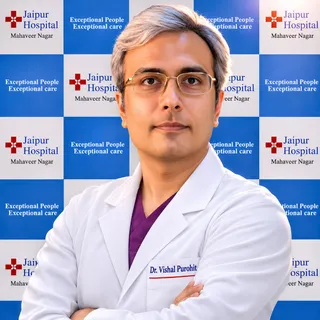
Your plastic surgery doctors
Explore our plastic surgery hospital in Jaipur: every treatment, the doctors and what to expect at your visit.
Frequently asked questions
Questions patients ask about cleft lip and palate surgery
What does cleft lip repair involve?
In short
Cleft lip repair at Jaipur Hospital is a staged reconstruction that closes the separation in the upper lip and reshapes the nose. The operation takes two to four hours under general anaesthesia. The surgeon rearranges the muscle and skin layers using techniques such as Millard rotation-advancement or Tennison-Randall triangular flap to restore function and appearance.
In detail
The procedure begins with incisions along the edges of the cleft extending into the nose. The surgeon releases and repositions the orbicularis oris muscle to rebuild the lip ring and philtral columns. Skin edges are then brought together with absorbable stitches.
The choice of technique depends on whether the cleft is unilateral or bilateral and on the surgeon's assessment of tissue quality. Evidence shows that careful muscle reconstruction reduces tension on the skin closure, which helps minimise scar widening.
The hospital stay is typically three to five nights per stage. Arm restraints are used for two weeks to protect the repair.
A common belief
Some people think it is only a skin stitch, but the key step is deep muscle repair.
What actually happens
Without proper muscle reconstruction, the scar can widen and the lip may not function well for feeding or speech.
Your next step at Jaipur Hospital
Your child will need a consultation with the cleft team to plan the timing and technique. Surgery is usually done when the baby is three to six months old. After the operation, you will receive feeding instructions and pain management guidance. Speech therapy and dental monitoring continue long-term.
Which tests and scans do I need before cleft lip repair?
In short
Before cleft lip repair at Jaipur Hospital, your child will have a paediatric health check, blood tests including haemoglobin and infection screening, and an anaesthesia fitness review. Imaging such as X-ray or MRI is not routine for the lip repair itself but may be needed if other anomalies are suspected.
In detail
The pre-operative assessment focuses on ensuring your child is fit for general anaesthesia. A paediatrician examines the heart, lungs, and airway. Blood tests check for anaemia, clotting function, and infections.
If your child has a syndrome or associated conditions, the team may request a chest X-ray, echocardiogram, or genetic tests. Hearing tests are part of the long-term cleft pathway but are not a pre-condition for lip surgery.
The surgeon also reviews the cleft type clinically; no special scan is required to plan the lip repair. The anaesthesia team will give clear fasting instructions based on your child's age.
A common belief
Parents often expect a CT or MRI of the face.
What actually happens
For lip repair alone, clinical examination is enough. Imaging is reserved for complex cases or syndrome screening.
Your next step at Jaipur Hospital
All tests are done a few days before admission. You will receive a checklist of reports to bring. The hospital stay is three to five nights. Arm restraints are used for two weeks after surgery. Feeding starts with a cup or syringe. Follow-up includes wound review, speech therapy, and dental checks.
How painful is cleft lip and palate surgery and the early recovery?
In short
Cleft lip and palate surgery at Jaipur Hospital is done under general anaesthesia, so your child feels no pain during the operation. After surgery, swelling, bruising, and discomfort are common for several days. The team gives pain medicine to keep your child comfortable.
In detail
During surgery your child is asleep and feels nothing. Afterwards the area around the mouth will be swollen and bruised for several days. Small amounts of bleeding in saliva are normal. Your child may be fussier than usual and find arm restraints uncomfortable.
Pain can affect eating, drinking, and sleeping for the first few days. The surgeon prescribes pain medicine, often paracetamol or ibuprofen, and sometimes stronger medicine for the first 48 hours. Most children need regular pain relief for about a week. Recovery from palate surgery may take a little longer than lip surgery because the operation is more complex.
A common belief
Some parents expect no pain at all or fear severe suffering.
What actually happens
The truth is in the middle: discomfort is real but manageable with prescribed medicine and careful feeding. Most children return to usual behaviour within a week.
Your next step at Jaipur Hospital
Give pain medicine on schedule for the first few days. Offer cool liquids and soft foods from a cup, not a straw. Keep arm restraints on for two weeks to protect the repair. Contact the hospital if pain seems uncontrolled.
How long does recovery usually take after cleft lip and palate surgery?
In short
At Jaipur Hospital, the hospital stay is typically three to five nights per stage. Most children return to usual behaviour within a week after cleft lip repair. Full recovery from cleft palate surgery may take up to four weeks. Arm restraints are worn for two weeks to protect the repair. Speech therapy continues long-term.
In detail
Evidence indicates that children spend one to three days in hospital after lip repair and may stay longer after palate repair depending on feeding and pain control. Stitches dissolve within one to two weeks or may last up to a month.
Swelling lasts at least one week. Pain can affect eating, drinking, and sleeping for up to two weeks. A soft or liquid diet from a cup without straws is needed for several weeks. The surgical team provides specific feeding instructions based on the child's age.
Long-term follow-up includes speech assessments at 18 months, 3 years, 5 years, and later, plus orthodontic care and possible bone grafting at 8 to 12 years.
A common belief
Many families think the surgery is the end.
What actually happens
Actually, feeding changes, speech therapy, and dental visits continue for years through the staged care plan.
Your next step at Jaipur Hospital
Follow the surgeon's diet and activity restrictions strictly. Keep the head elevated. Use prescribed pain relief on schedule. Attend the post-operative check-up at one to two weeks. Continue speech therapy as advised. Monitor for signs of dehydration or infection.
At what age or stage of growth is cleft lip and palate treatment usually considered?
In short
At Jaipur Hospital, cleft lip repair is typically done when the baby is three to six months old. Cleft palate repair usually follows at around twelve months, before speech develops. Further procedures such as alveolar bone grafting are considered at eight to twelve years. Orthodontic care and jaw surgery may continue into the late teens.
In detail
Timing follows the child's growth and functional needs. Early lip repair improves feeding and appearance. Palate repair before first words gives the most suitable chance for normal speech. The surgical team assesses weight, haemoglobin, and general health before each stage.
Delayed repair beyond eighteen months is linked to higher rates of velopharyngeal insufficiency. Each stage is planned by the multidisciplinary team including the surgeon, speech therapist, orthodontist, and audiologist.
A common belief
Some families wait, thinking the child must be older.
What actually happens
Evidence shows palate repair after eighteen months raises the risk of speech problems. Early timing supports normal development.
Your next step at Jaipur Hospital
Your child will be reviewed at regular intervals: feeding and hearing from birth, lip surgery at three to six months, palate surgery near twelve months, speech checks at eighteen months, three years, and five years, bone graft at eight to twelve years, and orthodontics through adolescence. The surgeon will advise the exact schedule.
How will appearance, function, and realistic expectations be discussed for cleft lip and palate surgery?
In short
At Jaipur Hospital, the surgeon explains the likely look and function after each stage, using plain language and typical outcomes. The goal is a natural lip contour, intact palate for speech, and stable dental arches, but individual results vary with cleft severity and healing.
In detail
During the consultation, the surgeon describes what each operation aims to achieve: lip repair aligns the vermillion border and nostril floor; palate repair closes the gap and repositions the levator muscles for speech.
Scars are placed along natural lines and fade over time, but a faint line remains. Speech outcomes depend on palate length, muscle function, and whether velopharyngeal insufficiency develops — which occurs in some children despite a good primary repair.
Dental alignment and jaw growth are monitored, and orthodontics or bone grafting may be needed. The team does not promise a perfect result but outlines the typical range of outcomes and the possibility of revision surgery. Before-and-after photographs of other patients are not shown; the surgeon explains typical results with diagrams.
A common belief
Some centres show dramatic before-and-after photos that raise unrealistic hopes.
What actually happens
We give honest, typical ranges so you can plan with confidence.
Your next step at Jaipur Hospital
You will have time to ask questions and receive written information about each stage. The surgeon will review the plan at every follow-up and adjust expectations as your child grows.
Why might my doctor recommend cleft lip repair?
In short
A doctor recommends cleft lip repair at Jaipur Hospital to restore the lip's function for feeding and speech and to improve facial appearance. The surgery closes the separation in the upper lip, rebuilds the muscle ring, and aligns the nostrils. Early repair supports normal growth of the face and reduces long-term speech and dental problems.
In detail
An unrepaired cleft lip affects the orbicularis oris muscle, which controls lip movement for sucking, blowing, and speech sounds. Without repair, the child may have difficulty creating a seal for breastfeeding or bottle feeding, leading to poor weight gain.
The nasal deformity can also affect breathing. Evidence shows that primary repair helps restore functional anatomy and lowers the risk of certain health conditions. The procedure also aligns the vermillion border and creates a more natural lip contour.
While a faint scar remains, the surgeon places it along natural lines to make it less noticeable. The scar typically fades over time.
A common belief
It is not only about appearance.
What actually happens
The muscle must be rebuilt so the child can suck, eat, and later speak clearly. Delaying repair can make feeding harder and affect facial growth.
Your next step at Jaipur Hospital
The cleft team will assess your child's feeding, growth, and overall health before recommending surgery. The usual age for lip repair is three to six months. If your child has both a cleft lip and palate, the lip is repaired first. Ongoing care includes speech assessments, dental checks, and possible further surgeries.
How should I prepare in the days before cleft lip repair?
In short
In the days before cleft lip repair at Jaipur Hospital, keep your child well hydrated and follow any feeding advice from the cleft nurse. Avoid giving aspirin or ibuprofen unless the surgeon agrees. Bring comfortable clothes, a favourite toy, and all test reports on admission day.
In detail
The paediatrician will see your child the week before surgery to confirm fitness. The anaesthesia team may ask you to stop certain medicines, such as blood thinners or herbal supplements, several days ahead.
If your child develops a fever, cough, or rash, inform the hospital immediately as surgery may be postponed. The cleft nurse can show you how to use the special feeding cup or syringe that will be needed after surgery.
Practising with it beforehand helps the transition. Arm restraints will be applied after the operation, so loose sleeves are helpful. The hospital provides nappies and basic toiletries, but you may bring your own.
A common belief
Some families wait until admission day to learn the new feeding method.
What actually happens
Practising early reduces stress and helps the baby accept feeds sooner after surgery.
Your next step at Jaipur Hospital
Admission is usually on the morning of surgery. Fasting rules depend on age and will be given by the anaesthesia team. One parent or attendant stays with the child. The operation takes two to four hours. Hospital stay is three to five nights. Arm restraints stay on for two weeks. Speech therapy and dental follow-up continue long-term.
What are the common side effects and the less common serious complications of cleft lip and palate surgery?
In short
At Jaipur Hospital, common side effects after cleft lip and palate surgery include swelling, bruising, small amounts of bleeding in saliva, nasal congestion, snoring, and temporary feeding difficulty. Less common serious complications include wound dehiscence, infection, haematoma, fistula formation, velopharyngeal insufficiency, and airway obstruction.
In detail
Evidence from multiple studies lists haematoma, infection, wound dehiscence, oral incompetence, eating and drinking dysfunction, and drug allergy as logged complications. Velopharyngeal insufficiency occurs in 5 to 20 percent of patients after primary palatoplasty. Fistulae, maxillary growth deficiency, and inadequate speech are recognised long-term concerns.
Airway obstruction is the most serious complication of pharyngeal flap procedures. Obstructive sleep apnoea has been reported. Taste disturbances, voice changes, foreign body sensation, and dry pharynx are documented after certain secondary procedures. The surgical team monitors for these risks during the hospital stay of three to five nights per stage.
A common belief
Many families focus only on the scar.
What actually happens
The functional risks like velopharyngeal insufficiency or fistula need long-term follow-up, not just the first few weeks.
Your next step at Jaipur Hospital
Watch for high fever, persistent bleeding, difficulty breathing, or signs of dehydration. Keep the follow-up appointment at one to two weeks. The surgeon will assess healing and speech development over time. Report any new nasal speech or feeding problems promptly.
Which symptoms are expected after cleft lip and palate surgery, and which need urgent medical attention?
In short
At Jaipur Hospital, expected symptoms after cleft surgery include swelling and bruising around the mouth for several days, small amounts of blood in saliva or mucus, nasal congestion and snoring for weeks, fussiness, and temporary feeding difficulty. Urgent signs are high fever, persistent bright red bleeding, difficulty breathing, signs of dehydration, or sudden worsening of pain not relieved by prescribed medicine.
In detail
Evidence lists swelling, bruising, minor bleeding in saliva, pink or bloody nasal drainage, snoring, and congestion as normal for several weeks. Exposed bone on the palate sides is normal and fills in. Pain may affect eating, drinking, and sleeping for up to two weeks.
The child may be fussier than normal. Arm restraints cause irritability. Serious complications to watch for include wound dehiscence, infection with fever, haematoma, fistula formation, and airway obstruction. Velopharyngeal insufficiency may appear later as hypernasal speech.
The team advises calling the provider right away for uncontrolled bleeding, breathing trouble, high fever, or refusal of fluids leading to dehydration.
A common belief
Parents often worry about the scar appearance first.
What actually happens
The real emergencies are airway blockage or dehydration, which need immediate hospital contact.
Your next step at Jaipur Hospital
Keep the emergency contact numbers handy. Monitor temperature, breathing, and urine output. Do not remove arm restraints early. Use only the prescribed feeding method. Attend the one to two week follow-up. Report any new nasal speech or feeding regression.
FAQ library
Questions and answers about cleft lip and palate surgery
When you contact us
Get a clear plan for your child
Contact Jaipur Hospital for a plastic surgery OPD consultation, in-house tests, a staged treatment plan and cost estimate with cashless scheme help.
- A consultation with a plastic surgeon in the OPD
- Your scans and reports reviewed, with tests done in-house if you need them (laboratory, X-ray and imaging)
- Your options explained in plain words, including whether you need surgery at all
- A cost estimate before you decide
- Help with cashless treatment under RGHS, MAA Yojana, CGHS and empanelled insurers and TPAs
- Follow-up visits after your treatment
Overview
Cleft Lip and Palate Surgery: what to know
What cleft lip and palate is and how it happens
- Cleft lip
- Separation of the two sides of the upper lip
- Cleft palate
- Split or opening in the roof of the mouth
- When it happens
- Early in pregnancy when facial parts do not fuse
A cleft lip is a separation of the two sides of the upper lip. A cleft palate is a split or opening in the roof of the mouth. They can occur together or separately, although having both is most common. A cleft occurs when tissues do not join together properly during foetal development.
This happens early in pregnancy when the parts of the face that form the lip and palate do not fuse as they usually would. The result is a gap that can affect the lip, the gum, the hard palate at the front of the roof of the mouth, and the soft palate at the back. Cleft lip and palate are among the most common congenital conditions worldwide and are correctable through surgical intervention.
Symptoms and warning signs that need urgent care the same day
- Dehydration No wet nappy for six hours, sunken fontanelle, listlessness
- Difficulty breathing Any sign your baby is struggling to breathe
- High fever Fever that does not settle with paracetamol
The visible gap in the lip or roof of the mouth is the main sign. Many babies with a cleft palate have problems breastfeeding because of the gap in the roof of the mouth.
They may struggle to form a seal with their mouth, so they may take in a lot of air and milk may come out of their nose. They may also struggle to put on weight during their first few months.
If a cleft involves the gum area,:
- Teeth on either side of the cleft may be tilted or out of position
- A tooth may be missing
- There may be an extra tooth
Velopharyngeal insufficiency (VPI) can cause hypernasal or unintelligible speech when the soft palate does not close properly against the back of the throat. Children with a cleft palate are more likely to develop glue ear, where fluid builds up in the ear and may reduce hearing.
Contact your doctor the same day if your baby shows signs of dehydration (no wet nappy for six hours, sunken fontanelle, listlessness), difficulty breathing, or a high fever that does not settle with paracetamol. These are not caused by the cleft itself but can happen more easily when feeding is difficult.
Causes and who is at higher risk
The exact cause is not always known. It happens when the tissues of the lip and palate do not fuse during early pregnancy. Genetic and environmental factors may play a part. A family history of clefts can increase the chance.
Certain medications taken during pregnancy, smoking, alcohol use, and lack of folic acid have been linked to a higher risk in some studies. Children with a cleft lip or palate are at risk for hearing loss, dental problems, and speech problems. They are more vulnerable to tooth decay, so good oral hygiene and regular dental visits are important. Some children have other health conditions along with the cleft, which can affect the treatment plan.
How cleft lip and palate is diagnosed: examination and tests
- Hearing tests
- Regular checks for glue ear and hearing loss
- Dental checks
- Paediatric dentist monitors teeth and recommends treatment
- Speech assessments
- Perceptual evaluation, nasometry or nasoendoscopy
- Imaging
- MRI to view velopharyngeal anatomy without radiation
The condition is usually seen at birth or during a routine ultrasound scan in pregnancy. After birth, a paediatrician examines the baby to check the extent of the cleft and to look for any other problems. A specialist cleft team will assess the child. This includes regular hearing tests to check for glue ear and hearing loss.
A paediatric dentist monitors the health of the teeth and recommends treatment when necessary. Speech and language therapists assess speech several times as the child grows, using perceptual speech evaluation and sometimes nasometry or nasoendoscopy to check how the palate is working during speech.
Imaging such as MRI may be used to look at the anatomy of the velopharyngeal mechanism without radiation. The team uses these assessments to plan the timing and type of surgery and other care.
Treatment options without surgery and when surgery is advised
- Cleft lip repair 3 to 6 months old
- Cleft palate repair Around 12 months old, before speech starts
- Bone graft to gum Usually 8 to 12 years of age
Surgery is the main treatment to close the cleft. Before and between surgeries, non-surgical care is essential. Feeding support is often needed: a specialist cleft nurse can advise on positioning, alternative feeding methods, and weaning. If breastfeeding is not possible, expressing breast milk into a flexible bottle designed for babies with a cleft palate may help.
Very occasionally, a baby may need to be fed through a tube placed into the nose until surgery is carried out. Hearing aids may be recommended for glue ear. Speech therapy is often needed even after surgical repair. Orthodontic treatment, including braces or other dental appliances, may be required to align the teeth.
Surgery to repair the cleft lip typically occurs when a child is 3 to 6 months old. Cleft palate surgery generally occurs around 12 months old, before the child learns to talk. Some procedures, such as bone grafts to repair the gum area, are done later, usually around 8 to 12 years of age. Your surgeon will advise on the exact timing based on your child's health and the type of cleft.
Preparing for cleft lip and palate surgery
Do
- Bring regular medicines
- Bring a favourite toy or blanket
Before the operation your child will be seen by a paediatrician to check they are well enough for general anaesthesia. The doctor may ask you to stop certain medicines in the week before surgery. Your child must have an empty stomach on the day of the procedure.
Bring any regular medicines, a favourite toy or blanket, and loose clothing that buttons at the front. An attendant should plan to stay overnight. Our team will explain the feeding plan for after surgery and answer any questions you have.
How cleft lip and palate surgery is done
- General anaesthesia Your child is asleep and feels no pain
- Incisions and stitches Surgeon brings tissues together to close the gap
- Palate tissue rearrangement Layers of tissue are detached and rearranged
- Arm splints applied Soft splints protect the repair after surgery
The operation is carried out under general anaesthesia so your child is asleep and feels no pain during the procedure. The surgeon makes incisions along the edges of the cleft and uses stitches to bring the tissues together, reshaping the lip and nostrils for a cleft lip repair.
For a cleft palate repair the surgeon detaches and rearranges the layers of tissue in the roof of the mouth and nasal cavity, then closes the gap with absorbable stitches. The choice of technique depends on the type and width of the cleft.
Common options include the Millard rotation-advancement and Tennison-Randall triangular flap for the lip, and the Furlow double-opposing Z-plasty or Von Langenbeck palatoplasty for the palate. Your surgeon will advise which approach suits your child. The operation usually takes 2 to 4 hours. After surgery soft splints or cuffs are placed on your child's arms to protect the repair.
An intravenous drip gives fluids until your child can drink on their own. You will receive written instructions on wound care, pain relief and feeding before you leave the hospital.
Risks and possible complications of cleft lip and palate surgery
All surgery carries some risk. Common early effects include swelling and bruising around the mouth for several days, a small amount of blood in the saliva or mucus, and discomfort that may need regular pain medicine for the first few days. Your child may be fussier than usual and find the arm restraints uncomfortable.
The palate repair can leave exposed bone at the sides of the palate; this is normal and fills in on its own. There may be more drainage from the nose, sometimes pink or bloody, and snoring or a congested sound for several weeks.
Less common complications recorded in studies include wound infection, wound breakdown (dehiscence), a fistula (hole) in the palate, and velopharyngeal insufficiency (VPI) where air escapes through the nose during speech, leading to nasal-sounding speech. VPI has been reported in 5 to 20 percent of patients after primary palate repair.
In a large review of over ten thousand patients, about 20 percent showed signs of VPI after the first palate operation. Other reported issues include difficulty swallowing, voice changes, taste disturbances and a feeling of a foreign body in the throat. Airway obstruction is a recognised risk after pharyngeal flap surgery for VPI.
If your child has difficulty breathing, a high fever, heavy bleeding, or the wound looks infected, contact the hospital straight away.
Recovery and aftercare after cleft lip and palate surgery
- Hospital stay 3 to 5 nights per stage
- Arm restraints worn Two weeks to protect the repair
- Usual behaviour returns Within a week for most children
- Follow-up appointment One to two weeks after discharge
Your child will stay in hospital for 3 to 5 nights per stage. In the first days they can start drinking breastmilk or formula from a cup; straws and bottles with teats are not used while the lip heals. Soft or mashed foods are given after palate repair; nothing crunchy or hard.
Stitches in the lip are usually removed after about six days; stitches in the palate dissolve on their own over one to four weeks. Arm restraints are worn for two weeks to stop your child touching the repair. Pain medicine and sometimes an antibiotic are given to take home.
Most children return to their usual behaviour within a week, though full recovery can take up to four weeks. The scar on the lip will be pink or red at first, may feel firm, and will soften and fade over time; the surgeon places it along the natural lines of the lip to make it less noticeable.
Protect the scar from sun with sunscreen once it has healed. A follow-up appointment is usually scheduled for one to two weeks after discharge. Speech and language therapy assessments continue at regular intervals as your child grows. Further surgery may be needed later for speech, a bone graft to the gum at around 8 to 12 years, or orthodontic treatment.
Results of cleft lip and palate surgery
Cleft lip and palate surgery restores the function of the lip and mouth and improves appearance. Most children are treated successfully with no long-term problems. Repairing the palate significantly reduces the chance of speech problems, but some children still need speech therapy after the palate is closed.
In studies, VPI after primary palatoplasty occurs in about 5 to 30 percent of patients, with the lowest rates seen when the first palate repair is done between 6 and 12 months of age. Palate re-repair for VPI achieves normal speech resonance in many but not all patients; one review found about 61 percent had no consistent hypernasality after re-repair.
About 21 percent of patients needed further surgery for persistent VPI. Obstructive sleep apnoea was reported in about 28 percent of patients after pharyngeal flap surgery for VPI. Long-term follow-up continues until growth is complete, usually around 21 years, with regular checks on speech, hearing, dental development and jaw growth.
Cost and insurance for cleft lip and palate surgery in Jaipur
The typical price range for staged cleft lip and palate reconstruction in India is ₹80,000 to ₹3,00,000. The final cost depends on the number of stages needed, the complexity of the cleft, the length of hospital stay, and any additional procedures such as bone grafting or orthodontic treatment. Jaipur Hospital is a NABH-accredited multispeciality hospital established in 1991.
We accept patients under RGHS, MAA Yojana, CGHS and a panel of private insurers and TPAs. The hospital has modular operation theatres, a 24×7 emergency department, in-house pharmacy, diagnostic laboratory and imaging, and a canteen with dietary meals. For a detailed estimate please contact the hospital on 0141-2551500, 0141-2554139 or 7414 001 001, or email [email protected].