
Plastic Surgery · Jaipur Hospital
Lipoma Removal in Jaipur
A soft lump under your skin? We assess it, explain your options, and plan a simple day-care removal.
- Serving Jaipur since 1991 (35 years)
- NABH accredited
- 24×7 emergency & ICU
- Cashless: RGHS, MAA Yojana, CGHS + 32 insurers
- Operation time
- 30 to 60 minutes
- Anaesthesia
- Local anaesthesia
- Recovery
- Suture removal in 7 to 10 daysnormal activity in 2 to 3 days
- Price
- ₹10,000 to ₹35,000typical range in India; ask us for an estimate
A lump you can feel
You have a soft lump under the skin that may be growing or causing worry
Lipomas are benign fatty tumours that sit under the skin. Most cause no pain, but they can grow, press on nerves, or look unsightly. You may wonder if it is serious or if it will go away on its own.
-
Visible or growing lump
A soft, doughy lump you can move slightly under the skin, often on the neck, back, shoulders, or arms.
-
Discomfort or pressure
Large or deep lipomas can press on nerves or muscles, causing ache or restricted movement.
-
Cosmetic concern
A lump in a visible area can cause embarrassment or make you avoid certain clothes.
-
Uncertainty about diagnosis
You want confirmation it is a harmless lipoma and not something that needs urgent care.
Lipomas are the most common type of soft tissue tumours and are benign mesenchymal tumours.
Why Jaipur Hospital
You worry the lump might be something serious, or that surgery will mean time off work and a visible scar.
Your care plan
Your first steps with us
- 1 Call or visit OPD for a surgeon consultation
- 2 Get examined and have any scans done in-house
- 3 Agree a plan and receive a cost estimate
- 4 Have day-care surgery and return for suture removal
How the operation is done
The surgeon removes the lipoma through a small cut under local anaesthesia. The procedure usually takes 30 to 60 minutes and you go home the same day.
-
Standard Elliptical Excision
Complete removal with primary closure using a standard elliptical incision over the lump.
-
Minimal Incision Extraction
Removal through a smaller cut for better cosmetic results on visible areas like the face or neck.
-
Liposuction Assisted
For large, soft lipomas; fat is suctioned out through a hidden incision away from the lump.
-
Endoscopic Removal
For deep or intramuscular lipomas using a camera and instruments through minimal access ports.
Why patients trust us
- 1991 Serving Jaipur for 35 years
- NABH Accredited hospital
- 1 Plastic Surgery consultants
- 24×7 Emergency, ICU and ambulance
- 35 Cashless schemes and insurers
What research shows about lipoma removal
-
Progression-free survival 88.1% at 20 years after total resection
Long-term study data shows total resection provides durable control compared to partial removal.
-
Threefold increase in recurrence hazard with high post-operative ratios
Incomplete removal is linked to significantly higher recurrence rates in analysed patient groups.
-
6 (3.6%) postoperative complications in endoscopic series
Reported complications included leaks, pneumothorax, and lacerations in a specific endoscopic cohort.
If it is left untreated
If left untreated, a lipoma may slowly enlarge. Large or deep lipomas can compress nerves or vessels, causing pain, numbness, or weakness. Rarely, a lump thought to be a lipoma may be a different tumour needing urgent care.
Life after treatment
Most people return to normal activity within a few days. The lump is gone and the small scar fades over months.
-
Lump removed
The fatty lump is completely taken out and sent for lab confirmation.
-
Quick recovery
Most people resume light activity in 2 to 3 days; sutures come out in 7 to 10 days.
-
Small scar
The incision line usually fades to a faint line over several months.
-
Peace of mind
You no longer wonder about the lump or feel it catching on clothes.
Meet the team
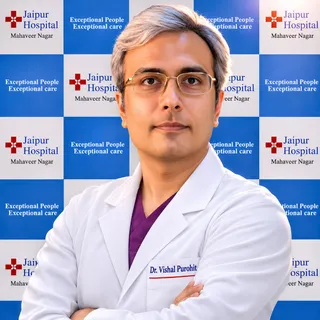
Your plastic surgery doctors
Explore our plastic surgery hospital in Jaipur: every treatment, the doctors and what to expect at your visit.
Frequently asked questions
Questions patients ask about lipoma removal
What does lipoma removal involve?
In short
Lipoma removal at Jaipur Hospital is a day-care operation under local anaesthesia that usually takes 30 to 60 minutes. The surgeon makes an incision, removes the fatty lump completely, and closes the wound with stitches. You go home the same day after a short observation period.
In detail
The technique chosen depends on the lipoma size, depth, and location. Standard elliptical excision removes the lump with a straight incision and primary closure. Minimal incision extraction uses a smaller cut for cosmetic areas. Liposuction-assisted removal suits large, soft lipomas through a hidden incision.
Endoscopic removal is reserved for deep or intramuscular lipomas. Evidence shows complete excision lowers recurrence risk compared to partial removal. Your surgeon will explain the planned approach during the consultation.
A common belief
Many people think it needs general anaesthesia or an overnight stay.
What actually happens
For most subcutaneous lipomas, local anaesthesia is enough and recovery is quick.
Your next step at Jaipur Hospital
Sutures are usually removed in 7 to 10 days. Most people return to normal activity in 2 to 3 days. Keep the wound clean and dry until the stitches come out. Avoid heavy lifting for the first week. The typical price range is ₹10,000 to ₹35,000; ask for an estimate at booking.
Which tests and scans do I need before lipoma removal?
In short
Most people need only a clinical examination before lipoma removal at Jaipur Hospital. An ultrasound is commonly ordered if the lump is large, deep, or not clearly defined by touch. MRI is reserved for deep-seated or intramuscular lipomas where the extent must be mapped before surgery.
In detail
Subcutaneous lipomas are usually diagnosed by feel. Ultrasound confirms the fatty nature, measures depth, and checks for vascularity. MRI gives detailed anatomy for lipomas under the fascia or within muscle.
Blood tests such as haemoglobin and clotting profile may be done if you have medical conditions or take blood thinners. The surgeon orders only what is necessary for safe planning. Routine extensive testing is not required for simple lipomas.
A common belief
Patients sometimes expect a full body scan.
What actually happens
For a typical lipoma under the skin, a careful clinical check is enough.
Your next step at Jaipur Hospital
Bring any recent scan reports to your consultation. If new imaging is needed, the hospital's in-house radiology can usually do it the same day. Results are discussed before the procedure date.
How painful is the lipoma removal procedure and the early recovery?
In short
At Jaipur Hospital, lipoma removal is done under local anaesthesia, so you feel pressure and movement but no sharp pain during the 30 to 60 minute operation. After the anaesthesia wears off, most patients describe a dull ache or soreness at the wound site for the first 24 to 48 hours, which is usually managed with simple oral pain relief.
In detail
The local anaesthetic injection itself may sting briefly. Once the area is numb, the surgeon makes an incision, removes the fatty lump, and closes the wound with sutures. You stay awake and can talk to the team. After surgery, the numbness lasts a few hours.
As it fades, you may feel a throbbing or tight sensation. Our usual protocols note normal activity returns in 2 to 3 days, and sutures are removed at 7 to 10 days.
Pain scores in studies of similar minor excisions are generally low, and strong painkillers are rarely needed. If the lipoma was large or deep, or if a minimal incision or liposuction-assisted technique was used, the soreness may last a day or two longer. Swelling and bruising are common and add to the discomfort but settle within a week.
A common belief
Some patients expect severe pain because it is surgery.
What actually happens
In reality, lipoma excision is a minor day-care procedure. The discomfort is much less than, for example, an abscess drainage or a muscle biopsy.
Your next step at Jaipur Hospital
Take the prescribed pain medicine on schedule for the first 24 hours, then as needed. Keep the operated part elevated when resting. Avoid heavy lifting or stretching the wound for the first 3 days. Contact the hospital if pain increases sharply, spreads, or is accompanied by fever or spreading redness.
How long does recovery usually take after lipoma removal?
In short
At Jaipur Hospital, recovery after lipoma removal is usually quick. Most patients return to light daily activities within 2 to 3 days. Sutures are removed at 7 to 10 days. The scar continues to mature and fade over several months. You can expect to go home the same day as the procedure.
In detail
The operation takes 30 to 60 minutes under local anaesthesia. After a short observation period, you are discharged with a dressing. Evidence from day-care surgical series shows that wound healing is typically complete by two weeks.
Strenuous exercise, heavy lifting, and stretching of the operated area should be avoided for about two weeks to prevent wound tension and a wider scar.
If the lipoma was large or deep, or if a drain was placed, your surgeon may advise a slightly longer rest period. Pain is usually mild and controlled with oral analgesics for the first 24 to 48 hours.
A common belief
People often think they need weeks off work.
What actually happens
For a small subcutaneous lipoma, most return to desk work the next day. Heavy physical work needs about two weeks.
Your next step at Jaipur Hospital
Keep the dressing dry until your first review. Avoid gym, swimming and contact sports for 10 to 14 days. Attend the suture removal appointment at 7 to 10 days. The scar will be pink for a few months; silicone gel or tape can help it settle.
Which changes in size, colour, bleeding, or symptoms need assessment after lipoma removal?
In short
After lipoma removal at Jaipur Hospital you should watch for increasing redness, swelling that worsens after the first day, persistent bleeding that soaks the dressing, foul-smelling discharge, fever above 38°C, or the wound opening up. Any of these signs mean you should contact the hospital promptly for assessment.
In detail
Some bruising and mild swelling around the incision are normal for the first few days. The scar may look pink or slightly raised at first.
If the lump was large, a small fluid collection (seroma) can form and feel like a soft swelling; this usually settles on its own. Increasing pain that is not relieved by simple painkillers, spreading redness, or heat around the wound suggest infection.
Bleeding that does not stop with firm pressure for 10 minutes needs medical attention. A change in skin colour to dusky blue or black around the edges may indicate poor blood supply and should be reviewed quickly.
A common belief
A little bruising and pinkness are normal.
What actually happens
People often mistake a seroma for the lipoma coming back. It’s just fluid and usually goes away. Real infection gets worse each day, not better.
Your next step at Jaipur Hospital
Keep the dressing dry and intact for the first 24 to 48 hours. Change it as advised by your surgeon. Take any prescribed antibiotics for the full course. Attend the suture removal appointment at 7 to 10 days. If you notice any warning sign before then, call Jaipur Hospital or visit the emergency department.
How will appearance, function, and realistic expectations be discussed for lipoma removal?
In short
At Jaipur Hospital the surgeon discusses appearance, function, and realistic expectations during your pre-operative consultation. You will see where the incision will be placed, how long it will be, and what the scar typically looks like after healing. The surgeon explains that the lump will be gone, the contour will be smooth, and normal movement returns in 2 to 3 days.
In detail
The conversation covers the size and depth of your lipoma, the technique suited to its location, and the trade-off between a smaller incision and complete removal. For cosmetic areas the minimal incision extraction may be offered.
The surgeon will not promise an invisible scar but will describe the usual healing timeline: pink and slightly raised at first, fading over months. You can ask about return to work, exercise, and any activity restrictions.
Photographs of typical results (not of other patients) may be used to illustrate the usual outcome. All questions are answered before you sign the consent form.
A common belief
Some clinics show only perfect photos.
What actually happens
We tell you the scar will be pink for weeks and may stay slightly visible. Honest expectations prevent disappointment.
Your next step at Jaipur Hospital
The consultation takes about 20 to 30 minutes. Bring a list of questions and an attendant if you wish. You will receive written aftercare instructions. Surgery is scheduled as a day-care procedure under local anaesthesia.
Why might my doctor recommend lipoma removal?
In short
A doctor at Jaipur Hospital may recommend lipoma removal when the lump causes symptoms such as pain, discomfort, or restricted movement, or when it grows large enough to press on nerves or muscles. Cosmetic concern is another common reason. The decision is based on how the lipoma affects your daily life.
In detail
Lipomas are benign mesenchymal tumours and the most common soft tissue tumours. Most are subcutaneous, lying above the fascia. Deep-seated or intramuscular lipomas can infiltrate muscle fibres. Studies show symptomatic lipomas tend to be larger than incidental ones.
Removal is advised if the lump causes tenderness, limits function, or creates anxiety about appearance. In rare cases, a lipoma may be removed to confirm the diagnosis when imaging is not definitive. Prophylactic removal of asymptomatic lipomas is not routinely endorsed unless specific features suggest risk.
A common belief
A common belief is that all lipomas must be removed because they are tumours.
What actually happens
In reality, most are harmless and can be watched. Surgery is not needed for every lump; it is offered when the lipoma causes symptoms or significant worry.
Your next step at Jaipur Hospital
Your surgeon will examine the lump, review any imaging, and discuss whether removal is appropriate for you. If surgery is advised, you will receive a cost estimate within the typical range of ₹10,000 to ₹35,000.
How should I prepare in the days before lipoma removal?
In short
In the days before lipoma removal at Jaipur Hospital, follow your surgeon's specific instructions. Usually you continue regular medicines unless told otherwise. Keep the skin over the lump clean. Avoid shaving the area yourself. Arrange for an attendant to accompany you on the day of surgery and help you home afterwards.
In detail
Preparation is simple for this day-care procedure under local anaesthesia. The surgeon may ask you to stop blood-thinning medicines or supplements a few days before, but only after checking with the prescribing doctor. No special diet or bowel preparation is needed.
Wear loose, comfortable clothing that gives easy access to the lump site. Bring any previous imaging reports. If you smoke, reducing or stopping helps wound healing. The hospital provides a preoperative checklist at the consultation.
A common belief
People often think they must fast for days or stop all medicines.
What actually happens
For local anaesthesia day-care surgery, you eat normally unless told otherwise, and most medicines continue. The main preparation is practical: clean skin, loose clothes, and someone to take you home.
Your next step at Jaipur Hospital
You will receive written instructions at your consultation. On the day of surgery, report to the admission counter with your attendant. The procedure takes 30 to 60 minutes and you go home the same day. Stitches are removed in 7 to 10 days.
What are the common side effects and the less common serious complications of lipoma removal?
In short
At Jaipur Hospital, common side effects after lipoma removal include bruising, swelling, mild soreness, and a small scar at the incision site. These usually settle within one to two weeks. Less common but serious complications can include wound infection, bleeding that forms a haematoma, delayed healing, or recurrence of the lipoma.
In detail
The operation is a minor excision under local anaesthesia lasting 30 to 60 minutes. Evidence from surgical series shows that most postoperative issues are minor. Infection rates for clean subcutaneous excisions are low, typically under 5 percent.
A haematoma may form if a small vessel bleeds after the wound is closed; this sometimes needs drainage. Nerve injury is rare but possible if the lipoma lies close to a nerve; it may cause temporary numbness or tingling.
Recurrence happens if a small capsule fragment is left behind; studies report recurrence rates varying from under 2 percent to around 5 percent depending on lipoma type and completeness of excision.
Deep or intramuscular lipomas carry a slightly higher risk of nerve irritation and recurrence because the capsule blends with muscle fibres.
Our usual protocols list suture removal at 7 to 10 days and return to normal activity in 2 to 3 days, indicating a generally smooth recovery.
A common belief
Many people worry about nerve damage or the lump returning.
What actually happens
Nerve injury is rare because the surgeon works carefully around nerves. Recurrence is also low when the whole capsule is removed, which is the standard aim.
Your next step at Jaipur Hospital
Keep the dressing clean and dry. Watch for increasing redness, warmth, pus, or a sudden increase in swelling or pain, which may signal infection or haematoma. Fever above 38 degrees Celsius also needs prompt review. Attend the scheduled suture removal visit. If you notice a lump reforming at the same site months later, inform your surgeon.
Which symptoms are expected after lipoma removal, and which need urgent medical attention?
In short
At Jaipur Hospital, expected symptoms after lipoma removal include mild soreness, bruising, swelling around the wound, and a small amount of clear or blood-tinged fluid on the dressing for the first 24 to 48 hours. These improve daily. Urgent signs are increasing pain not relieved by medicine, spreading redness or warmth, pus, a sudden increase in swelling, fever above 38 degrees Celsius, or the wound opening up.
In detail
The operation is a clean excision under local anaesthesia. Normal healing involves inflammation that peaks at 48 hours. Bruising may track downwards due to gravity.
A seroma, a collection of clear fluid, can form in the cavity left by the lipoma; small ones absorb on their own, larger ones may need aspiration.
Infection is uncommon but typically appears after day 3 with throbbing pain, redness spreading beyond the wound edges, and fever. A haematoma presents as a tense, painful swelling that appears quickly, often within the first few hours.
Nerve irritation may cause temporary numbness or tingling near the scar; this usually resolves over weeks. Our usual protocols note suture removal at 7 to 10 days and return to normal activity in 2 to 3 days, which assumes an uncomplicated course.
A common belief
Patients often ignore a growing swelling thinking it is just bruising.
What actually happens
A tense, painful swelling that appears fast can be a haematoma needing drainage. Fever after day 3 is not normal and suggests infection.
Your next step at Jaipur Hospital
Check the wound twice daily. Keep the dressing dry. Take pain medicine as prescribed. If you notice any urgent sign, call the hospital or visit the emergency department immediately. Do not wait for the scheduled follow-up. Attend the suture removal visit at 7 to 10 days even if you feel well.
FAQ library
Questions and answers about lipoma removal
When you contact us
Get your lump assessed and a clear plan
Contact Jaipur Hospital to book a consultation with our surgical team in the OPD.
- A consultation with a plastic surgeon in the OPD
- Your scans and reports reviewed, with tests done in-house if you need them (laboratory, X-ray and imaging)
- Your options explained in plain words, including whether you need surgery at all
- A cost estimate before you decide
- Help with cashless treatment under RGHS, MAA Yojana, CGHS and empanelled insurers and TPAs
- Follow-up visits after your treatment
Overview
Lipoma Removal: what to know
What a lipoma is and how it develops
- Benign fat tumour
- Made of mature fat cells
- Most common soft tissue tumour
- Subcutaneous type lies under the skin
- Deep-seated types
- Can grow beneath fascia or inside muscle
- Rare internal sites
- Heart, colon, stomach, oesophagus
A lipoma is a benign mesenchymal tumour made of mature fat cells. It is the most common type of soft tissue tumour. Most lipomas lie just under the skin, above the fascia that covers the muscles. These are called subcutaneous lipomas. When a lipoma grows beneath the fascia, it is called a deep-seated lipoma.
An intramuscular lipoma is a deep-seated lipoma that starts inside a muscle. Lipomas can also occur in the heart, the colon, the stomach or the oesophagus, though these are much less common. The exact cause of intramuscular lipomas is not clear. They are thought to be true neoplasms that arise from multipotent mesenchymal cells.
Symptoms of a lipoma and warning signs that need urgent care
- Sudden severe chest pain
- Fainting or near-fainting
- Difficulty breathing
- Vomiting blood or black tarry stools
Most subcutaneous lipomas are soft, movable lumps under the skin that cause no pain. A lump that causes no pain is still a real medical finding. Intramuscular lipomas occur most often in the large muscles of the limbs and trunk, especially the thigh and shoulder.
They can also involve muscles of the head and neck such as the tongue, cheek or temporalis muscle. Intramuscular lipomas of the hand and foot are rare. Cardiac lipomas are often silent. When they cause symptoms, the most common is breathlessness.
Other symptoms include palpitations, chest pain, fatigue, fainting or near-fainting, and rarely sudden death from severe arrhythmia or coronary occlusion. Large pericardial lipomas can compress heart chambers or vessels. Myocardial lipomas may cause conduction abnormalities. Colonic lipomas often present with abdominal pain, rectal bleeding or a change in bowel habit. They are frequently found in the right colon.
Oesophageal lipomas most often cause difficulty swallowing. Respiratory symptoms such as cough or aspiration pneumonia can occur. Giant gastric lipomas may cause upper gastrointestinal bleeding, anaemia or an ulcerated mass.
Warning signs that need care the same day include sudden severe chest pain, fainting, difficulty breathing, vomiting blood or passing black tarry stools, and a lump that grows rapidly, becomes hard, fixed or painful.
Causes and who is at higher risk of a lipoma
- 1.8% of adipose tumours Intramuscular lipomas
- 83% of intramuscular lipomas Infiltrative subtype
- 48 to 59 years Average age at presentation
- 95% of cases Cardiac lipomas single lesions
The exact cause of most lipomas is not known. Trauma, chronic irritation, obesity, developmental disorders, endocrine and metabolic factors and genetic factors have all been suggested as possible contributors to the growth of intramuscular lipomas. Body mass index may be related to the development of intramuscular lipomas; in one series two-thirds of patients were overweight or obese.
Intramuscular lipomas account for just over 1.8 percent of all primary adipose tissue tumours and less than 1 percent of all lipomas. About 83 percent of intramuscular lipomas are of the infiltrative type and 17 percent are well-defined. The average age at presentation is usually between 48 and 59 years.
Infiltrative subtypes tend to appear at a slightly older average age than well-circumscribed subtypes. Cardiac lipomas can occur at any age from the foetal period to the 80s, but most are diagnosed between 40 and 70 years.
A clear gender predilection has not been established for all lipomas, though some studies of intramuscular lipomas show a female predominance and others show more men than women. Cardiac lipomas are found as single lesions in about 95 percent of cases and multiple in about 5 percent. About 38 percent of cardiac lipomas are found incidentally without symptoms.
How a lipoma is diagnosed: examination and tests
- Clinical examination Doctor feels the lump for size, shape, mobility and depth
- Ultrasound first for deep lipomas Commonly used first for deep or intramuscular lipomas
- CT or MRI for more detail Used for deep-seated, intramuscular or large lipomas
- Specialised tests for internal lipomas Echocardiography, CT, MRI, colonoscopy, endoscopic ultrasound
A doctor will feel the lump to check its size, shape, mobility and depth. For subcutaneous lipomas, clinical examination is often enough. For deep or intramuscular lipomas, imaging is needed to see the extent and relation to muscles or nerves. Ultrasound is commonly used first. CT and MRI give more detail for deep-seated, intramuscular or large lipomas.
For cardiac lipomas, echocardiography, CT or MRI of the chest are used. For colonic lipomas, CT and colonoscopy are the most common diagnostic tools. Endoscopic mucosal biopsies are often non-diagnostic for giant gastric lipomas. Endoscopic ultrasound shows characteristic findings in about 80 percent of gastric lipomas. Abdominal CT demonstrates characteristic findings in most cases.
In one series, more than 70 percent of patients needed at least two investigations before a diagnosis of intestinal intussusception caused by a lipoma was made. Your surgeon will advise which tests are appropriate for your lump.
Non-surgical options for lipoma and when surgery is advised
Many lipomas are asymptomatic and do not need treatment. Observation with periodic check-ups is a reasonable option for small, not painful lumps that are not growing. Steroid injection has been used for some lipomas but is not a standard curative treatment.
Surgery is advised when a lipoma causes symptoms such as pain, pressure on nerves or vessels, restriction of movement, cosmetic concern, or when the diagnosis is uncertain and cancer must be ruled out. For colonic lipomas larger than 2 cm or when malignancy cannot be excluded before surgery, laparoscopic resection is the standard treatment.
For cardiac lipomas, radical resection should be considered in all patients because of the risk of overgrowth, myocardial infiltration, arrhythmia or sudden death. For symptomatic oesophageal or gastric lipomas, surgical or endoscopic removal is performed. For subcutaneous lipomas, surgical excision is preferred when the lump becomes larger than 2 cm.
The technique used depends on the location and size of the lipoma. Options include standard elliptical excision, minimal incision extraction, liposuction assisted removal and endoscopic removal for deep or intramuscular lipomas. Your surgeon will advise which technique suits you. Close follow-up with imaging is recommended after removal to monitor for recurrence or overgrowth.
Preparing for Lipoma Removal Surgery
Do
- Attend OPD for pre-operative assessment
- Wear loose, comfortable clothing
Before the operation you will attend the OPD for a pre-operative assessment. Your surgeon will ask about any medicines you take, especially blood thinners such as aspirin, clopidogrel or warfarin, and any supplements that can affect bleeding. Bring a list of all medicines and any recent test reports.
Routine blood tests and a chest X-ray or ECG may be ordered depending on your age and medical history. The hospital's in-house laboratory and radiology department can perform these on the same day. You will be asked to fast for at least six hours before the procedure because local anaesthesia with sedation may be used.
Wear loose, comfortable clothing that does not press on the lump. An attendant should accompany you to help with paperwork and to take you home afterwards. If you have a fever, cough or any infection on the day of surgery, inform the hospital so the procedure can be rescheduled.
How Lipoma Removal Surgery Is Done
- Day-care admission and marking Admitted to day-care ward, skin marked and cleaned
- Local anaesthesia injection You stay awake but should feel no pain
- Surgeon uses chosen technique Elliptical excision, minimal incision, liposuction or endoscopic removal
- Wound closed and dressing applied Sutures and sterile dressing after removal
- Specimen sent for histopathology Confirms the diagnosis
- Short observation then discharge Written aftercare instructions given
Lipoma removal is performed as a day-care procedure under local anaesthesia. The operation usually takes 30 to 60 minutes. Your surgeon will discuss which technique suits the size, depth and location of your lipoma. Standard elliptical excision removes the lump through an incision along the skin lines and closes the wound in layers.
Minimal incision extraction uses a smaller cut, often preferred for visible areas such as the face, neck or forearm. Liposuction-assisted removal is an option for large, soft lipomas where the fatty tissue can be suctioned through a hidden incision. Endoscopic removal is reserved for deep or intramuscular lipomas and uses a small camera and instruments through minimal access ports.
On the day of surgery you will be admitted to the day-care ward, the skin will be marked and cleaned, and local anaesthesia will be injected around the lump. You will be awake but should feel no pain. After the lipoma is removed, the wound is closed with sutures and a sterile dressing is applied.
The specimen is sent for histopathological examination to confirm the diagnosis. You will be observed for a short period and then discharged with written aftercare instructions.
Risks and Possible Complications of Lipoma Removal
- Common minor issues
- Bruising, swelling, temporary numbness
- Infection
- Treated with short course of antibiotics
- Seroma
- Fluid collection under wound, may need aspiration
- Scarring
- Inevitable, fades over months, may remain visible
- Recurrence
- Uncommon after complete excision, reported in deep lipomas
- Rare nerve or vessel injury
- May cause temporary or long-term weakness or numbness
Lipoma excision is generally safe, but every operation carries some risk. Common minor issues include bruising, swelling and temporary numbness around the scar. Infection occurs in a small proportion of patients and is usually treated with a short course of antibiotics.
A seroma, which is a collection of fluid under the wound, may form and sometimes needs aspiration in the OPD. Scarring is inevitable; the scar usually fades over months but can remain visible, especially in people who form keloids. Recurrence of the lipoma after complete excision is uncommon but has been reported.
In studies of deep or intramuscular lipomas, incomplete removal due to diffuse infiltration can lead to regrowth. Rare complications include injury to nearby nerves or blood vessels, which may cause temporary or long-term weakness or numbness. Very large or deep lipomas near vital structures carry a higher risk of intraoperative bleeding.
Your surgeon will explain the specific risks that apply to your lipoma's size and location before you sign the consent form.
Recovery and Aftercare After Lipoma Removal
After discharge you can resume light activity within 2 to 3 days. Avoid heavy lifting, strenuous exercise or stretching the operated area for at least two weeks. Keep the dressing clean and dry; you may shower after 48 hours if the wound is covered with a waterproof dressing, but do not soak the wound in a bath or pool.
Pain is usually mild and can be managed with paracetamol or the analgesic prescribed by your doctor. Do not take aspirin or ibuprofen unless your surgeon advises it, as they can increase bleeding. Sutures are typically removed in 7 to 10 days at the OPD. The hospital's 24-hour laboratory and X-ray facilities are available if any concern arises.
Contact the hospital or visit the emergency department if you notice increasing redness, warmth, pus, fever above 38°C, sudden swelling, or bleeding that does not stop with gentle pressure. A follow-up appointment is usually scheduled at the time of suture removal to check healing and discuss the histopathology report.
Results and Recurrence After Lipoma Removal
Complete surgical excision of a subcutaneous lipoma provides a high rate of long-term control. In studies comparing total resection with partial resection, progression-free survival at 20 years after total resection was 88.1 percent, whereas partial resection showed 34.6 percent at 10.5 years. A higher post-operative cord-sac ratio was associated with a threefold increase in recurrence hazard.
For deep or intramuscular lipomas, the infiltrative subtype is more common and may be harder to remove completely, which can affect recurrence rates. Cardiac and gastrointestinal lipomas are rare and require specialised approaches; outcomes in those series show that complete resection is associated with low recurrence and good survival.
For the common subcutaneous lipomas treated at Jaipur Hospital, the aim is total removal with clear margins. The histopathology report confirms the diagnosis and margin status. Your doctor will discuss the expected outcome based on the type and location of your lipoma.
Cost and Insurance for Lipoma Removal in Jaipur
The typical price range for lipoma removal at Jaipur Hospital is ₹10,000 to ₹35,000. The final cost depends on the number and size of lipomas, the technique used, the surgeon's fee, anaesthetist's fee, operating room charges, diagnostic tests, medicines, wound care supplies and any compression garment needed. Day-care admission avoids room rent charges.
The hospital accepts RGHS, MAA Yojana, CGHS and a panel of private insurers and TPAs. If you are covered under one of these schemes, bring your card and any pre-authorisation letter. The hospital's insurance desk can help verify coverage and estimate your out-of-pocket amount.
For self-pay patients, a detailed estimate can be provided after the surgeon assesses the lipoma in the OPD. Payment can be made at the in-house pharmacy and billing counter.