
Plastic Surgery · Jaipur Hospital
Mole Removal in Jaipur
Unsure about a mole? Get a clear assessment and a simple plan for removal.
- Serving Jaipur since 1991 (35 years)
- NABH accredited
- 24×7 emergency & ICU
- Cashless: RGHS, MAA Yojana, CGHS + 32 insurers
- Procedure time
- 15 to 30 minutes
- Anaesthesia
- Local anaesthesia
- Recovery
- Healing in 7 to 14 dayssun protection essential
- Price
- ₹3,000 to ₹15,000 per lesiontypical range in India; ask us for an estimate
A mole that worries you
You have a mole that looks different or feels uncomfortable
A mole may change colour, grow, bleed or catch on clothing. You want to know if it is harmless and what removal involves.
-
Change in appearance
Colour, size or shape shifts that you notice over weeks or months.
-
Physical irritation
Mole catches on clothes, jewellery or a razor and bleeds.
-
Cosmetic concern
Visible mole on face or neck affects how you feel about your looks.
-
Uncertainty about risk
You do not know if the mole needs a biopsy or simple removal.
Histological examination confirms the diagnosis in all excised lesions.
Why Jaipur Hospital
You worry the mole might be serious, or you are tired of it catching on your collar and the time a procedure might take.
Your care plan
Your first steps with us
- 1 Call or visit OPD for a surgeon consultation
- 2 Get examined and agree on a plan
- 3 Have the mole removed as a day-care case
- 4 Return for suture removal and histology report
How the operation is done
Under local anaesthesia, the surgeon removes the mole by shave, elliptical or punch excision. The tissue is sent for histology. The procedure usually takes 15 to 30 minutes.
-
Shave Excision
Flush removal for raised benign moles; no sutures needed.
-
Elliptical Excision
Full-thickness removal with sutures for flat or suspicious moles.
-
Punch Excision
Small round blade used for tiny moles; may need a suture.
Why patients trust us
- 1991 Serving Jaipur for 35 years
- NABH Accredited hospital
- 1 Plastic Surgery consultants
- 24×7 Emergency, ICU and ambulance
- 35 Cashless schemes and insurers
What research shows about this treatment
-
Healing in 7 to 14 days
Typical wound healing after excision with local anaesthesia.
-
Day-care procedure
No overnight stay is required for standard mole removal.
-
Histology confirms diagnosis
All excised specimens are examined microscopically for a definitive result.
If it is left untreated
A changing mole left unchecked can delay diagnosis of skin cancer. Early removal allows timely treatment if needed.
Life after treatment
Most people return to normal routine quickly with a small scar that fades over months.
-
Quick return to routine
Most people resume daily activities the next day with simple wound care.
-
Peace of mind
Histology result tells you the mole was benign or guides further care.
-
Fading scar
The scar usually becomes less noticeable over several months with sun protection.
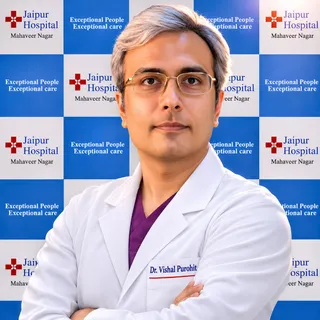
Meet the team
Your plastic surgery doctors
Explore our plastic surgery hospital in Jaipur: every treatment, the doctors and what to expect at your visit.
Frequently asked questions
Questions patients ask about mole removal
What does mole and nevus excision involve?
In short
Mole and nevus excision at Jaipur Hospital is a day-care procedure that removes a skin lesion under local anaesthesia. The surgeon chooses shave excision for raised benign moles, elliptical excision for flat or suspicious lesions, or punch excision for very small moles. The procedure usually takes 15 to 30 minutes and the tissue is sent for histopathological examination.
In detail
The technique depends on the mole's appearance and the clinical suspicion. Shave excision uses a blade to remove the lesion flush with the skin and does not need sutures.
Elliptical excision removes the full thickness of skin in an oval shape and the wound is closed with stitches. Punch excision uses a small circular blade for tiny lesions. Local anaesthesia is injected to numb the area completely.
The removed specimen is always sent to the laboratory to confirm the diagnosis and rule out malignancy. Healing typically takes 7 to 14 days and sun protection on the scar is essential during this period.
A common belief
Many people think every mole needs deep cutting and stitches.
What actually happens
In fact, raised benign moles can often be shaved off flush with the skin without any sutures, while flat or suspicious moles need full-thickness excision for proper diagnosis.
Your next step at Jaipur Hospital
You will attend the OPD for a clinical assessment. The surgeon will explain which technique suits your lesion and give a cost estimate within the typical range of ₹3,000 to ₹15,000 per lesion. No special preparation is usually needed.
After the procedure you can go home the same day with wound care instructions. Please book a consultation at Jaipur Hospital to discuss your specific mole.
Which tests and scans do I need before mole and nevus excision?
In short
Before mole and nevus excision at Jaipur Hospital, most people need no special tests or scans. The surgeon relies on clinical examination and dermatoscopy. If you take blood thinners or have a bleeding disorder, a basic blood count and clotting profile may be asked for. Routine imaging is not required.
In detail
The decision is based on what the surgeon sees with a dermatoscope. For the vast majority of lesions, no laboratory work or imaging is needed because the procedure is done under local anaesthesia in 15 to 30 minutes as day care.
If you are on anticoagulants, antiplatelet drugs, or have a known clotting problem, the surgeon may request a complete blood count, prothrombin time, and INR to plan safe haemostasis.
In rare cases where a very large or deep lesion is suspected, an ultrasound of the skin may be used to assess depth, but this is uncommon. All removed tissue is sent for histology after excision. Healing takes 7 to 14 days with sun protection. The typical cost range is ₹3,000 to ₹15,000 per lesion.
A common belief
Some patients expect a scan or biopsy before the actual removal.
What actually happens
In practice, the dermatoscope gives the surgeon enough information to plan the excision. The tissue removed during the procedure is itself sent for histology, so a separate biopsy beforehand is usually unnecessary.
Your next step at Jaipur Hospital
Attend the OPD with a list of your current medicines. The surgeon will examine the mole and tell you if any blood tests are needed. If tests are required, they can be done at the in-house laboratory. On the day of the procedure you can eat and drink normally unless advised otherwise.
How painful is the mole removal procedure and the early recovery?
In short
At Jaipur Hospital, mole removal is done under local anaesthesia, so you feel pressure but not sharp pain during the 15 to 30 minute procedure. After the anaesthesia wears off, most people describe mild soreness or a stinging sensation that settles within a day or two. Simple pain relief such as paracetamol is usually enough.
In detail
The injection of local anaesthesia causes a brief sting. Once the area is numb, the surgeon uses shave excision, elliptical excision, or punch excision depending on the mole type. You may feel pushing or tugging but no cutting pain.
After the procedure, the wound is dressed. Studies of similar minor skin procedures show that postoperative pain scores are low and opioid medicines are rarely needed. The recovery protocol advises keeping the area clean, avoiding stretching the wound, and protecting it from the sun.
Healing takes 7 to 14 days. If the mole was removed by elliptical excision with sutures, you may feel slight tightness when the stitches are in place. Any increasing pain, spreading redness, or discharge should be reported promptly.
A common belief
Some expect severe pain or need strong painkillers.
What actually happens
In reality, this is a minor day-care procedure with low pain scores in studies. The key is good local anaesthesia and simple aftercare, not heavy medication.
Your next step at Jaipur Hospital
Take paracetamol if needed, following the dose your surgeon advises. Keep the dressing dry for the first 24 to 48 hours unless told otherwise. Avoid strenuous activity that pulls on the wound for the first week. Attend any scheduled suture removal or wound check.
How long does recovery usually take after mole removal?
In short
At Jaipur Hospital, recovery after mole removal usually takes 7 to 14 days for the wound to heal. The procedure itself lasts 15 to 30 minutes under local anaesthesia and you go home the same day. Sun protection is essential during healing to prevent darkening of the scar.
In detail
Shave excision leaves a shallow graze that forms a scab and heals from the base up, typically within 7 to 10 days.
Elliptical excision with sutures takes 10 to 14 days for the skin edges to knit; sutures on the face are removed at 5 to 7 days, on the body at 10 to 14 days.
Punch excision for tiny moles heals similarly to a small shave wound. In studies of minor skin surgery, most patients return to desk work the next day. Strenuous exercise and swimming are avoided until the wound is fully closed and sutures are out. Our usual protocols note healing in 7 to 14 days and sun protection essential.
A common belief
People often think they need weeks off work.
What actually happens
For most mole removals, only heavy lifting or swimming is paused for a week or two. The rest of life continues as normal.
Your next step at Jaipur Hospital
Keep the dressing dry for 24 to 48 hours then follow the surgeon's cleaning instructions. Apply any prescribed ointment. Avoid stretching the wound site. Use broad-spectrum sunscreen or cover the area when outdoors for at least six months.
Which changes in size, colour, bleeding, or symptoms need assessment for a mole?
In short
Any mole that grows, changes colour, develops an irregular border, bleeds, itches, or becomes painful should be assessed at Jaipur Hospital. The ABCDE rule helps: Asymmetry, Border irregularity, Colour variation, Diameter over 6 mm, and Evolution or change over time. New moles appearing after age 30 also warrant examination.
In detail
These features can indicate abnormal cell growth. A clinical examination by a qualified surgeon is the first step. If a mole looks suspicious, an elliptical excision biopsy with sutures is typically performed to remove the full thickness for laboratory analysis.
Shave excision is used for raised benign moles, while punch excision suits tiny lesions. The removed tissue is always sent for histopathological examination to confirm the diagnosis.
A common belief
People often wait until a mole hurts, but melanoma rarely hurts early.
What actually happens
The warning signs are visual and subtle — change itself is the most important signal, not pain.
Your next step at Jaipur Hospital
Check your skin monthly. If you notice any of the ABCDE changes, or a mole that bleeds without injury, book an appointment promptly. Early assessment leads to simpler treatment.
How will appearance, function, and realistic expectations be discussed for mole removal?
In short
At Jaipur Hospital, your surgeon will discuss the expected scar, the healing timeline and what the final result is likely to look like during the pre-procedure consultation. The conversation covers the technique chosen, the trade-off between scar length and complete removal, and how your skin type influences healing.
In detail
Shave excision leaves a flat, round mark that fades over months but may leave a slight colour difference. Elliptical excision produces a straight line scar that is usually longer than the mole's diameter but tends to become a fine line with good care.
Punch excision leaves a tiny circular scar that often becomes barely visible. The surgeon will explain that all surgery leaves a scar and that individual healing varies with age, site, skin tension and genetics.
Keloid or hypertrophic scarring is uncommon on the face but more likely on the chest, shoulders and back. Sun protection, silicone gel or sheets after suture removal, and avoiding stretching the area during the first few weeks all improve the final appearance.
Function is rarely affected because the procedures are superficial, but the surgeon will check for any nearby structures such as nerves or muscles if the lesion is deep or near a sensitive area.
A common belief
Many people expect invisible results, but even the most suitable closure leaves a mark.
What actually happens
Understanding the trade-offs helps you choose the method that fits your priorities.
Your next step at Jaipur Hospital
Bring any photos or concerns to your consultation at Jaipur Hospital. The surgeon will mark the planned excision, show you the expected scar orientation and give you written aftercare instructions.
A follow-up at one week for suture removal or wound check, and another at six to eight weeks for scar assessment, is typical.
Why might my doctor recommend mole and nevus excision?
In short
A doctor at Jaipur Hospital may recommend mole and nevus excision if a lesion looks suspicious for skin cancer, changes in size, shape or colour, bleeds, itches, or causes cosmetic concern. The procedure provides a definite diagnosis by sending the tissue for histology and removes the lesion completely.
In detail
The main reasons are diagnostic and cosmetic. If a mole shows asymmetry, irregular borders, colour variation, diameter over 6 mm, or evolution over time, excision allows the pathologist to check for melanoma or other skin cancers.
Even benign moles may be removed if they catch on clothing, bleed during shaving, or cause distress because of their appearance. Shave excision is used for raised benign moles, elliptical excision for flat or suspicious ones, and punch excision for very small lesions.
All methods are done under local anaesthesia in 15 to 30 minutes as day care. Healing takes 7 to 14 days with sun protection. The typical cost range is ₹3,000 to ₹15,000 per lesion.
A common belief
Many people think moles are only removed for looks.
What actually happens
In reality, the most important reason is to rule out melanoma. A mole that seems harmless to you may have features the surgeon recognises as warning signs. Removing it and checking the tissue under a microscope is the only way to be certain.
Your next step at Jaipur Hospital
If you notice a changing mole or have a lesion that bothers you, attend the OPD for an examination. The surgeon will assess the mole, explain whether excision is advised, and discuss the technique and cost.
You can eat and drink normally on the day of the procedure. After removal you receive wound care instructions and a follow-up appointment.
How should I prepare in the days before mole and nevus excision?
In short
In the days before mole and nevus excision at Jaipur Hospital, keep the skin clean and avoid applying creams, lotions, or makeup on the lesion. Tell the surgeon about all medicines you take, especially blood thinners, aspirin, or herbal supplements that may affect bleeding. No special diet or bowel preparation is needed.
In detail
Preparation is simple because the procedure uses local anaesthesia and takes 15 to 30 minutes as day care. You should shower on the morning of the procedure and wear loose clothing that gives easy access to the mole site.
If you take anticoagulants, antiplatelet drugs, or supplements like ginkgo, garlic, or fish oil, the surgeon may ask you to stop them a few days before, but only after checking with the doctor who prescribed them. Do not stop any prescribed medicine on your own.
Avoid sun exposure on the area for at least a week before, as sunburned skin heals poorly. Healing after excision takes 7 to 14 days and sun protection is essential during that time. The typical cost range is ₹3,000 to ₹15,000 per lesion.
A common belief
People often think they must fast or stop all medicines.
What actually happens
In fact, you can eat and drink normally because only local anaesthesia is used. You should not stop prescribed blood thinners on your own; the surgeon will coordinate with your prescribing doctor to decide if a short pause is safe.
Your next step at Jaipur Hospital
Bring a list of your medicines to the OPD visit. The surgeon will review them and give specific instructions about any that need to be paused. On the day of the procedure you can eat and drink normally. After removal you receive wound care instructions and a follow-up date for suture removal if stitches were used.
What are the common side effects and the less common serious complications of mole removal?
In short
At Jaipur Hospital, common side effects after mole removal include mild redness, swelling, bruising, and a small scar at the site. These usually settle within the 7 to 14 day healing period. Less common serious complications are wound infection, bleeding that does not stop with pressure, wound breakdown, or a noticeable scar such as a keloid. Allergic reaction to local anaesthesia is rare.
In detail
The procedure uses local anaesthesia and takes 15 to 30 minutes as day care. Shave excision leaves a shallow graze that heals by secondary intention. Elliptical excision uses sutures and leaves a fine line scar. Punch excision is for tiny moles.
Common side effects reflect the normal inflammatory response: slight tenderness, pink edges, and a small scab. Serious complications are uncommon. Infection shows as increasing pain, spreading redness, warmth, or pus. Bleeding that soaks the dressing despite firm pressure for 10 to 15 minutes needs review.
Wound breakdown or suture spitting can occur if the area is stretched too early. Keloid or hypertrophic scarring is more likely in people with a personal or family history. The specimen is sent for histology to confirm the diagnosis.
A common belief
People often worry about severe complications or think the scar will be large.
What actually happens
In practice, most heal with a fine line or faint mark. The risk rises if the wound is stretched, gets wet too early, or if you have a keloid tendency. Good aftercare makes the difference.
Your next step at Jaipur Hospital
Keep the dressing clean and dry as advised. Apply firm pressure with a clean gauze if bleeding occurs. Contact the hospital if you notice signs of infection, persistent bleeding, or the wound opening up. Follow up for suture removal if stitches were placed.
Which symptoms are expected after mole removal, and which need urgent medical attention?
In short
At Jaipur Hospital, expected symptoms after mole removal include mild soreness, slight swelling, bruising, a pink wound edge, and a small scab or clear ooze for the first few days. These settle within the 7 to 14 day healing period. Urgent signs are increasing pain not relieved by simple painkillers, spreading redness or heat, pus, bleeding that soaks the dressing despite firm pressure for 10 to 15 minutes, fever, or the wound opening up.
In detail
The procedure uses local anaesthesia and takes 15 to 30 minutes as day care. Shave excision heals by secondary intention with a scab. Elliptical excision uses sutures that may feel tight. Punch excision leaves a tiny puncture. Normal healing shows gradual improvement each day.
Infection signs usually appear after 48 to 72 hours: throbbing pain, expanding redness, warmth, yellow discharge, or fever above 38°C. Bleeding that will not stop with continuous pressure suggests a vessel needs attention.
Wound breakdown (dehiscence) can happen if the area is stretched too early, especially on the back or joints. Allergic reaction to the anaesthetic or dressing is rare but can cause itching, rash, or swelling beyond the wound. The histology result is separate from wound healing and will be discussed at follow-up.
A common belief
Many people panic over a little clear fluid or a pink edge, which are normal.
What actually happens
Others ignore spreading redness or increasing pain, hoping it will settle. The rule: improving each day is normal; getting worse after 48 hours needs review.
Your next step at Jaipur Hospital
Keep the dressing clean and dry as instructed. Apply firm pressure with clean gauze for 10 to 15 minutes if bleeding occurs. Take paracetamol for discomfort if your surgeon agrees. Contact the hospital immediately for any urgent signs. Attend scheduled suture removal and wound checks.
FAQ library
Questions and answers about mole removal
When you contact us
Get a clear plan today
Contact Jaipur Hospital for a consultation, cost estimate and help with cashless schemes.
- A consultation with a plastic surgeon in the OPD
- Your scans and reports reviewed, with tests done in-house if you need them (laboratory, X-ray and imaging)
- Your options explained in plain words, including whether you need surgery at all
- A cost estimate before you decide
- Help with cashless treatment under RGHS, MAA Yojana, CGHS and empanelled insurers and TPAs
- Follow-up visits after your treatment
Overview
Mole Removal: what to know
What a mole is and how it develops
- How it forms
- Pigment cells grow in a cluster
- Common count
- 10 to 40 moles by adulthood
- Appearance
- Brown, black, pink, blue or skin coloured
- Normal changes
- May become raised, change colour or grow hair
A mole is a common skin growth that forms when pigment cells, called melanocytes, grow in a cluster instead of spreading evenly through the skin. Most people have between 10 and 40 moles by the time they reach adulthood. They can appear anywhere on the body, alone or in groups.
Moles are usually brown or black, but they can also be skin coloured, pink or blue. They may be flat or raised, round or oval, and they often have a smooth edge. Over the years, moles can change slowly. They may become raised, change colour, or develop hair. Some moles fade away completely. These gradual changes are normal.
A mole that appears after the age of 30, or a mole that changes quickly, should be shown to a doctor.
Symptoms of a mole and warning signs that need urgent care the same day
- Pain, itching or bleeding Without an injury
- Crust, ooze or ulcer Surface breaks down
- Rapid change Size, shape or colour over weeks or months
- Asymmetry One half does not match the other
- Irregular border Ragged or blurred edges
- Varied colour Shades of brown, black, pink, red, white or blue
Most moles cause no symptoms at all. You may notice a spot on your skin that has been there for years without any pain, itching or bleeding. A mole that becomes painful, itchy, tender or starts to bleed without an injury should be examined promptly.
The same applies if a mole develops a crust, oozes fluid, or the surface breaks down into an ulcer. Rapid change in size, shape or colour over weeks or months is a warning sign.
The ABCDE rule helps you remember what to watch for:
- Asymmetry, where one half does not match the other
- Border that is irregular, ragged or blurred
- Colour that varies from one area to another with shades of brown, black, pink, red, white or blue
- Diameter larger than 6 millimetres, about the size of a pencil eraser
- Evolving, meaning the mole looks different from the rest or is changing in size, shape or colour
If you notice any of these features, attend the OPD the same day for an examination.
What causes moles and who is at higher risk
- Genetics and UV
- Main causes of moles
- Fair skin
- Light eyes, red or blond hair
- Family history
- Many moles or melanoma
- Sun exposure
- Childhood sunburns and tanning beds
Moles are caused by a combination of genetic factors and exposure to ultraviolet (UV) radiation from the sun. People with fair skin, light coloured eyes, and red or blond hair tend to develop more moles. A family history of many moles or of melanoma increases your risk.
Spending a lot of time in the sun, especially during childhood, and having had sunburns that blistered, also raise the number of moles you develop. Using tanning beds adds to UV exposure. People who take medicines that suppress the immune system, or who have a weakened immune system from illness, may develop more unusual moles.
Having more than 50 ordinary moles, or having large moles present from birth (congenital naevi), puts you at higher risk for melanoma. Your surgeon will ask about your sun habits, family history and any previous skin cancers to understand your risk.
How a mole is diagnosed: examination and tests
- Skin examination Doctor checks the mole in OPD
- Dermatoscopy Magnifies skin with polarised light
- Biopsy if needed Tissue sent for histology
- Histology confirms Pathologist examines cells under microscope
Diagnosis begins with a careful skin examination in the OPD. Your doctor will look at the mole with a dermatoscope, a hand held device that magnifies the skin and uses polarised light to show structures not visible to the naked eye. This helps the doctor decide whether the mole looks benign or suspicious.
If the mole appears suspicious, or if it has changed recently, your surgeon will advise a biopsy. A biopsy means removing the mole, or a part of it, and sending the tissue to the laboratory for histological examination. The pathologist looks at the cells under a microscope to confirm whether the mole is benign or malignant.
Histological confirmation is the standard way to establish the diagnosis. The procedure is done under local anaesthesia and takes about 15 to 30 minutes. You go home the same day.
Treatment options without surgery and when surgery is advised
There is no cream, tablet or light treatment that removes a mole safely and completely. Over the counter creams and home remedies can irritate the skin, cause infection, and delay the diagnosis of a serious condition. Jaipur Hospital does not offer laser, radiofrequency, chemical peels or platelet injections for mole removal.
These methods are not used because they destroy the tissue needed for histological examination. Surgery is advised when a mole looks suspicious on dermatoscopy, when it has changed in size, shape or colour, when it causes symptoms such as bleeding or itching, or when you wish to remove a benign mole for cosmetic reasons.
The surgical options are:
- Shave excision
- Elliptical excision
- Punch excision
Your surgeon will explain which technique suits your mole based on its size, depth, location and whether it needs to be examined under the microscope. The tissue removed is always sent for histology when there is any doubt about the diagnosis. Healing usually takes 7 to 14 days and sun protection is essential during that time.
Preparing for mole removal
Your doctor will examine the mole and ask about any changes in size, colour, shape or sensation. You should tell the doctor about every medicine you take, including blood thinners, aspirin, herbal products and supplements, because some of these can increase bleeding. If you have a bleeding disorder or a history of poor wound healing, mention it.
The procedure is done under local anaesthesia, so you do not need to fast unless your doctor advises otherwise. Wear loose clothing that gives easy access to the area. Bring a list of your medicines, any previous biopsy reports and your insurance or scheme card if you have one. An attendant may stay with you in the waiting area.
How mole removal is done
- Clean and numb Local anaesthesia injected
- Choose technique Based on mole type and histology need
- Remove mole Shave, elliptical or punch excision
- Send for histology Tissue examined under microscope
- Apply dressing Before you leave
The procedure takes 15 to 30 minutes and is performed as day care. After cleaning the skin, the surgeon injects local anaesthesia to numb the area. The technique depends on the mole type and whether a tissue sample is needed for histology.
Shave excision uses a blade to remove a raised benign mole flush with the skin; no sutures are required. Elliptical excision removes the full thickness of the mole with a margin of normal skin and the wound is closed with sutures; this is used for flat or suspicious moles.
Punch excision uses a small round blade for tiny moles and may need one or two sutures. The removed tissue is sent for histological examination to confirm the diagnosis. Your surgeon will advise which technique suits you. A dressing is applied before you leave.
Risks and possible complications of mole removal
- Bleeding
- Controlled with pressure or a stitch
- Infection
- Redness, swelling, warmth or discharge
- Scarring
- Expected with full-thickness cuts; may be raised
- Numbness
- May last weeks or months
- Incomplete removal
- Possible with shave excision
Mole removal is a minor procedure and serious complications are uncommon. Bleeding during or shortly after the procedure can occur and is usually controlled with pressure or a stitch. Infection of the wound may cause redness, swelling, warmth or discharge; it is treated with antibiotics if needed.
Scarring is expected with any technique that cuts the full skin thickness; the scar usually fades over months. Some people develop a raised or thickened scar (hypertrophic or keloid) especially on the chest, shoulders or back. Numbness or altered sensation around the scar may last for weeks or months.
Incomplete removal can happen with shave excision if the mole extends deeper than expected; a repeat procedure may be needed. The evidence available for this service does not provide specific complication rates for mole removal.
Recovery and aftercare after mole removal
- First 24 to 48 hours Keep dressing clean and dry
- 7 to 10 days (face) Sutures removed
- 10 to 14 days (body) Sutures removed
- 7 to 14 days Healing usually complete
Healing usually takes 7 to 14 days. Keep the dressing clean and dry for the first 24 to 48 hours unless your doctor gives different instructions. After that you may gently wash the area with soap and water and pat it dry. Apply any prescribed ointment and change the dressing as advised.
If sutures were placed, they are usually removed in 7 to 10 days for the face and 10 to 14 days for the body. Avoid stretching the wound, heavy exercise and swimming until the skin has healed.
Sun protection is essential; cover the area or use a broad-spectrum sunscreen (SPF 30 or higher) for at least six months to prevent darkening of the scar. Mild soreness, itching or a small amount of pink discharge is normal.
Contact the hospital if you notice:
- Increasing pain
- Spreading redness
- Pus
- Fever
- If the wound opens
Results of mole removal
When the mole is completely excised with clear margins, it does not grow back at the same site. Histology confirms whether the lesion was benign or needed further treatment. In studies of elliptical excision for suspicious lesions, tumour diagnosis was confirmed histologically in all subjects.
Shave excision of benign raised moles has a low recurrence rate, but if any mole cells remain deeper in the skin the mole may reappear. The cosmetic outcome depends on the technique, site, your skin type and how you care for the wound. Scars continue to mature and fade for up to a year or more. Regular skin self-examination and sun protection reduce the risk of new moles and skin cancer.
Cost and insurance for mole removal in Jaipur
The typical price range in India is ₹3,000 to ₹15,000 per lesion. The final cost depends on the number of lesions, the technique used, the size and site of the mole, whether histology is required and the type of anaesthesia. Jaipur Hospital is a NABH-accredited multispeciality hospital established in February 1991.
It accepts:
- RGHS
- MAA Yojana
- CGHS
- A panel of private insurers and TPAs
The hospital has an in-house pharmacy, diagnostic laboratory and imaging, modular operation theatres and 24×7 emergency and ambulance services. For an estimate, contact the hospital at 0141-2551500, 0141-2554139 or 7414 001 001, or email [email protected].